EU parliament passes controversial nature law despite political backlash, farmers’ protest

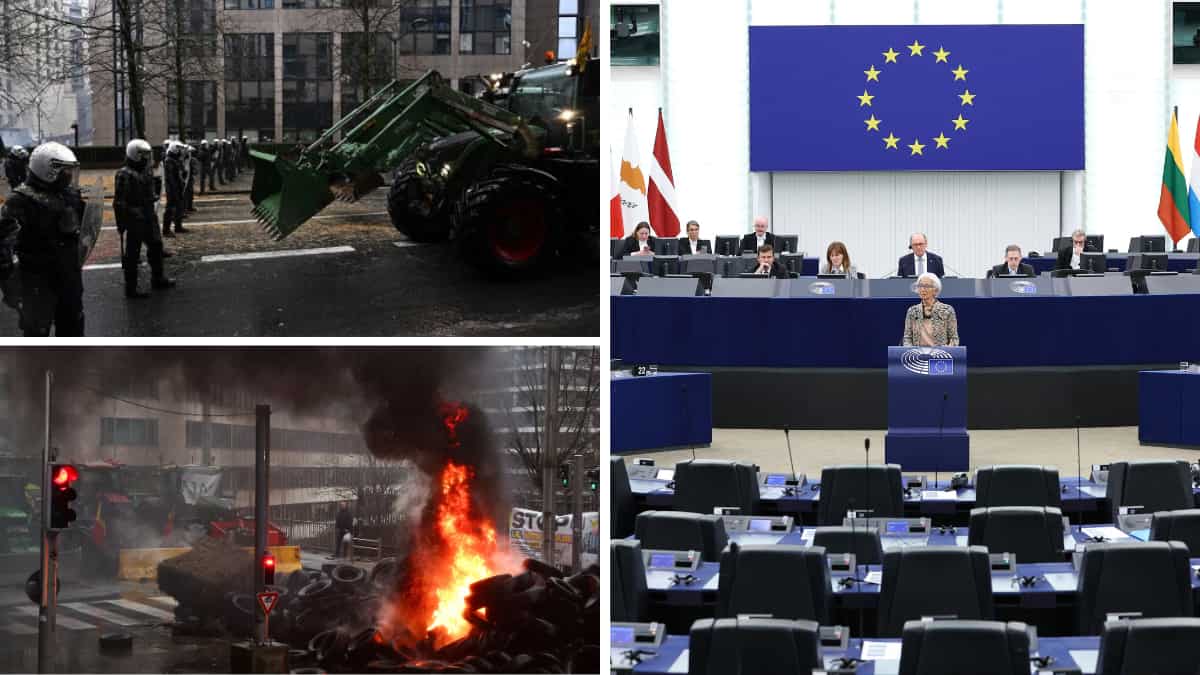
EU passes nature law amid farmers' protest
The European Parliament, on Tuesday (Feb 27) passed a landmark bill aimed at protecting nature in the 27-nation bloc after overcoming conservative attempts to dump the legislation and despite becoming a target of protesting farmers across the EU in recent weeks.
The vote took place a day after violent demonstrations erupted outside the European Union’s headquarters in Brussels, Belgium amid the ongoing weeks-long farmers’ protests across Europe.
WATCH |Europe Farmers' Protest: Polish farmers block Ukrainian trucks from entering country
Bill passed despite opposition
The farmers’ unions had urged members of the parliament to support the agricultural sector by rejecting the legislation which they say threatens their livelihoods.
The bill had also faced opposition at the last minute from the European People’s Party (EPP), the largest political grouping in the parliament which said that it would subject farmers to more red tape and bureaucracy.
Eventually, the EU lawmakers adopted a watered version of the legislation with 329 votes in favour, 275 against and 24 abstentions, on Tuesday. The European Commissioner for Environment, Oceans and Fisheries, Virginijus Sinkevicius took to X and thanked those who voted in favour of the bill.
He also called the policy EU’s “concrete contribution to preserve biodiversity, precious ecosystems, healthy soils and waters – first and foremost, for our farmers.”
The nature law still requires final approval from EU member states before it comes into force. This process is typically a formality, but the same cannot be said for this particular legislation as recent EU policies have faced blocks and delays because of pushback in various European countries.
What is the law about?
The nature law is said to be one of the biggest environmental legislation in the EU. It requires 27 member states to introduce measures to restore at least 20 per cent of the bloc’s land and seas by 2030 and all ecosystems in need of restoration by 2050.
The legislation is aimed at reversing the decline of Europe’s natural habitats as 81 per cent of them have been classed as being in poor health.
In line with the law, member states will be required to restore at least 30 per cent of forests, grasslands, and wetlands, as well as rivers, lakes, and coral beds from poor to good condition by 2030.
The nature law will also target specific areas like the restoration of peatlands so they can absorb carbon dioxide.
Opposition against the law
The law has mainly been opposed by two groups – EPP and the protesting farmers.
In 2022, when the nature law was first proposed by the European Commission it faced fierce political backlash mostly from centre-right lawmakers who attempted to get rid of it completely.
In a bid to pass the legislation, sections of the nature law including a goal to introduce more trees, ponds and other biodiverse features to farmland were weakened.
Meanwhile, European farmers who have been protesting for weeks now raised concerns about the excessively restrictive environmental rules, as well as called on lawmakers to address issues like competition from cheap imports from outside the EU and low incomes.
(With inputs from agencies)