Documentary crew divers find Challenger space shuttle wreckage off Florida coast

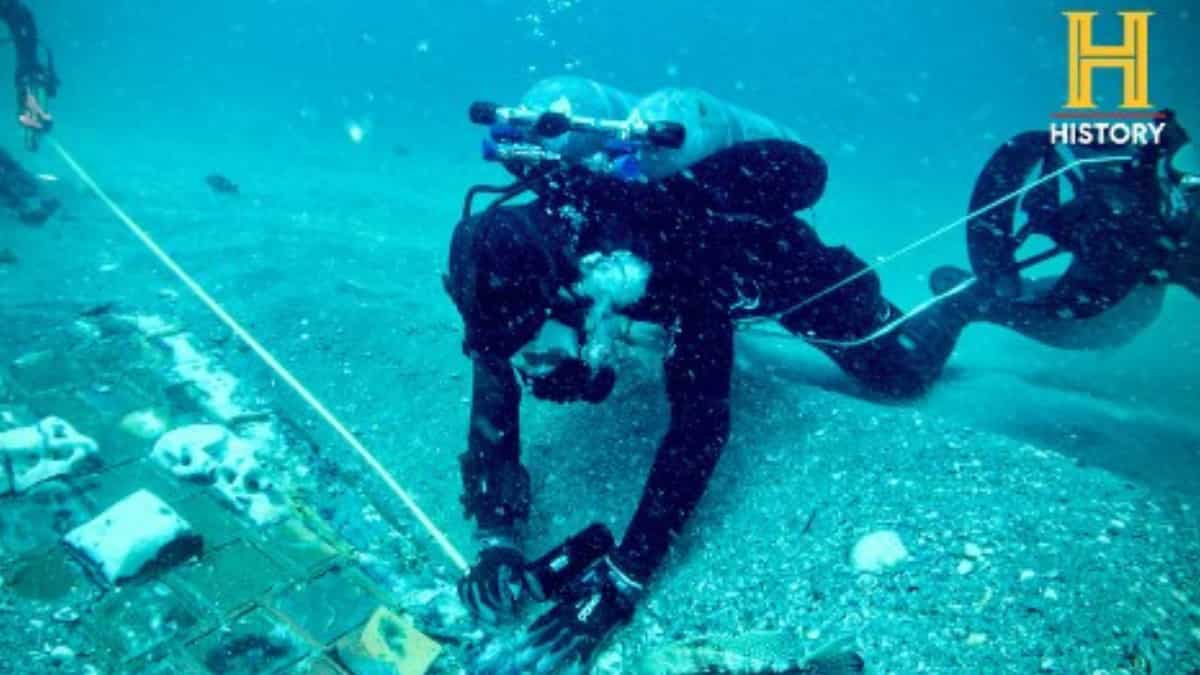
Space Shuttle Challenger wreckage
A 20-foot section of the space shuttle Challenger was found by divers of a documentary crew who were looking for the wreckage of a World War Two aircraft off the coast of Florida, NASA said. The space shuttle had broken apart shortly after its launch in 1986. The divers spotted a large, modern object covered in sand at the bottom of the ocean and bearing the shuttle's distinctive tiles, the space agency said in a written statement.
"This discovery gives us an opportunity to pause once again, to uplift the legacies of the seven pioneers we lost, and to reflect on how this tragedy changed us," NASA administrator Bill Nelson said in the statement.
“While it has been nearly 37 years since seven daring and brave explorers lost their lives aboard Challenger, this tragedy will forever be seared in the collective memory of our country,” Nelson said in the statement. “For millions around the globe, myself included, 28 January 1986 still feels like yesterday.”
The divers were on an exploratory mission for a History Channel documentary called "The Bermuda Triangle: Into Cursed Waters". They were looking for the wreckage of a PBM Martin Mariner Rescue Plane in the area of the Atlantic Ocean that has been linked with supernatural vanishing of planes and ships for years.
It had disappeared without a trace on December 5, 1945, while searching for five US Navy torpedo bombers that had also went missing that day.
NASA is trying to determine whether it should recover the wreckage and "what additional actions it may take regarding the artifact that will properly honour the legacy of Challenger's fallen astronauts and the families who loved them."
The Challenger erupted into a ball of flame 73 seconds after lifting off from Kennedy Space Center on Jan. 28, 1986. All seven crew members were killed, including school teacher Christa McAuliffe.
As per investigations, compromised O-Ring seals on a solid rocket booster, worsened by unusually cold temperatures, caused the disaster. It remains one of the worst disasters in the history of the US space programme.
(With inputs from agencies)

