Deploying new US missiles would be 'reckless act': North Korean state media

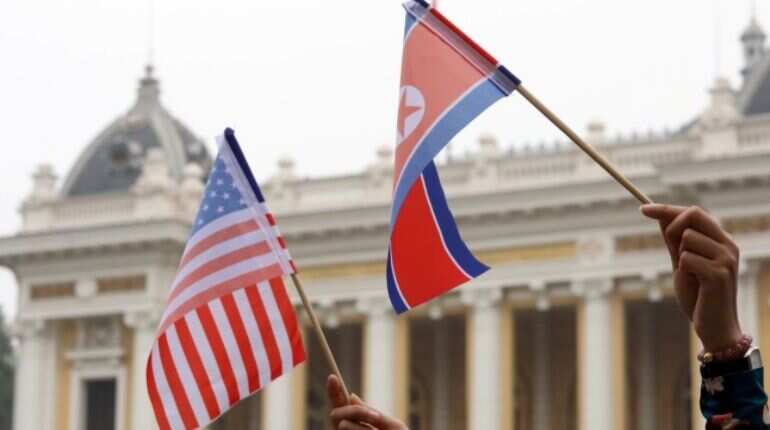
US- South korea
Any move by the United States to placenewground-launched, intermediate-rangemissilesin South Korea could spark a "newCold War" and an escalating arms race in the region,NorthKoreanstatemediasaid on Wednesday.
US Defence Secretary Mark Esper this month said he was in favour of placing ground-launched, intermediate-rangemissilesin Asia, a day after the United States withdrew from the Intermediate Nuclear Forces (INF) treaty with Russia.
"TheUS pointed out that it is now examining a plan fordeployingground-to-ground medium-rangemissilesin the Asian region and South Korea has been singled out as a place for the deployment,"NorthKorea's statenews agency KCNA said.
"It is a reckless act of escalating regional tension, an act that may spark off anewCold War and arms race in the Far Eastern region to deploy anewoffensive weapon in South Korea," it said in a commentary.
Other seniorUS officials have said any deployment of such weaponrywouldbe years away.
South Korea's defence ministry has said there had been no discussion of placing American intermediate-rangemissilesin the country, and there were no plans to consider the idea.
The KCNA statement also criticised recent moves to improve military sites in South that hostUS Terminal High Altitude Area Defense (THAAD) systems, which are designed to intercept ballisticmissiles.
"It is a hard fact that the deployment of THAAD is under theUS strategy to contain great powers and hold supremacy inNortheast Asia, not the one for 'shielding' South Korea from someone's 'threat'," KCNA said.
NorthKorea's military has launched a series ofmissilesin recent weeks to protest what it sees as a military build-up in South Korea, as well as joint military exercises by SouthKorean and American troops stationed on the peninsula.
The launches have complicated attempts to restart talks betweenUS andNorthKoreannegotiators over the future of the country's nuclear weapons and ballistic missile programmes, which prompted sanctions by the United Nations Security Council.