Could coronavirus be causing long-term brain damage even in mild cases? Scientists think so!

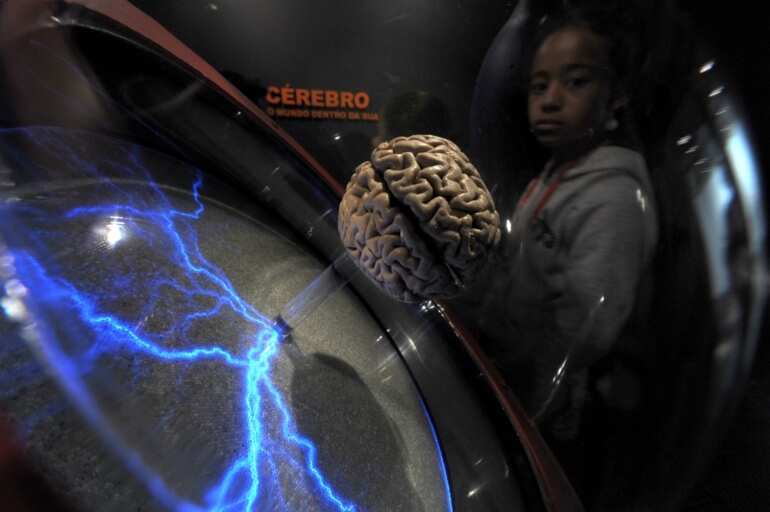
A girl looks at a real human brain, as part of the interactive exhibition "The brain: a world inside your head", in Sao Paulo, Brazil, on August 21, 200
Coronavirus could induce long-term brain damage even in mild cases of coronavirus, new data suggests.
A study which was published in the journal Brain on July 8 referred to 43 cases of the virus with brain damage. Scientists have repeatedly asserted how little we know about the virus, and have stressed on the need to prevent catching it, even If a mild case, for we simply do not know its long-term implications.
According to the researchers, this could be the beginning in a series of coronavirus-related revelations.
Many complications were observed among patients, including inflammation, psychosis, delirium. Many also suffered brain dysfunction and nerve damage.
Another pandemic?
One of the study’s authors from University College London’s Institute of Neurology, Michael Zandi claimed that it could be similar to eat encephalitis lethargica outbreak in the 1920s-30s in the aftermath of the 1918 influenza pandemic. Based on this data, they fear that the worst might be yet to come, an offshoot pandemic emerging from COVID-19.
In the study, almost nine patients exhibited symptoms of a rare condition called acute disseminated encephalomyelitis (ADEM). As part of this condition, the brain becomes inflamed and the spinal cord is attacked. Additionally, myelin is damaged, which forms the protective covering of nerve fibres. It is commonly seen in children.
Not simply a respiratory illness
Coronavirus has been seen as a largely respiratory illness which lungs being the major victims. However, new symptoms and after-effects keep emerging as doctors get to know the virus better.
Over 300 studies on coronavirus patients around the world said that patients experience neurological abnormalities. Many mild symptoms include headaches, loss of smell and taste, and tingling sensations. Extreme symptoms include losing the inability to speak, seizures, and strokes.
Many scientists also fear that recovered patients might develop cognitive deficits from the infection.
The number of reported cases of ADEM have increased in London, according to the study’s scientists.
However, scientists still don’t know about the long-term damage induced by COVID-19, with new information coming in everyday.