China's efforts to control air pollution are actually warming the planet, say climate experts

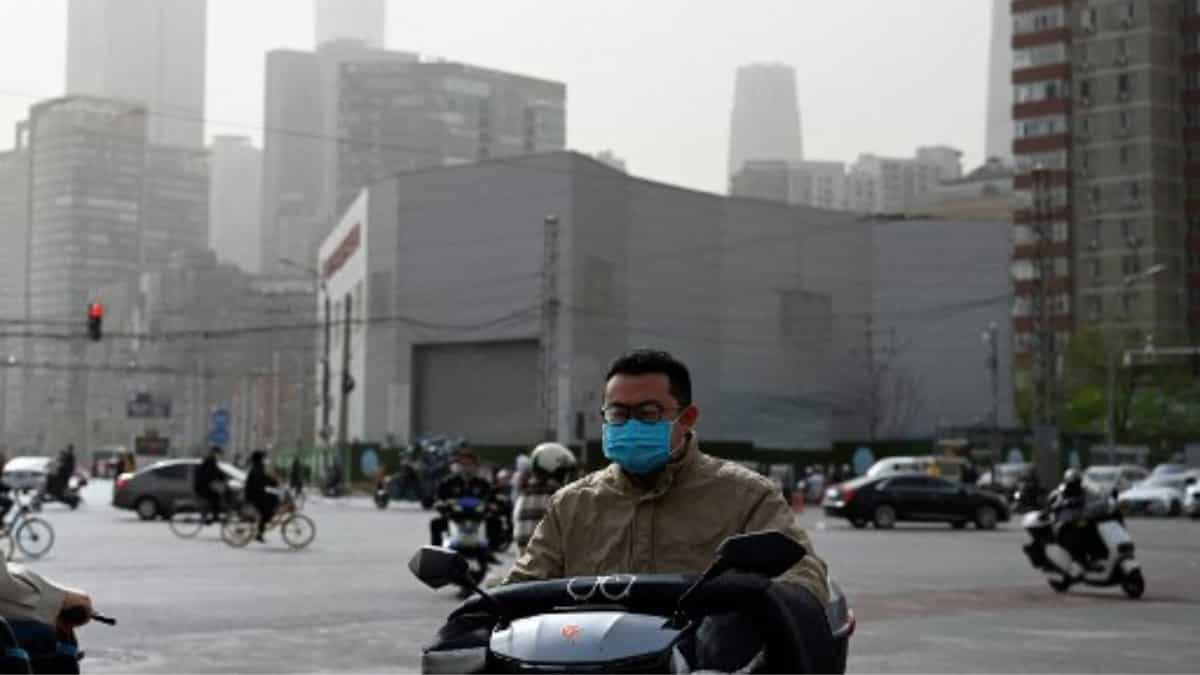
A man rides a scooter during a heavily polluted day in Beijing on April 11, 2023.
China's response to its air pollution woesconsists of a massive experiment to remove atmosphericsulphur dioxide— a primary component of smog— which has in turnresulted in record-high sea temperatures, an analysis by climate experts said.
Sulphur dioxide plays a crucial role in creating cloud-forming particles in the lower atmosphere. These particles can absorb, scatter, and reflect sunlight, and potentially mitigate the warming effects of greenhouse gases.
What is China's Catch-22 situation?
Climate experts have closely monitored the impact of China's efforts to reduce marine fuel emissions since 2020, particularly in relation to record-high sea temperatures. However, the substantial reduction of sulphur dioxide emissions from China's vehicles and industrial sources over the past decade has the potential to cause significant warming effects, particularly in Asia.
Yangyang Xu, an Associate Professor of Atmospheric Science at Texas A&M University, pointed out the unexpected consequences of the fight for improved air quality.
"We are actually heating the planet by improving air quality."
China declared a "war" on pollution in 2014 and implemented a number ofstringent measures that became a template for developing world cities to combat air pollution.
Power plants, steel mills, and industrial facilities were mandated to upgrade emission control technologies and use cleaner, lower-sulphur coal. Moreover, vehicle fuel standards were raised nationwide.
The correlation between sulphate reduction and observed phenomena, such as floods and heat waves, is a subject of ongoing scientific investigation in relation to the warming temperatures of the planet.
China's annual sulphur dioxide emissions significantly decreased from nearly 26 million tonnes in 2006 to 3.2 million tonnes in 2020, Reuters reported while citing the figures from the National Bureau of Statistics.
Also watch |New Delhi's air pollution woes
Over the same period, average temperatures in China rose by almost 1 degree Celsius, outpacing the global average.
Chinese urban centres, such as Beijing and Shanghai have experienced record-breaking high temperatures and heavy flooding, with residents observing unusually longand hotter summers.
While no conclusive study has definitively linked the surge in temperatures in China and globally to the decline in sulphur dioxide emissions, manyscientists concur that it is indeed a contributingfactor.
(With inputs from agencies)