China's economy falls into a slumber due to unexpected COVID-19 outbreaks and property crisis

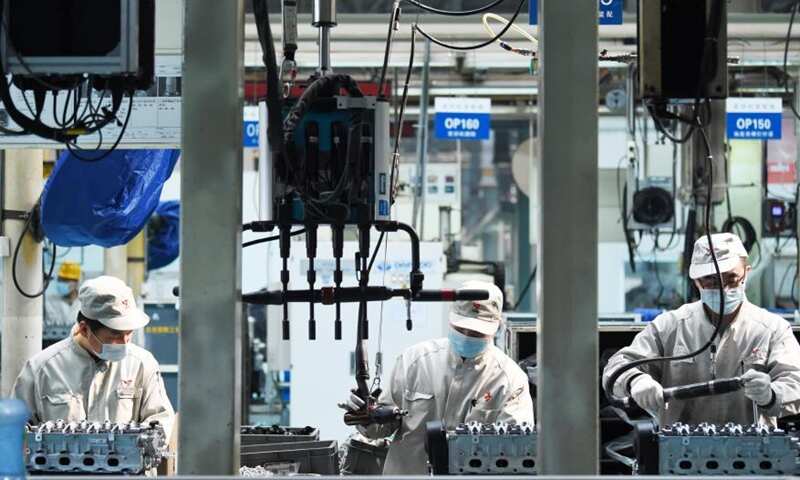
July’s industrial output in China grew by 3.9% year on year, lower than analyst’s expectations,
China's economy unexpectedly contracted in July as a result of a housing crisis and Beijing's zero-Covidpolicy, while the central bank shocked the markets by lowering crucial lending rates to boost demand.
According to data from the National Bureau of Statistics (NBS), industrial output increased 3.8% from a year earlier in July, which was a little decrease from June's 3.9% growth. According to a Reuters poll, economists had predicted a 4.6% increase.
Retail sales, which only started to increase in June, up 2.7% from a year earlier, far below the 3.1% rise observed in June and far below analysts' expectations of 5% growth.
The second-largest economyin the world just avoided contracting in the June quarter due to the lockdown of Shanghai's business centre, a worsening downturn in the real estate market, and chronically weak consumer spending.
Risks to expansion do exist, though, as numerous Chinese cities, including industry hubs and well-known tourist destinations, implemented lockdown measures in July in response to new outbreaks of the more contagious Omicron variety.
The NBS issued a statement warning that "the possibility of stagflation in the world economy is rising and the ground for domestic economic recovery is not yet firm."
The mortgage boycott that negatively impacted buyer confidence further shook the real estate market in July. In July, real estate investment fell by 12.3%, the fastest rate this year, while new sales fell by 28.9%.
Chinese officials are attempting to strike a balance between bolstering a flimsy recovery and eliminating rising COVIDclusters, as the economy is anticipated to miss its official growth target this year, set at approximately 5.5%, for the first time since 2015.
With the exception of exports, all economic indicators in July were disappointing. Nie Wen, an economist with Hwabao Trust with a Shanghai office, noted that loan demand from the real sector remained poor, indicating a cautious prognosis for the months to come. He also noted that COVID-19 outbreaks and the July heatwaves had an impact on activity.
The state of the labour market remains precarious. Although youth unemployment remained stubbornly high, reaching a record 19.9% in July, the nationwide survey-based unemployment rate slightly decreased to 5.4% in July from 5.5% in June.
The central bank abruptly reduced interest rates on important lending facilities for the second time this year on Monday in an effort to support growth. According to data released on Friday, new yuan loans fell more than anticipated in July as businesses and consumers continued to be cautious about taking on debt.
Wang Jun, an analyst at Zhongyuan Bank, predicts that rather than deploying drastic new stimulus measures, government officials would concentrate on implementing current policies.
“We are now facing a typical liquidity trap problem. No matter how loose the credit supply is, companies and consumers are cautious in taking on more debt,” Wang said. “Some of them are now even paying back their debt in advance. This may herald a recession.”
In the first seven months of the year, fixed asset investment increased 5.7% from the same period a year earlier, below the forecasted 6.2% increase and down from a 6.1% increase in January-June. Beijing had hoped that fixed asset investment would drive growth in the second half as exports slump.
(With inputs from agencies)