China to offer legal protection to employees for ‘invisible overtime’

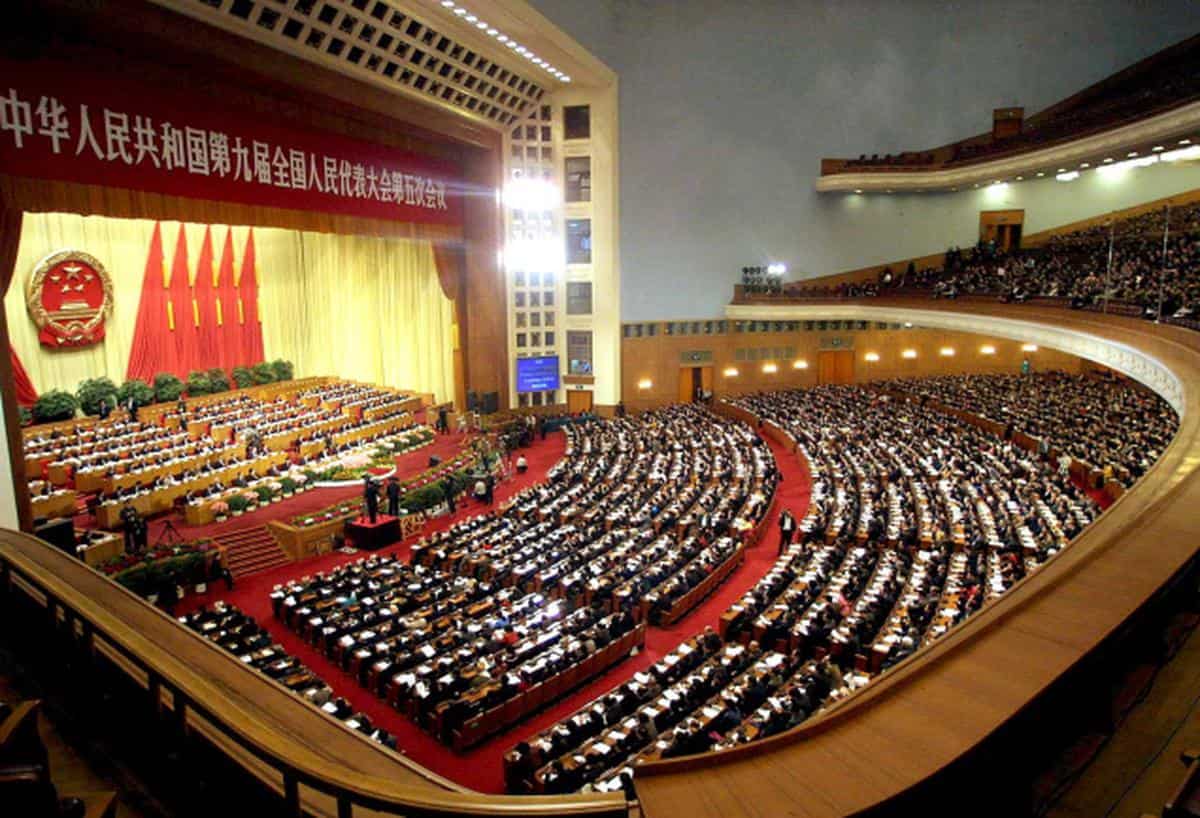
The National People’s Congress, China’s rubberstamp parliament.
China is considering offering legal protection to employees forced to stay online even after work hours, reported Hong-Kong-based news outlet South China Morning Post (SCMP). This comes after Lyu Guoquan, head of the general office of China’s trade union federation, recommended the Chinese People’s Political Consultative Conference (CPPCC) last week that guidelines and a legal framework be made for “working overtime online”. According to Lyu, the proposal was accepted by several government agencies and political advisory bodies.
China’s ‘Supreme Court’ on board
The issue was reportedly raised by the president of the Supreme People’s Court on Friday (Mar 8), who talked about rewarding employees for the “invisible overtime” in his work report to the National People’s Congress, China’s rubberstamp parliament.
Chief Justice Zhang Jun said a person was considered to be working overtime if they “contributed substantive labour” to tasks that “evidently consume time” – a definition that included staying online. “The standards guarantee that online [overtime] work is rewarded and offline rest is protected,” he said.
Chinese judiciary on overtime cases
In recent years, Chinese courts have addressed numerous cases concerning online overtime payments, with one particular case highlighted by the Supreme Court as exemplary for other judicial bodies to follow.
Watch:China-Taiwan Tensions: China's push for Taiwan reunification, PLA spokesperson makes strong remarks
This case involved a director of a short video team, named Li, who sued their employer for unpaid overtime after being terminated in 2020. Initially, a lower court ruled that the time Li spent on WeChat for work-related communication during off-duty hours should be considered while calculating overtime compensation. However, the Supreme Court later found that quantifying such scattered time was challenging.
Lou Yu, director of the Social Law Institute at China University of Political Science and Law, expressed the likelihood of regulations being established to govern online overtime labour.
“This is a very prominent labour and employment issue at present, and [the proposal] was recognised by different sectors,” he said.
(With inputs from agencies)