China slams EU's 'confrontational approach' after it freezes investments

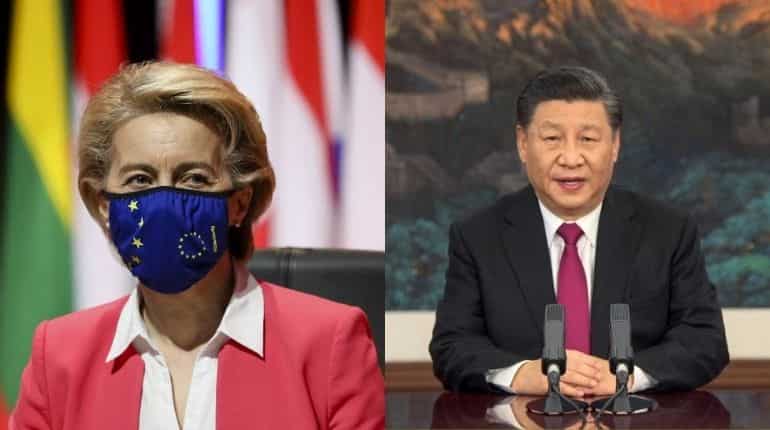
European Union and China
China on Friday slammed the European Union's "confrontational approach" after ithaltedratification of a new investment pact withBeijing until it lifts sanctions on EU politicians, deepening a dispute in Sino-European relations and denying EU companies greater access toChina.
The resolution to freeze ratification was passed in the European Parliamentwith 599 votes in favour, 30 votes against and 58 abstentions.
Foreign ministry spokesman Zhao Lijian said Beijing's sanctions were a "necessary and justified response" to previous EU measures against Chinese officials over human rights concerns in Xinjiang.
The EU-ChinaComprehensive Agreement on Investment, agreed by negotiators in December after seven years of talks, aimed to put EU companies on an equal footing inChinaand cement Beijing's status as a trusted trading partner.
But Beijing imposed sanctions in March on 10 EU politicians, as well as think tanks and diplomatic bodies, in response to Western sanctions against Chinese officials accused of the mass detentions of Muslim Uyghurs in northwesternChina.
China's sanctions include five members of the EU assembly and its human rights sub-committee.
"With its sanctions,Chinahas miscalculated. They should learn from their mistakes and rethink. Because ofChina's sanctions, the Comprehensive Agreement on Investment has been put into the freezer," said Reinhard Butikofer, a German EU lawmaker who Beijing targeted with its sanctions.
EU lawmakers say the Chinese sanctions are not based on international law, while the bloc's measures, like those of Britain and the United States, tackle abuses of human rights upheld in United Nations treaties. But Beijing denies any wrongdoing.
The parliament "demands thatChinalift the sanctions before dealing with (the investment accord)", it said in its resolution, which is not legally binding but is now the assembly's official position. "EU-Chinarelations may not continue business as usual," it said.
In response to the resolution,China's mission to the EU said the investment agreement was "mutually beneficial" and not a "favour" from one side to the other.China's sanctions were a legitimate response to EU actions, it said.
China's foreign ministry spokesman Zhao Lijian said at a daily briefing on Friday that he hoped the EU "could do less emotional venting and more rational thinking, and make correct decisions in line with its own interests."
The impasse is a setback for bothChinaand the EU. Ratification of the pact would allow greater protection of European investment and intellectual property rights inChina.Chinawas hoping for improved international standing as a fair and respectful trading partner, European diplomats say.
The investment deal aims to open China's market and eliminate discriminatory laws and practices preventing European companies from competing on an equal footing, according to the European Commission.
EU foreign direct investment in China since 2000 -- excluding Britain -- amounted to $181 billion. The corresponding sum from China is $138 billion.
Activists and U.N. rights experts say at least 1 million Muslims are detained in camps in Xinjiang. The activists and some Western politicians accuseChinaof using torture, forced labour and sterilisations.Chinadenies rights abuses in Xinjiang and says its camps provide vocational training and are needed to fight extremism.