

&imwidth=800&imheight=600&format=webp&quality=medium "China's BIG statement on relationship with India over Dalai Lama's issue, warns against using 'Xizang card' - What it is")
The Chinese embassy in New Delhi said that the issue of the successor of the 14th Dalai Lama is a "thorn in the China-India relations." The Chinese embassy also said that India should be "fully cognizant" of the sensitive nature of issues related to 'Xizang' - a term the Chinese use for Tibet. It also reiterated that the issue related to the Dalai Lama is China "internal matter." The statement came ahead of Indian's foreign minister S Jaishankar's visit to China - the first time since China-India border skirmishes in 2020. Jaishankar will be attending a regional security meeting under the Shanghai Cooperation Organisation in Tianjin in northern China on July 15 and hold bilateral meetings on the sidelines.
This will be one of the highest-level visits between India and China since their relations were hit after a deadly border clash in 2020 that killed at least 20 Indian and four Chinese soldiers. Last month, India's Defence Minister Rajnath Singh held talks with his Chinese counterpart in China on the sidelines of a defence ministers' meeting of the Shanghai Cooperation Organisation.
“In reality, the Xizang-related issue is a thorn in China-India relations and has become a burden for India. Playing the “Xizang card" will definitely end up shooting oneself in the foot," Yu Jing, spokesperson for the Chinese embassy in India, wrote on social media platform X. Without taking any names, Jing also said that some noted people from India "have made some improper remarks on the reincarnation of Dalai Lama." She highlighted that the remarks were contrary to the stance of the Indian government. The remark pointed to the Indian foreign ministry's July 4 statement wherein it said that New Delhi does not take any position or speak on matters concerning beliefs and practices of faith and religion. However, Indian Minister Kiren Rijiju was seen at the 90th birthday celebrations of the 14th Dalai Lama Tenzin Gyatso in Dharamshala.
Dalai Lama says his successor would be chosen, China objects
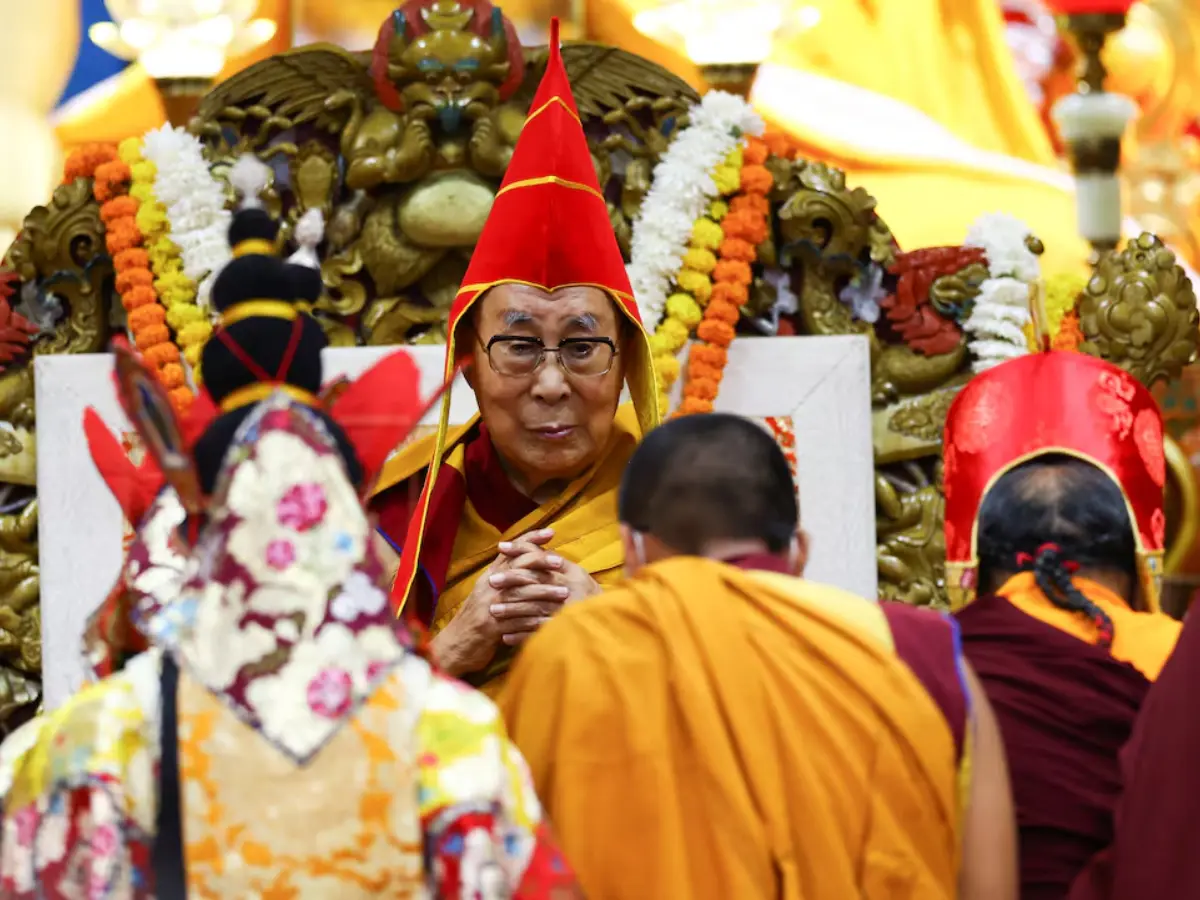
The elderly Dalai Lama, earlier this week, assured followers that upon his death, he would be reincarnated as the next spiritual leader of Tibetan Buddhism and spelt out a succession process, setting up a renewed clash with China. The statement made days before the Nobel peace laureate turns 90 put to rest speculation, started by the Dalai Lama himself, that he may be the last of Tibet's spiritual leaders, ending a line that stretches back centuries. China said that his successor must be "approved by the Chinese government." Establishing Beijing's authority in picking the 15th Dalai Lama, foreign ministry spokeswoman Mao Ning said, “The reincarnation of the Dalai Lama, the Panchen Lama and other great Buddhist figures must be chosen by drawing lots from a golden urn, and approved by the central government.”

