China, France launch powerful satellite for studying star explosions

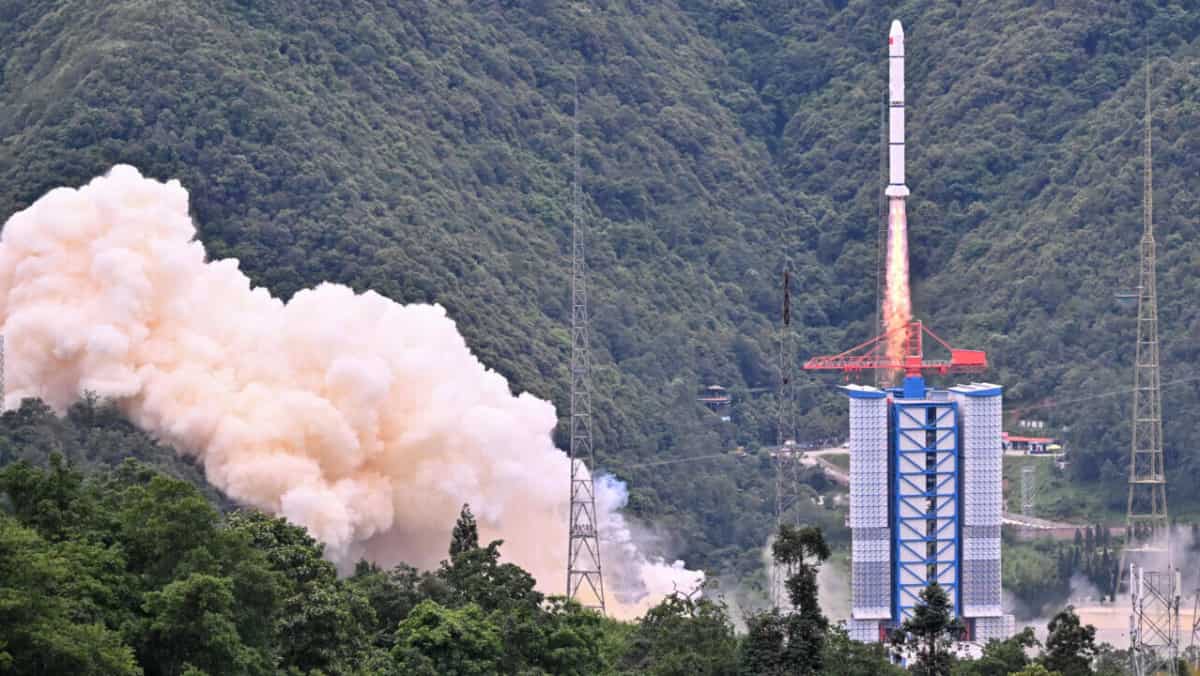
Long March 2-C rocket
A jointly developed satellite by China and France was successfully launched on Saturday (June 22). The satellite, designed to study the farthest explosions of stars, is a collaboration between the two countries' space agencies and scientific groups.
The Long March-2C rocket, carrying the advanced astronomical satellite, lifted off from the Xichang Satellite Launch Center in Sichuan province.
According to Chinese media reports, the satellite's mission included studying phenomena like gamma-ray bursts, which are crucial to understanding stellar explosions and their impact on the universe.
The 930-kilogram satellite is equipped with four instruments - two French and two Chinese. It was launched at about 3:00 pm (0700 GMT) from Xichang Satellite Launch Center, as per AFP journalists who observed its liftoff.
The satellite mission, named Space Variable Objects Monitor, is the first joint venture in astronomy between China and France, following their successful cooperation on the China-France Oceanography Satellite (CFOSat) launched in 2018.
The CFOSat was launched on October 29, 2018 and has been providing crucial data for oceanographic and climate research.
An astrophysicist at the Flatiron Institute's Center for Astrophysics in New York Ore Gottlieb told AFP, "SVOM has the potential to unravel several mysteries in the field of (gamma-ray bursts), including detecting the most distant GRBs in the universe, which correspond to the earliest GRBs."
Watch |China's Russia aid hurting EU ties: Germany | 3 dead in Russian strikes on Kharkiv
Recently, China's lunar probe Chang'e-6 carried payloads from the European Space Agency, Pakistani, French, and Italian research institutes to the far side of the moon.
United States in 2011 imposed a ban prohibiting any direct collaboration between NASA and entities based in China. This ban was introduced due to concerns over national security and human rights violations. It effectively halted joint projects and exchanges between NASA and Chinese counterparts in the space sector.
(With inputs from agencies)