Irish backstop should be replaced: PM Johnson's Brexit bid to EU

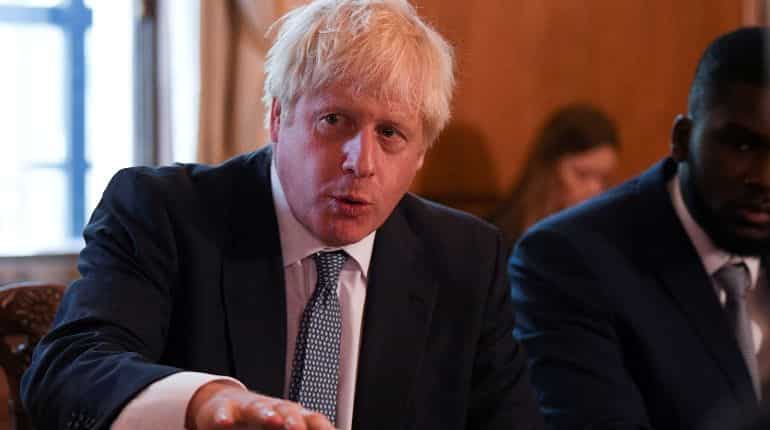
Boris Johnson
Prime Minister BorisJohnsonhas fired theopeningsalvo in hisbidto renegotiateBritain'sdivorce from the European Union, demanding that an insurance policy for theIrishborderbe removed from theBrexitdeal and replaced with a pledge.
After more than three years ofBrexitcrisis, the United Kingdom is heading towards a showdown with the EU asJohnsonhas vowed to leave the bloc on October 31 withouta deal unless it agrees to renegotiate the divorce terms.
The bloc and its leaders have repeatedly refused to reopen the Withdrawal Agreement, which includes a protocol on theIrishborder"backstop" that then-prime minister Theresa May agreed in November.
In hisopeningbidto the EU ahead of meetings with French President Emmanuel Macron and German Chancellor Angela Merkel this week,Johnsonwrote a four-page letter to European Council President Donald Tusk settingouthis demands.
"I propose that thebackstopshould be replaced with a commitment to put in place (alternative) arrangements as far as possible before the end of the transition period, as part of the future relationship,"Johnsonwrote.
"Time is very short."
A diplomat from one EU country told Reuters thatJohnson's letter was "pure PR" and not meant to spur constructive talks but rather set the stage for a "blame game" with the EU.
Irishsource saidJohnsonhad provided no detail on alternative proposals.
In a call withJohnson,IrishPrime Minister Leo Varadkar reiterated the EU's position that the Withdrawal Agreement cannot be reopened.
The riddle of what to do aboutIreland's 500-km (300-mile) landborderwith the British province of Northern Ireland remains has repeatedly imperilledBrexittalks.
The EU wants to ensure that its only landborderwith the United Kingdom afterBrexitdoes not become a back door for goods to enter the EU's single market - which guarantees the free movement of goods, capital, services, and labour.
But Ireland says checks could undermine the 1998 Good Friday agreement, which brought peace after more than 3,600 died in a three-decade conflict between unionists who wanted Northern Ireland to remain British andIrishnationalists who want Northern Ireland to join a united Ireland ruled from Dublin.
And the United Kingdom does not want there to be anyborder- effective or virtual - between Britain and Northern Ireland.Johnson's government is propped up by NorthernIrish unionists.
Brexit showdown?
Thebackstopwas a compromise aimed at squaring the circle: it would keep the United Kingdom in a customs union with the EU until a better solution was found, and keep Northern Ireland aligned to the rules of the EU's single market.
Johnsonwrote that thebackstopwas anti-democratic and threatened the United Kingdom's sovereignty as the application of single-market rules in Northern Ireland could divide Northern Ireland from the rest of the UK.
"It presents the whole of the UK with the choice of remaining in a customs union and aligned with those rules, or of seeing Northern Ireland gradually detached from the UK economy across a very broad range of areas,"Johnsonsaid.
"Both of thoseoutcomes are unacceptable to the British government."
He also argued that thebackstoprisked weakening the delicate balance between nationalists and unionists in Northern Ireland.
He said the best solution was a pledge to put in place arrangements as far as possible before the end of the transition period, and that this could be agreed as part of a deal onBritain'sfuture relationship with the EU.
Dublin does not accept the assertion that thebackstopis a threat to peace, anIrishgovernment source said, adding that, while the letter refers to alternative arrangements, it gives no detail of what these might be.
Under the current text of the Withdrawal Agreement, thebackstopwould be invoked at the end of the transition period in 2020, creating a single EU-UK customs territory, including "level playing field" rules ensuring fair competition in areas such as environment, state aid, and labour standards.
The clause is designed as a default mechanism to remain in place "unless and until" it is superseded by alternative arrangements that ensure the sameoutcome.
Brexiteers fear that this would keep Britain dependent on rules set from Brussels over which they would have no say, and hinder their efforts to strike trade deals with third countries - one of the key benefits they see from leaving the EU in the first place.
Some pro-Brexitpoliticians have said it would make Britain a "vassal state".