
&imwidth=800&imheight=600&format=webp&quality=medium "BRICS Summit 2026: PM Modi's 'critical minerals' and 'supply chain' message on Day 2 in front of China's Xi")
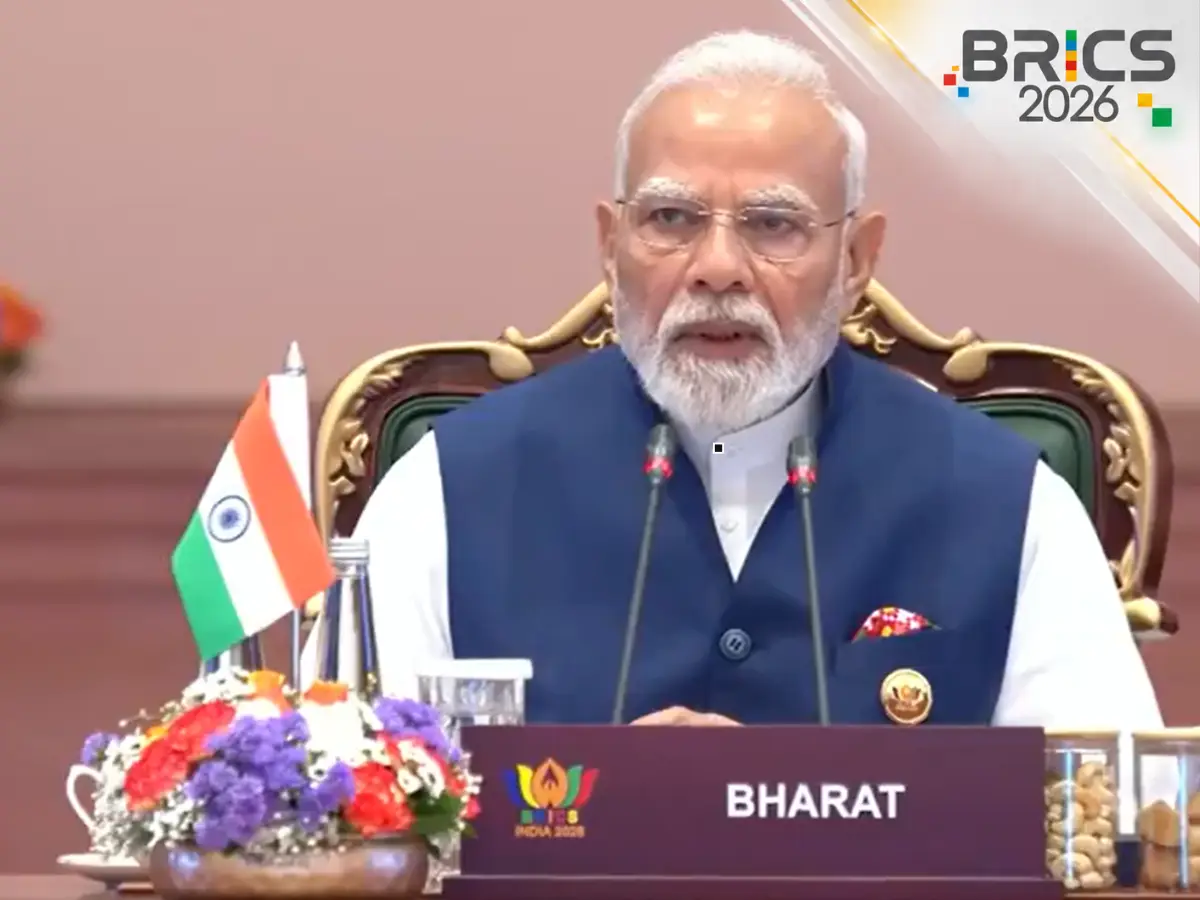
On Day 2 of the BRICS Summit 2026, Prime Minister Narendra Modi addressed the session and said that India's term as BRICS chair has been a ‘win-win collaboration.’ He shed light on a number of issues including global supply chain, critical minerals, and BRICS as a bloc in the multipolar world. With Chinese President Xi Jinping at the meeting, PM Modi put inclusivity at the centre of his closing remarks and cautioned against the "weaponisation" of technology and critical minerals, saying such measures could create "hurdles" to common growth.
He also said that under India's BRICS presidency, the grouping had focused on four pillars — resilience, innovation, cooperation and sustainability — and had worked to turn a shared vision into mutually beneficial collaboration. He highlighted initiatives aimed at strengthening preparedness against pandemics and disasters, making supply chains more resilient and promoting innovation through startups, digital agriculture and technology. PM Modi said India had sought to expand BRICS cooperation beyond governments by involving entrepreneurs, farmers, researchers, women, youth and ordinary citizens.
“India has advanced the spirit of friendship, partnership, and cooperation through the BRICS platform. We have endeavored to ensure that BRICS cooperation is not limited to governments alone; we want our entrepreneurs, farmers, researchers, women, youth, and ordinary citizens to become active participants as well. I am pleased that, with your cooperation and support, we have been able to transform our shared vision into a win-win collaboration..."

On supply chain, he said that the BRICS Logistics Supply Chain Cooperation Framework will make supply chains more reliable and resilient. He said the BRICS Incubator Network will connect startups and incubators, while the proposed BRICS Startup Innovation Fund will support innovative and scalable solutions. Modi also said the BRICS Network on Digital Agriculture will use AI, geospatial technology and digital public infrastructure to meet farmers’ needs. He warned that the weaponisation of technology and critical minerals could hinder shared progress and stressed the need for inclusive technology adoption.
Despite the presence of China's Xi Jinping, he said: “Weaponisation of critical minerals can be hurdle to common growth.” "The weaponisation of technology and critical minerals can hinder our shared progress. Therefore, we have emphasised inclusivity in the adoption of technology," PM Modi said at the BRICS session on 'Resilience, Innovation, Cooperation and Sustainability'.
What PM Modi said on Day 1
Earlier in Day 1, addressing the 18th BRICS Summit session on Inclusive Global Governance and Strengthening in the national capital, PM Modi said that the Global South is at the forefront of global crises but remains on the sidelines when it comes to decision-making. PM Modi said the proposed roadmap should focus on three key areas -- Representation, Responsiveness and Rule-making. “The Global South is today in the front row when it comes to facing global crises, but in the back row when it comes to decision-making. We must transform this ‘pyramid of privilege’ into a ‘platform of partnership', where every country has a voice, every member has a stake, and human development remains at the heart of every effort,” PM Modi said. “With this objective, I propose that we jointly prepare ten proposals for global governance reform, which we can seek to develop into a BRICS Reform Roadmap by the next Summit,” he added.

