Beijing, Shanghai, Hainan, HK, Macau, Tibet: Covid outbreaks, lockdowns, mass tests expose China policy fail

China TIbet COVID-19
It started in Wuhan. Now, various major cities and provinces are reporting Covid clusters in China. Infections in Beijing to Shanghai, Hainan, Macau, Xinjiang and many places in between, and the mass testing and rolling lockdowns are exposing China's zero-Covid policy's failure. It begs the questions: Are vaccination numbers reported by China accurate, and are Chinese-made vaccines like Sinovac inefficient?
The latest infections are reported from the Tibet Autonomous Region (TAR). A sudden spike in cases there have forced the authorities to close down some parts of Tibet, while launching mass testing in the region which is also a tourist hub.
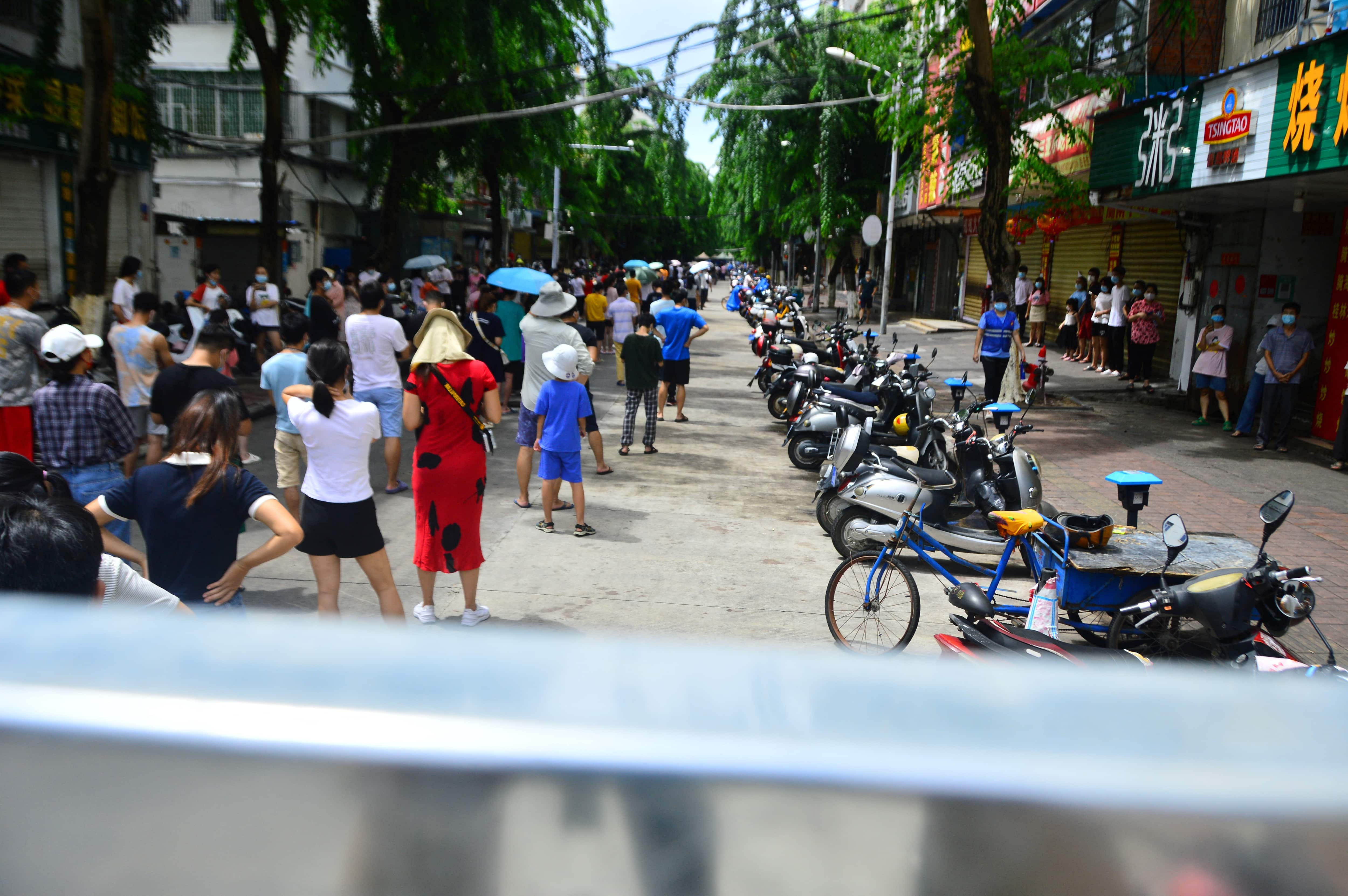
Meanwhile Hainan province is battling its worst COVID-19 outbreak ever, leaving thousands of tourists stranded.
The country has been adhering to a "dynamic zero COVID-19" policy under which Tibet only witnessed one symptomatic case way back in January, 2020, and saw no COVID-19 cases for over 900 days. But things are slowly unravelling.
While the rest of the world has reopened, China continues to tighten its grip over the virus. The fresh outbreaks have led to the imposition of curbs on Shigatse (Tibet's second biggest city) for three days, under which various events have been cancelled and people have been barred from entering or leaving the city. Several religious, entertainment and tourist venues have also been shut. Tibet's famed Potala Palace, which is a major draw among tourists, has also been closed indefinitely.
Tibet's economy heavily relies on tourism and these latest measures are bound to have a negative impact. Several experts and World Health Organization have called out China for its hardline policy amidst the changing nature of the virus.
China reported 828 new domestically transmitted cases for August 8. Lhasa, the regional capital city of Tibet, reported 18 new cases, one symptomatic and the rest asymptomatic, on Sunday. "Four cases were found earlier in Ngari prefecture’s Burang county. The 22 cases are all related to Tibet’s Shigatse city, home to about 800,000 people," state-run tabloid, Global Times reported.
“Cities of Lhasa and Shigatse are currently carrying out the first round of mass testing and will conduct the second round of testing on Wednesday," it added.
Meanwhile, in the Hainan province, the government is reportedly planning to let tourists in unaffected areas leave after two nucleic acid negative certificates within 48 hours, and three for those in low-risk areas, besides a general screening to check for symptoms.
What could be behind these failures?
One reason could be that the much-touted vaccination numbers are a lie. Millions of Chinese still live below poverty line, and are unwilling or possibly unable to get vaccinations. The efficacy of vaccines is questionable. There's anecdotal evidence to prove this, given that several Arab countries which reported cases in the previous waves had actually administered China-made vaccines. It's a lesser-known fact that many in Hong Kong had actually taken the Pfizer vaccine, not Chinese vaccines. It may have reduced the number of overall cases there, but China may not wish to advertise this fact, as it would make it look like the mainland is giving Hong Kong a special treatment. Hong Kong did have its own waves of outbreaks in spite of the vaccinations in any case.
A combination of massive population burden, crowd control and governance bottlenecks are leading Chinese authorities to go for the only feasible option: rolling mass lockdowns, quarantines, make-shift hospitals, and mass testing. Poor areas are susceptible to more infections, as people live chock-a-block in congested cities, slums and suburbs. These are probably the factors behind the urgency with which China is cracking down on all who could be potentially infected. In its race to manage headlines, China is aggressively pursuing its failing 'zero-Covid' policy. But whether it is successful or not, the world may never know, just as it won't know the real origin of the virus that began somewhere between a lab and a wet meat market in Wuhan in 2019.
WATCH WION LIVE HERE
You can now write for wionews.com and be a part of the community. Share your stories and opinions with us here.

