
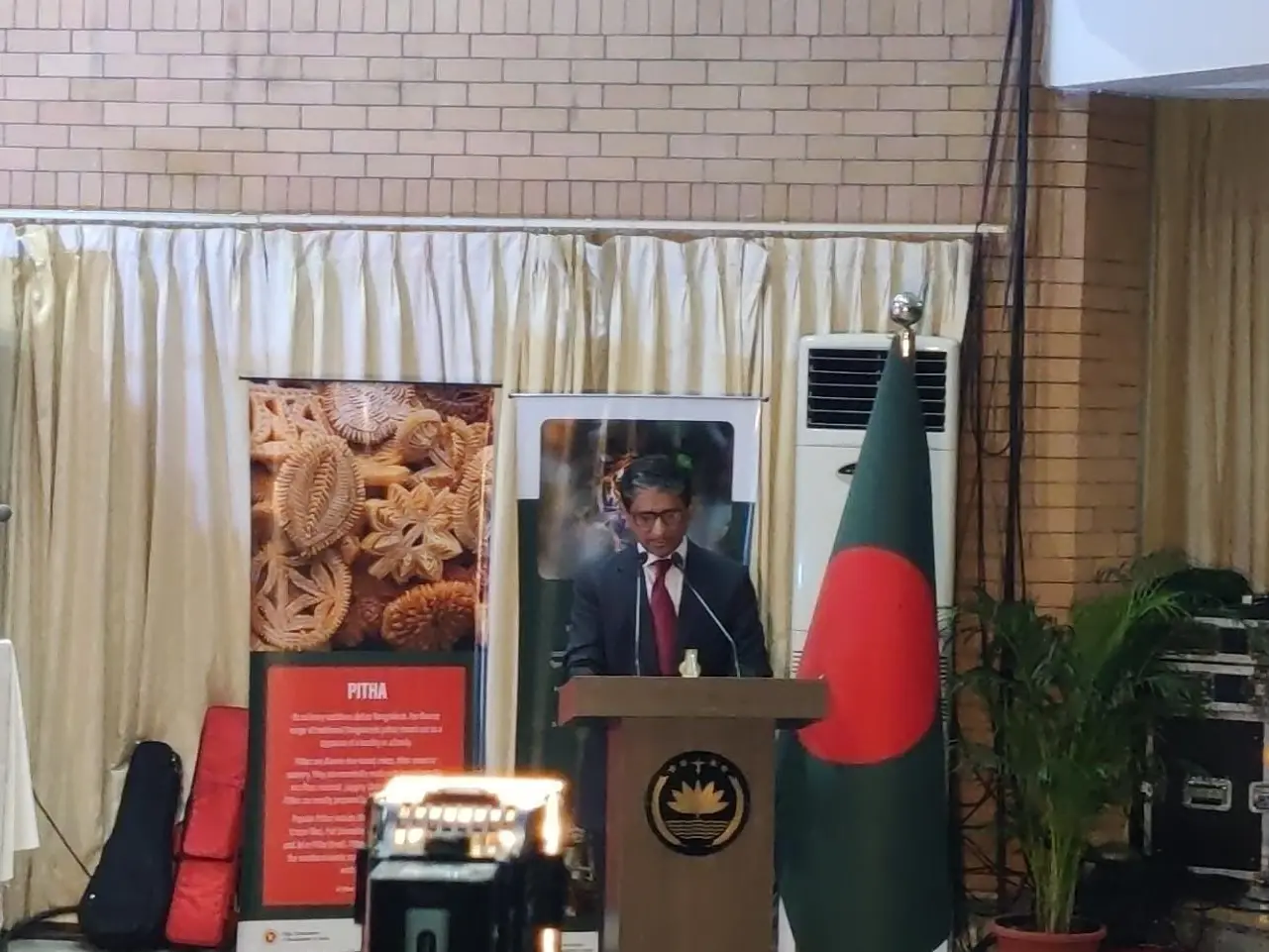
&imwidth=800&imheight=600&format=webp&quality=medium "Bangladesh envoy Hamidullah pays tribute to Indian soldiers on Victory Day; says both countries have 'organic relationship'")
Bangladesh's High Commissioner to India, Riaz Hamidullah, has called for deeper mutual trust and cooperation between the two nations, emphasising their shared history and interdependence, during the 54th Victory Day celebrations at the high commission in New Delhi. In his address, Hamidullah highlighted the enduring bonds forged in 1971, stating, "As people in Bangladesh and India share culture and contiguous geography, more so shared agro-ecology, securing peace, stability, prosperity of both the people remains in our shared interests."
He described bilateral relations as "deep and multi-layered," adding, “The organic relationship that our two people share merits going beyond numbers, where interactions are based on dignity, shared values, mutual trust and respect. Let's embrace each other in shaping and advancing a framework of trust and understanding where engagements flourish for the mutual benefit of both peoples.” The remarks come against a backdrop of recent tensions between the 2 countries, on several counts, from former Bangladesh PM Hasina's presence in India, or Bangladeshi politicians making anti-India remarks.
Hamidullah paid homage to the sacrifices of the Liberation War, saying: "We are here to celebrate, to remember, to acknowledge, and reflect on the future. Our tribute to all the Freedom Fighters (muktijoddha), including Birangonas (female freedom fighters)." He recalled atrocities, including the cold-blooded murder of over 1,100 intellectuals and violations against women, while honouring the 1,668 Indian soldiers who died on Bangladeshi soil. Cultural figures like Pandit Ravi Shankar and Lata Mangeshkar were praised for their support, alongside Indian military leaders such as Lt Gen Jacob and Lt Gen Aurora.

Personally reflecting on childhood inspirations, Hamidullah shared stories of three posthumously decorated captains: Captain Aftabul Qader, Captain Salahuddin Momtaz, and Captain Mohiuddin Jahangir. He described the Battle of Kamalpur as a turning point. These unsung heroes, he said, exemplified the "people's war" against a larger force, crediting young Bengali officers and ordinary peasants for the victory.
Bangladesh's 1971 War of Liberation began when Pakistani forces launched Operation Searchlight on 25 March, cracking down on calls for independence in East Pakistan with widespread mass killings and atrocities. The nine-month conflict saw Pakistani troops commit systematic violence. Estimates of deaths range from 300,000 to three million, according to Bangladeshi authorities and independent researchers, ending with Pakistan's surrender on 16 December 1971.
