Amid rising fuel prices, France to convene G7 leaders virtual meet on energy supplies; Macron speaks to Trump, Carney

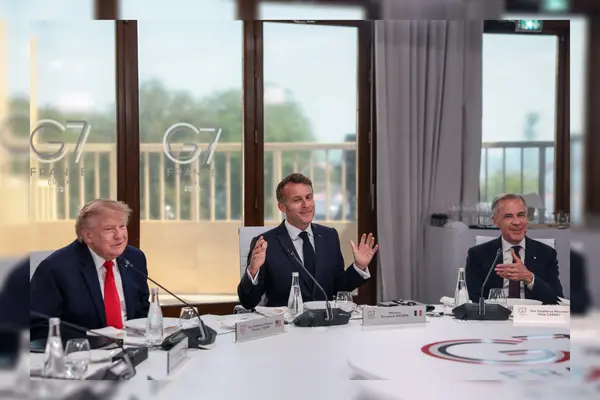
US President Donald Trump (L) France's President Emmanuel Macron (C) and Canada’s Prime Minister Mark Carney (R) attend a work lunch as part of the G7 summit, in Evian, eastern France, on June 16, 2026. Photograph: (AFP)
The French initiative sits against a wider warning from India that energy pressures form only one part of a broader shock. External Affairs Minister S. Jaishankar has repeatedly described a “4F” crisis of fuel, food, fertiliser and finance.
French President Emmanuel Macron has urged the world’s leading economies to act together to ease a surge in fuel prices, after overnight talks with US President Donald Trump and Canadian Prime Minister Mark Carney.
The French leadership stressed the need for coordinated action to tackle rising fuel costs and to ensure the global availability of refined products. France, which holds the G7 presidency this year, is working with the International Energy Agency and intends to convene a videoconference of G7 leaders “as soon as possible”, according to French diplomatic sources, to coordinate measures on crude oil and refined-product supplies, both among member states and more widely. Parallel discussions are under way at the European level.
Macron underlined that G7 countries shared a "common interest in acting in concert and without export restrictions". The appeal comes as Washington presses European governments to release strategic diesel stocks. US Treasury Secretary Scott Bessent has called on partners to accelerate deliveries and make additional supplies available immediately.
The price spike has been linked to disruption following the US-Israel attack on Iran, which has tightened markets for refined products and pushed costs higher for consumers and industry. France has floated the idea of a substantial release of crude and diesel from European reserves, though the proposal remains under technical assessment, according to media reports. EU energy officials met in Brussels earlier today to seek a common position.
The French initiative sits against a wider warning from India that energy pressures form only one part of a broader shock. External Affairs Minister S. Jaishankar has repeatedly described a “4F” crisis of fuel, food, fertiliser and finance. Speaking at the Partners for Multilateralism summit on the sidelines of the UN General Assembly in New York last month, he said the crisis “cannot be left to itself” and called for frameworks and guardrails, alongside efforts to de-risk supply chains vulnerable to chokepoints.
In subsequent remarks in New York, Jaishankar warned of a possible major food crisis in the coming months. He pointed to constraints on grain shipments from major exporters, significant fertiliser shortages linked to the wars in Ukraine and West Asia, including disruption around the Strait of Hormuz, and the added risk of a strong El Niño. Higher financing costs, he argued, compound the problem for the Global South as capital shifts toward safer markets during conflict.
