Air pollution becomes second leading risk factor of deaths globally, finds study

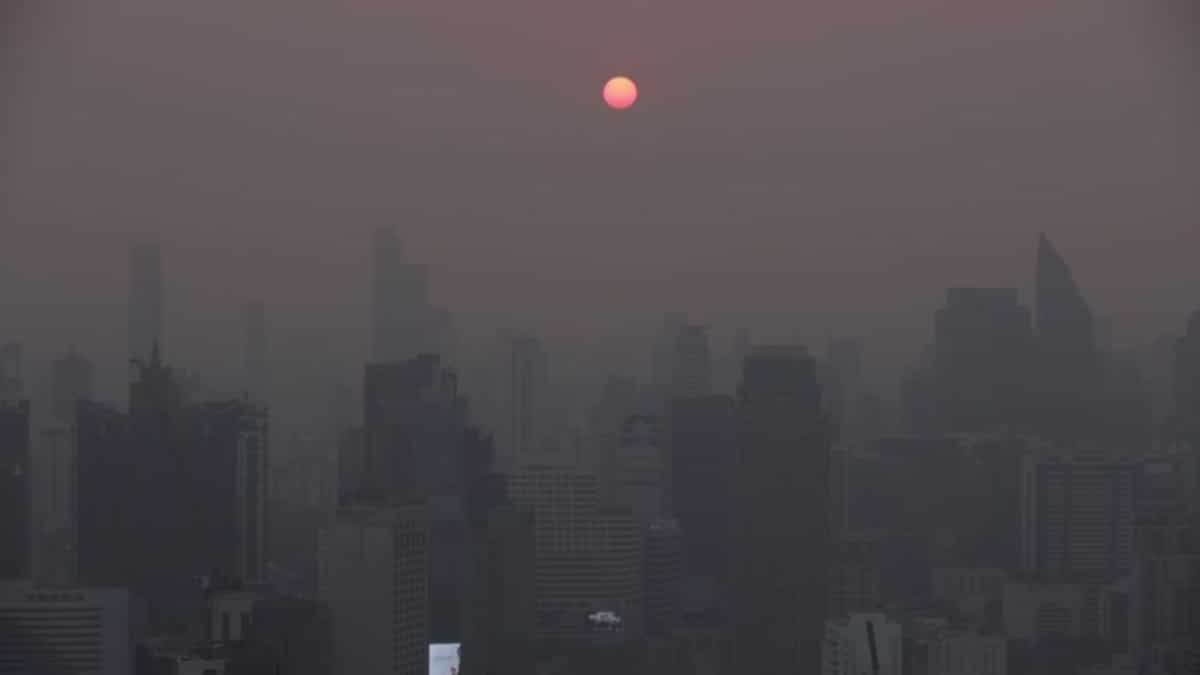
Air pollution
Nearly 2,000 children under the age of five are dying due to air pollution every day, said a report released by a US-based independent nonprofit research organisationon Wednesday (Jun 19). The recent study also found that polluted air is not only a second-leading risk factor for the deaths of children but also the general global population.
What did the report find?
According to the report titled State of Global Air (SoGA), air pollution accounted for 8.1 million deaths globally in 2021.
The study conducted by the US-based Health Effects Institute (HEI) also noted that it is not just the outdoor fine particulate matter which is affecting our health but also the indoor air pollution.
Children under five are said to be particularly vulnerable, with health effects linked to air pollution including premature birth, low birth weight, asthma and lung diseases, according to the study.
Exposure to air pollution was linked to more than 700,000 deaths of children under the age of five, in 2021, second only to malnutrition, said the report produced this year in partnership with UNICEF.
The study also found that a staggering 500,000 deaths of children, mostly in Asia and Africa, were linked to household air pollution because of cooking indoors with polluting fuels.
The report noted that some of the greatest health impacts of air pollution were seen in children, with them being “uniquely vulnerable” to the damage it causes as it can start in the womb and lead to health effects that can last a lifetime.
“Despite progress in maternal and child health, every day almost 2000 children under five years die because of health impacts linked to air pollution,” said UNICEF Deputy Executive Director Kitty van der Heijden, in a statement.
A global concern
The study which is based on data from more than 200 countries and territories across the world said that nearly every person on Earth breathes unhealthy levels of air pollution every day and it adversely affects our health.
“This new report offers a stark reminder of the significant impacts air pollution has on human health, with far too much of the burden borne by young children, older populations, and low- and middle-income countries,” said Dr Pallavi Pant, head of global health at HEI and the lead author of the report, in a statement.
She also called on cities and countries to consider “air quality and air pollution as high-risk factors when developing health policies and other noncommunicable disease prevention and control programs.”
PM2.5 particles have been attributedto more than 90 per cent (7.8 million) of air pollution-linked deaths across the world.
The PM2.5 particles, which are less than 2.5 micrometres in diameter, are small enough to enter the lungs and stay there and can also enter the bloodstream. These tiny particles can lead to diseases like heart disease, stroke, diabetes, lung cancer, and COPD, in adults.
Air pollution has become the second-leading risk factor for death across the world, second only to blood pressure and is followed by excessive tobacco use, according to the report.
(With inputs from agencies)