A new blood test can detect cancer four years before symptoms show

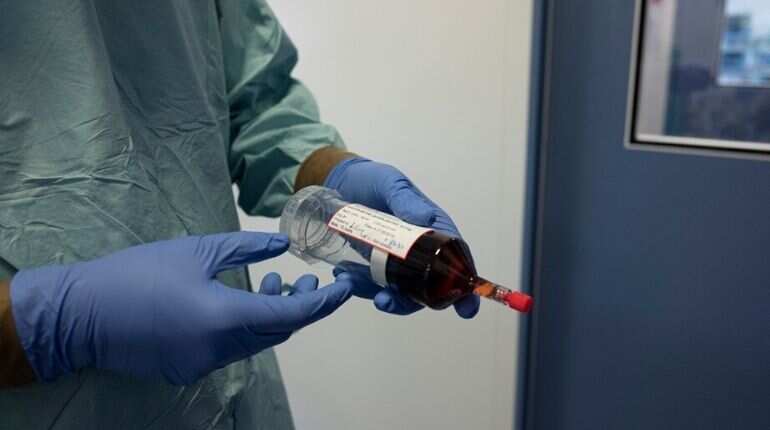
A surgeon holds a syringe prior to administering chemotherapy on June 7, 2019, at the Georges-Francois Leclerc centre in Dijon, central-eastern France, as he treats a patient with a pressurised intraperitoneal aerosol chemotherapy (PIPAC) to reduce perito
One of the deadliest diseases in the world - cancer may be now detectable up to four years before someone shows symptoms, a new study says.
The blood test, called PanSeer can detect cancer in 95 per cent people who show no symptoms but inevitably develop the disease.
The research is not a predictive test, but rather simply picks up signs of cancer in the body before they become pervasive enough to cause apparent changes in the body, which is mostly when people get diagnosed with the disease. This early detection can prevent many deaths and complications by taking earlysteps to bring it under control.
The researchers who contributed belong to various schools of Fudan University -State Key Laboratory of Genetic Engineering and Collaborative Innovation Center for Genetics and Development,Taizhou Institute of Health Sciences, and theHuman Phenome Institute.
"Non-invasive"
The study was published in the journal Nature Communications and the test it has developed is a “DNA methylation-based” non-invasive blood test.
Even though earlier studies have claimed to have achieved the same, this particular test is peculiar for it diagnoses the cancer even before its symptoms become apparent in patients.
The researchers looked for methyl groups in the DNA, which are one of the significant signs of tumour. They then picked up small strands of DNA to ascertain the presence of cancer.
Employing technology based on artificial intelligence, they developed a system to determine whether any DNA came from tumours.
Early diagnosis: Early treatment
They collected 414 plasma samples from people in China between 2007-2014.
Out of these cancer free samples, 191 came out with symptoms of stomach, liver, lung, colorectal cancers, after which they were diagnosed.
The team based in China also collected sampled from 223 patients that had already been diagnosed with some form of cancer.
PanSeer was able to detect cancer in 88 per cent of the participants who were already diagnosed, while it logged in 95 per cent cancer cases in people who had not shown any symptoms or had not been diagnosed with any cancer.
The test may be advanced, but it cannot pick up what type of cancer one has.