
&imwidth=800&imheight=600&format=webp&quality=medium "'Pak steeped in terrorism': India slams Pakistan after Ishaq Dar attempts to rake up Op Sindoor, Kashmir at UNSC")
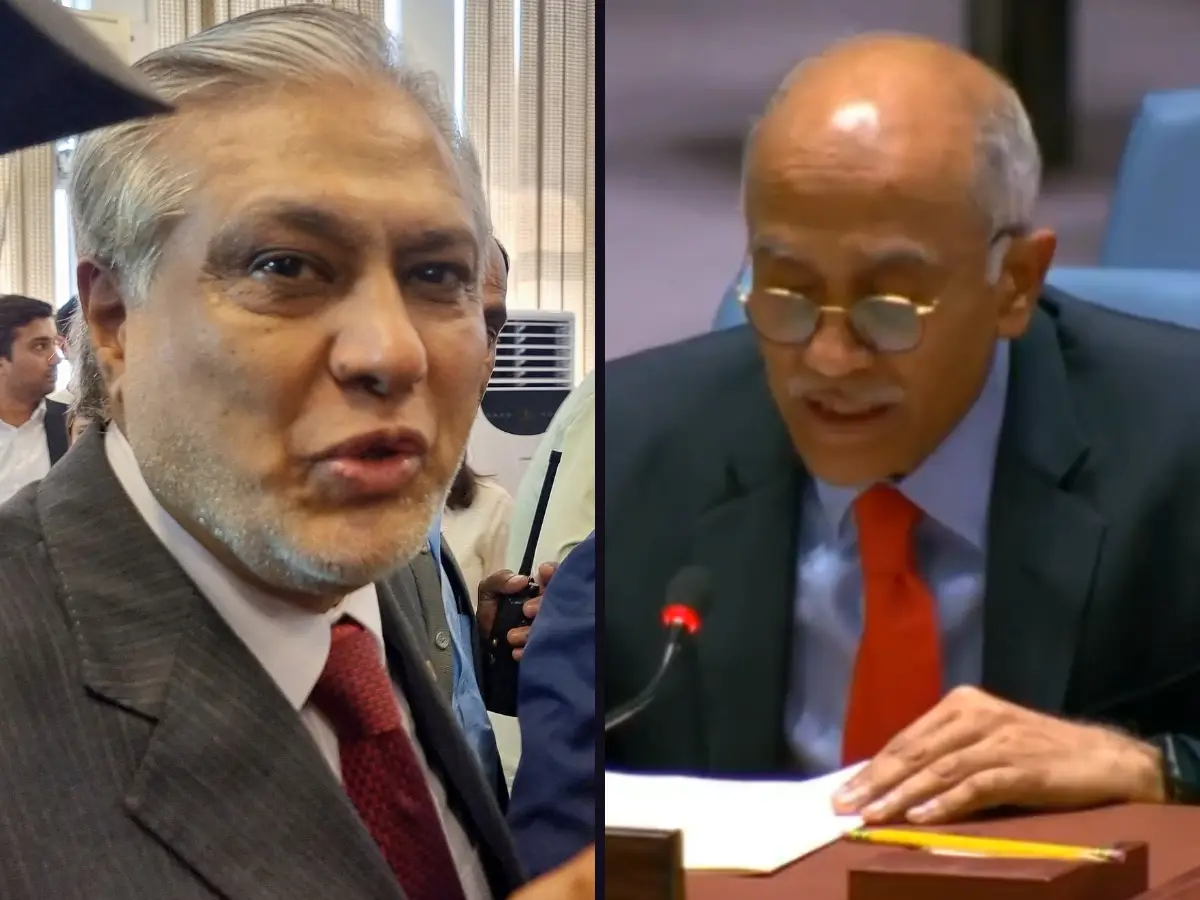
India on Tuesday (July 23) responded to Pakistani Foreign Minister Ishaq Dar's remarks at the United Nations Security Council (UNSC), slamming Islamabad's long-standing support for terrorism. India’s Permanent Representative to the UN, Ambassador P Harish, said Pakistan is “steeped in fanaticism and terrorism and a serial borrower from the IMF.” Defending Operation Sindoor, India cited the Security Council's April 25 statement on holding sponsors of terrorism accountable. India's response came after Ishaq Dar presided over the Council's open debate and brought up Kashmir as well as India's holding the Indus Water Treaty in abeyance after the Pahalgam terror attack.
India on Operation Sindoor
Operation Sindoor targeting terrorist camps in Pakistan and Pakistan-occupied Kashmir (PoK) “was focused, measured, and non-escalatory in nature”, he said. Harish warned of terrorism changing the nature of international conflicts. “The nature of conflicts has transformed, with a proliferation of non-state actors, often propped up as proxies by state actors; and cross-border funding, arms trafficking, training of terrorists, and spread of radical ideologies, facilitated by modern digital and communication technologies”, he said.

India calls Pakistan 'steeped in' terrorism'
Ambassador P Harish said, "On one hand there is India, which is a matured Democracy, a surging economy, a pluralistic and inclusive society. At the other extreme is Pakistan, steeped in fanaticism and terrorism, and a serial borrower from the IMF. As we debate promoting International Peace and Security, it is essential to recognise that there are some fundamental principles which need to be universally respected, one of which is Zero Tolerance for Terrorism. It ill behoves the member of the Council to offer homilies while indulging in practices that are unacceptable to the international community"
What did Ishaq Dar say?
Ishaq Dar presided over an open debate on “Promoting International Peace and Security through Multilateralism and the Peaceful Settlement of Disputes,” and said, “Today’s debate is both timely and critical. Multilateralism is not merely a diplomatic convenience; it is the need of the hour. The peaceful settlement of disputes is not just a principle—it is the lifeline of global stability.” Repeating its old claims about the Indus Waters Treaty, Dar said, "It is most unfortunate and regrettable that India has chosen to illegally and unilaterally hold this treaty in abeyance on baseless grounds, with the intent of choking water flow to 240 million Pakistanis who depend on it for their livelihood and survival,” he alleged.
“It is most unfortunate and regrettable that India has chosen to illegally and unilaterally hold this treaty in abeyance on baseless grounds, with the intent of choking water flow to 240 million Pakistanis who depend on it for their livelihood and survival,” he alleged.

