

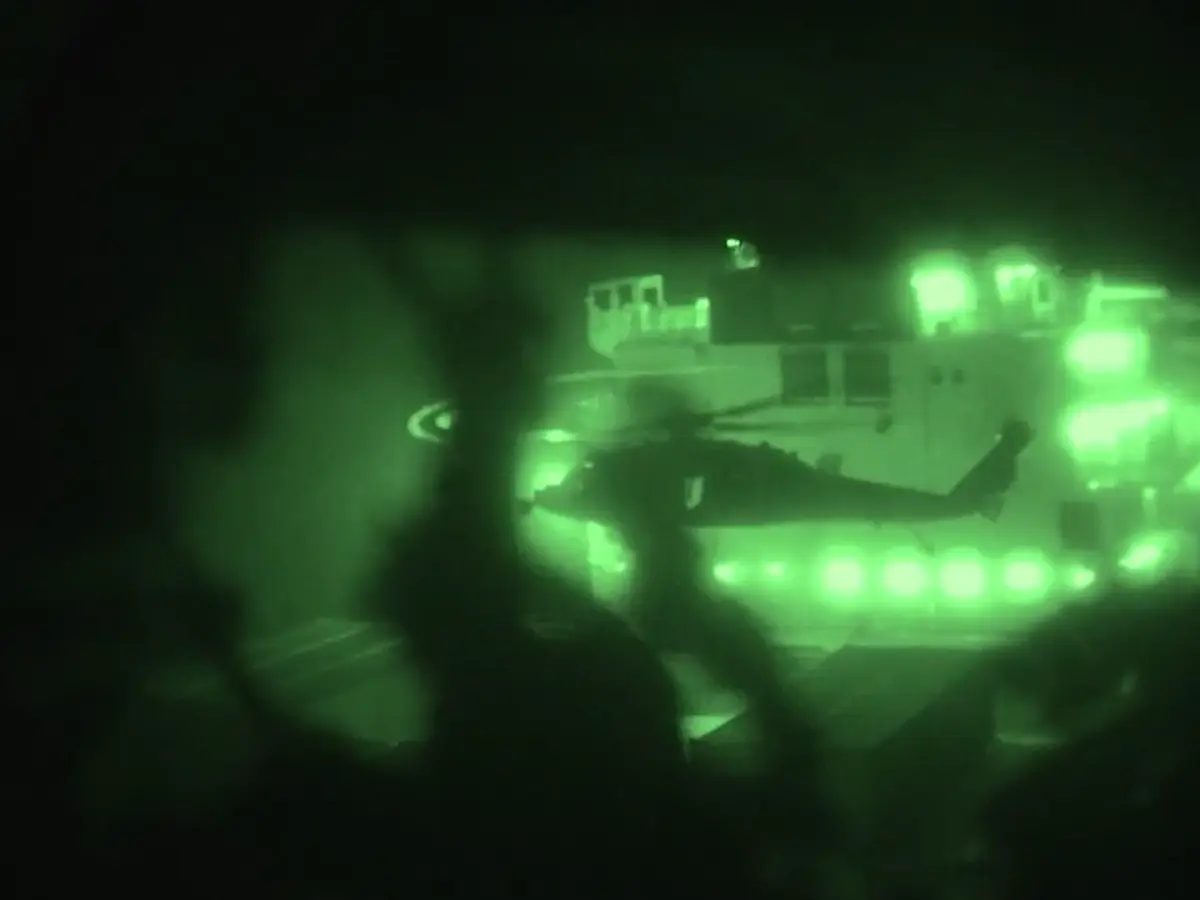
&imwidth=800&imheight=600&format=webp&quality=medium "'If you attempt to run...': CENTCOM shares video of US troops seizing Iranian vessel M/V Touska | WATCH")
The United States Central Command shared a video on Monday (Apr 20) of American troops seizing an Iranian-flagged container ship in the Gulf of Oman. The crew was warned that if they "attempt to run the blockade," they will be subjected to "compliance of force". After the crew ignored repeated warnings to comply with Washington's naval blockade of Iranian ports, the ship, believed to be M/V Touska, was seized. Following the seizure, Iran has vowed retaliation and accused Washington of "armed piracy".
What we know about M/V Toushka
M/V Touska, as per reports, belongs to the Islamic Republic of Iran Shipping Lines, a group sanctioned by the US since 2019. According to Trump, the USS Spruance, a guided-missile destroyer, gave the ship fair warning to stop before the US Navy disabled it by "blowing a hole in the engine room." US Marines then boarded and seized the vessel. Iran said the ship had been travelling from China and claimed its military was prepared to confront US forces over the incident, but was constrained by the presence of crew members' families on board.
27 ships forced to turn back
US Central Command has released a video of US troops engaging in a separate blockade enforcement interaction. While they don't specify the ship, the interaction is believed to be with the M/V Touska crew. "This is US warship 115 entering area of a military blockade... If you attempt to run the blockade, we will compel compliance by force."
CENTCOM also revealed that US forces have now directed 27 vessels in total to turn around or return to Iranian ports since the blockade began.
Will the US end its blockade?
Trump, speaking Monday, showed no signs of backing down. The blockade would remain in place until a deal is finalised, he said, adding that he was "under no pressure" to move faster. The two-week ceasefire announced on April 7 expires on Wednesday, and another round of talks is expected in Islamabad this week, though Iran has threatened to boycott the negotiations and accused Washington of violating the ceasefire terms through the blockade itself.
Tehran reopened the Strait of Hormuz last week following a separate Israel-Lebanon ceasefire, only to immediately threaten to close it again as the US blockade continued. Iranian parliamentary speaker Mohammad Bagher Ghalibaf was unambiguous: "With the continuation of the blockade, the Strait of Hormuz will not remain open." The seizure of the Touska has made that threat more pointed.
Disclaimer: WION takes utmost care to accurately and responsibly report ongoing conflicts in West Asia involving Israel, Iran, US, Gulf nations and non-state actors like Hezbollah, Hamas, Houthis, Islamic State, and others. Claims and counterclaims, disinformation and misinformation are being made online and offline. Given this context, WION cannot independently verify the authenticity of all statements, social media posts, photos and videos.

