
&imwidth=800&imheight=600&format=webp&quality=medium "‘Aid trucks enter Gaza, but supplies are undelivered’: Gaza is starving. Israel blames the UN. The UN blames Israel. What’s really happening?")
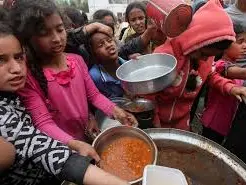
Israel and the United Nations have publicly blamed each other for the worsening hunger crisis in Gaza, with both sides defending their roles in aid delivery and pointing fingers over who is really responsible for the suffering of civilians.
In a statement posted on X, Israel’s Foreign Ministry wrote on Thursday (July 24), “Today, the IDF invited dozens of international journalists to the Kerem Shalom crossing inside Gaza, to see for themselves. Hundreds of aid trucks have entered Gaza with Israel’s approval, but the supplies are standing idle, undelivered. The reason? The UN refuses to distribute the aid. Hamas and the UN prevent the aid to reach the civilians in Gaza. The world deserves to know the truth.”

According to Israel, large quantities of aid have been delivered to the Gazan side of the border, but remain untouched because the UN is failing to collect or distribute them. The country has repeatedly said it is allowing enough supplies in.
How did the UN respond?
UN spokesperson Stephane Dujarric earlier rejected Israel’s version of events and pointed to major obstacles caused by Israel itself. “The Kerem Shalom Crossing is not a McDonald’s drive-through where we just pull up and pick up what we’ve ordered,” Dujarric said during a press briefing.
Trending Stories
He explained that UN staff need a series of approvals from Israeli authorities just to approach the crossing and that this is made more complicated by ongoing military activity, restricted access and a slow, complex handover process. “There are tremendous bureaucratic impediments. There are tremendous security impediments, and frankly, there’s a lack of willingness to allow us to do our work,” he added.
Why isn’t aid getting through to Gaza?
Getting aid into Gaza is far from simple. Even if trucks manage to enter through heavily guarded crossings, humanitarian groups say Israeli restrictions make it almost impossible to move those supplies further inside the territory. Aid organisations argue there is no shortage of available food and medicine, the problem is distribution. According to them, trucks full of goods are stuck in warehouses, while thousands of Gazans face extreme hunger just a short distance away. Earlier this year, Israel blocked aid from entering Gaza for 11 weeks, saying the move was aimed at pressuring Hamas into releasing hostages.
In response to growing criticism of the UN’s handling of aid, Israel and the US launched a controversial initiative called the Gaza Humanitarian Foundation (GHF). It was set up to bypass traditional UN channels and use private security contractors to distribute aid from Israeli-controlled zones.
Israel and the US say this method prevents Hamas from seizing aid. But human rights groups and aid organisations have condemned the scheme, accusing Israeli forces of using violence during distributions. The UN says over 1,000 Palestinians have been killed by Israeli troops while trying to collect food under the GHF programme.
How bad is the situation on the ground?
According to the World Health Organisation, a large part of Gaza’s population is now starving. International agencies continue to warn of catastrophic levels of hunger and disease as the blockade drags on and basic supplies fail to reach the people whoneedthemmost.
