Who is Nicolas Maduro? Venezuelan president targeted by the Trump administration

&imwidth=600&imheight=450&format=webp&quality=medium "Who is Nicolas Maduro? Venezuelan president targeted by the Trump administration")
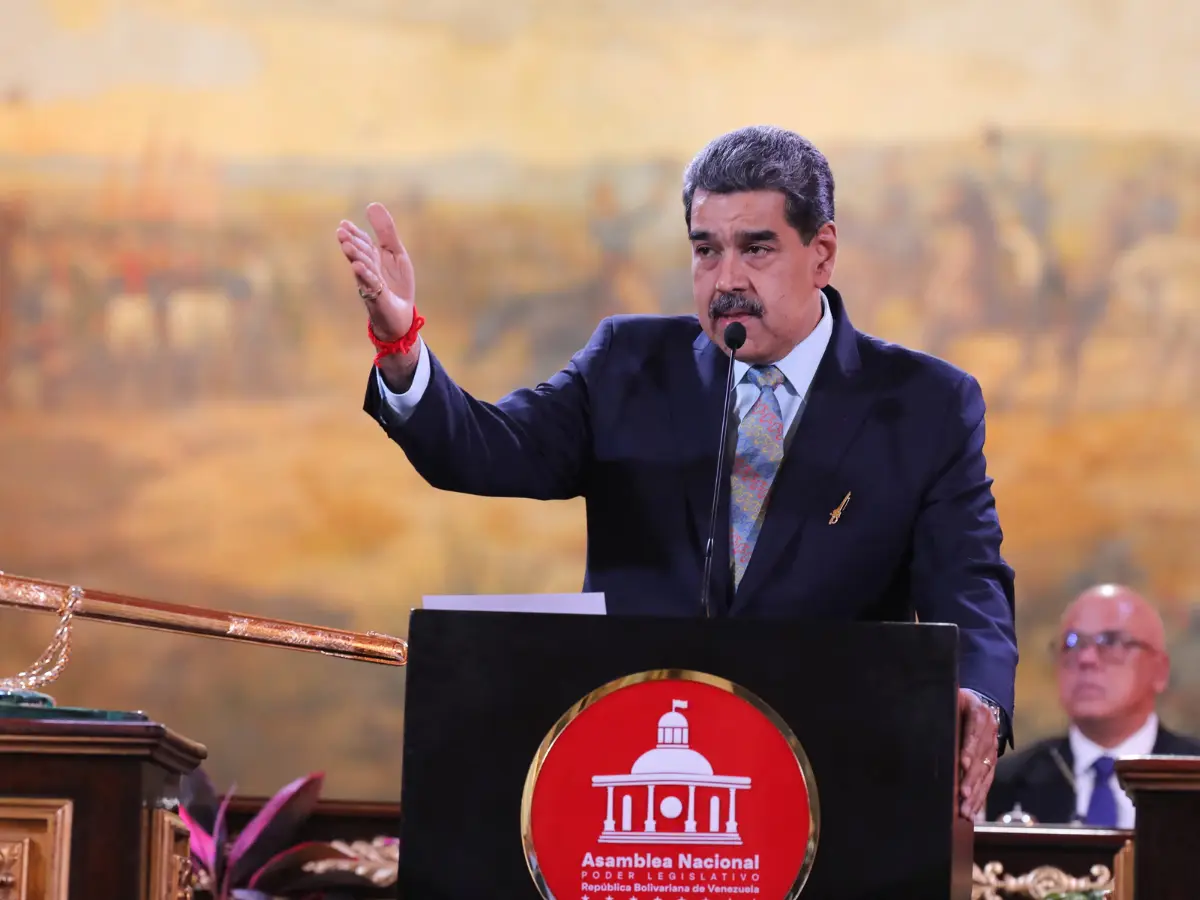
Venezuelan President Nicolas Maduro Photograph: (Reuters)
Venezuelan President Nicolás Maduro has a reward of $50 million on him. This will be rewarded to anyone who gives information to the US government about Maduro's whereabouts. But here's the story of why he is wanted in the US
US President Donald Trump on Tuesday (Aug 2) announced that United States forces had bombed a drug-carrying vessel in the southern Caribbean, after it departed from Venezuela, killing eleven on-board. This comes almost a month after the United States announced a whopping $50 million reward for the arrest of Venezuelan President Nicolás Maduro. The Venezuelan President already had a bounty of $25 million on him, which has now been increased to $50 million, with the US calling him the biggest drug trafficker. He was indicted in Manhattan federal court in 2020, during the first Trump's presidency and at that time, the US offered a $15 million reward for his arrest. When Joe Biden became the US president, he increased this amount to $25 million. While Maduro continues to claim that he is not involved in drug trafficking, why do American leaders want him to face the US justice system, and who is he?
Who is Nicolás Maduro?
Nicolás Maduro is the president of Venezuela, who first came to power in 2013. He was a key figure in the country’s socialist political movement known as Chavismo, named after his predecessor and mentor, Hugo Chávez. Born on November 23, 1962, in Caracas, Maduro came from a working-class background and began his career as a bus driver before entering politics through union activism. He rose within the ranks of the United Socialist Party of Venezuela (PSUV) to the top position that he holds today. Maduro was chosen as the third president of the National Assembly from 2005 to 2006, he became the 24th vice president and served from 2012 to 2013 and also served as the Minister of Foreign Affairs from 2006 to 2012. When Chávez died of cancer in 2013, Maduro was named his successor and narrowly won the presidential election later that year.
Maduro's presidency has been marked by deep political and economic crises. Under his rule, Venezuela experienced one of the worst economic collapses in modern history, characterised by hyperinflation, widespread poverty, food and medicine shortages, and mass migration. His administration has been widely accused of authoritarianism, electoral fraud, human rights abuses, and suppressing political opposition. Despite these allegations, Maduro has remained in power, allegedly due to his control over the military and key institutions.
Why is Nicolás Maduro wanted in the US?
While countries like the United States and members of the European Union have questioned the legitimacy of his leadership and have accused him of rigging the 2018 and 2025 elections, other nations such as Russia, China, Iran, and Cuba support him. The US calls him the biggest drug trafficker. The story begins back in 2016 when two nephews of Maduro’s wife Cilia Flores - Efraín Antonio Campo Flores and Francisco Flores de Freitas - were convicted in a US court for conspiracy to import cocaine. It was alleged that some of the drug trafficking proceeds helped fund Maduro’s 2013 presidential campaign and possibly the 2015 parliamentary elections. The nephews reportedly used a presidential airport terminal regularly, highlighting their close connections to the Venezuelan government. After their arrest by the US Drug Enforcement Administration in 2015, Maduro condemned the operation as an imperialist attack.
High-ranking Venezuelan officials, including Diosdado Cabello and former Vice President Tareck El Aissami, have been sanctioned by the US for involvement in drug trafficking, corruption, and links to terrorist groups like Hezbollah and Iran’s Quds Force. In 2018, the US Treasury accused Cabello of directing drug trafficking activities and profiting from corruption alongside Maduro. In March 2020, the US Department of Justice charged Maduro and other Venezuelan and Colombian officials with “narco-terrorism,” alleging they orchestrated cocaine shipments to America to harm public health. Initially, it offered a reward of $15 million for information leading to Maduro’s arrest. His nephews, meanwhile, were released in 2022 as part of a prisoner exchange.

