

&imwidth=800&imheight=600&format=webp&quality=medium "WATCH: Family on balcony of viral green house survives terrifying Nepal floods")
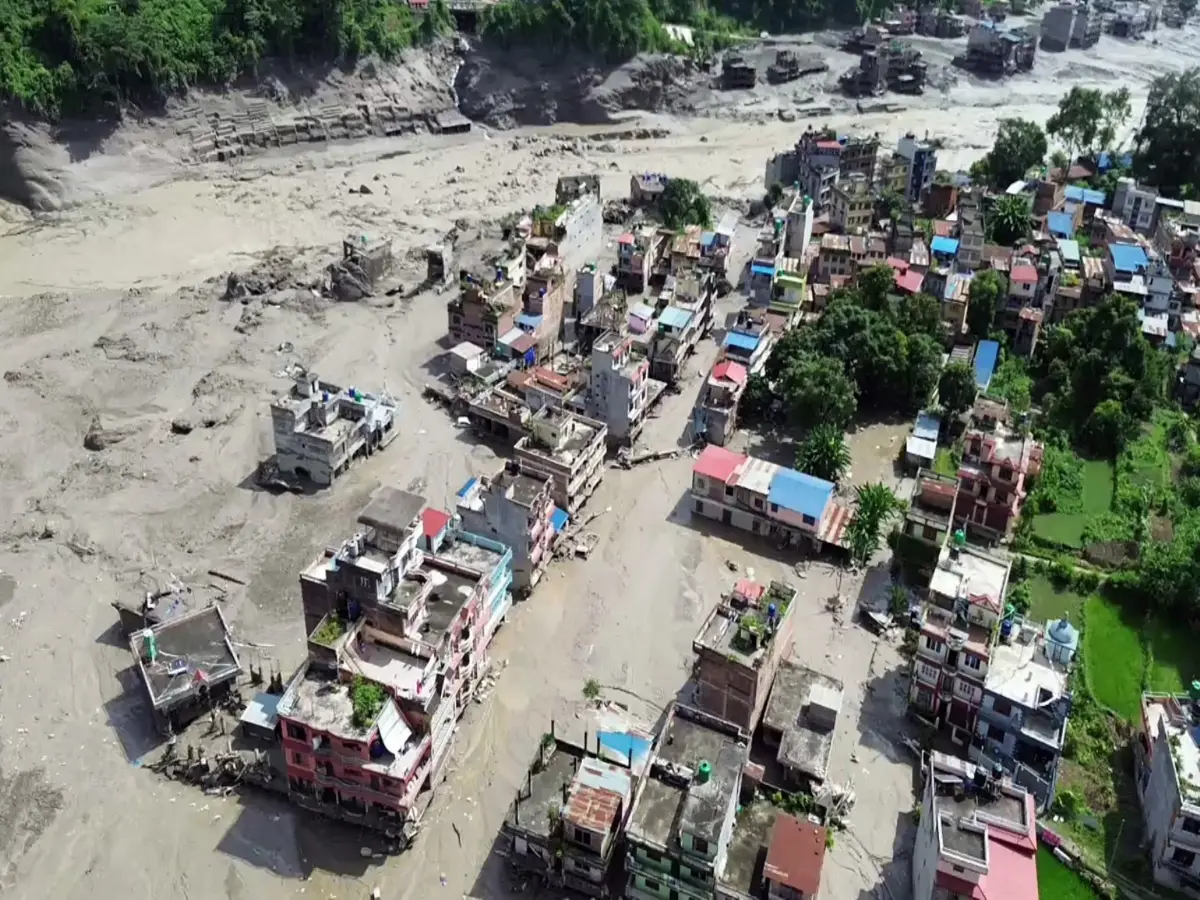
Nepal flash floods have left a trail of destruction behind. The death toll has reached 579, while hundreds of them are missing, including foreign tourists. The infrastructure damage in the region is also huge. At least 19 motorable bridges and 40 kilometers of major roads have been severely damaged or washed away.
Several concrete buildings, local markets, and residential villages along the Bhotekoshi and Bhote Koshi river basins in districts like Rasuwa, Nuwakot, Dhading, and Chitwan have been swept away by the flash floods.
The scale of destruction was captured on cameras and widely shared on social media platforms. One video that has gone viral is about the escape of a family from the devastating floods.
In the two-minute video posted on X one can see a two-storey structure painted in light green standing tall amid raging floodwaters. At least three members of a family can also be seen standing in the balcony of the house as flood waters gush with strong force.
As other structures around it collapsed, the building remained standing with relatively little visible damage.
What caused the devastating Nepal floods?
Preliminary information suggest that a magnitude 4.4 earthquake in Tibetan territory may have triggered an avalanche that led to the devastating flash flood in Nepal’s Bhote Koshi River.
According to the US Geological Survey (USGS), the earthquake struck Tibetan territory at around 8:37 am, approximately 47 kilometres north of Gosainkunda.
While, Nepal’s National Disaster Risk Reduction and Management Authority say that a glacier-inclusive flood occurred in the Lhende River due to a snow-rock landslide on the Nepal-China border about 20 kilometers northeast of the Nepal-China Rasuwagadhi border crossing.
As sequence of events is still being assessed, authorities and experts are investigating whether the earthquake in the Tibetan territory had any role to play in the avalanche that led to the sudden release of water in Bhotekoshi River.
