VIDEO: 30 foot meteotsunami slams into Argentina as beachgoers flee in panic: 'Like a wall'

&imwidth=600&imheight=450&format=webp&quality=medium "VIDEO: 30 foot meteotsunami slams into Argentina as beachgoers flee in panic: 'Like a wall'")
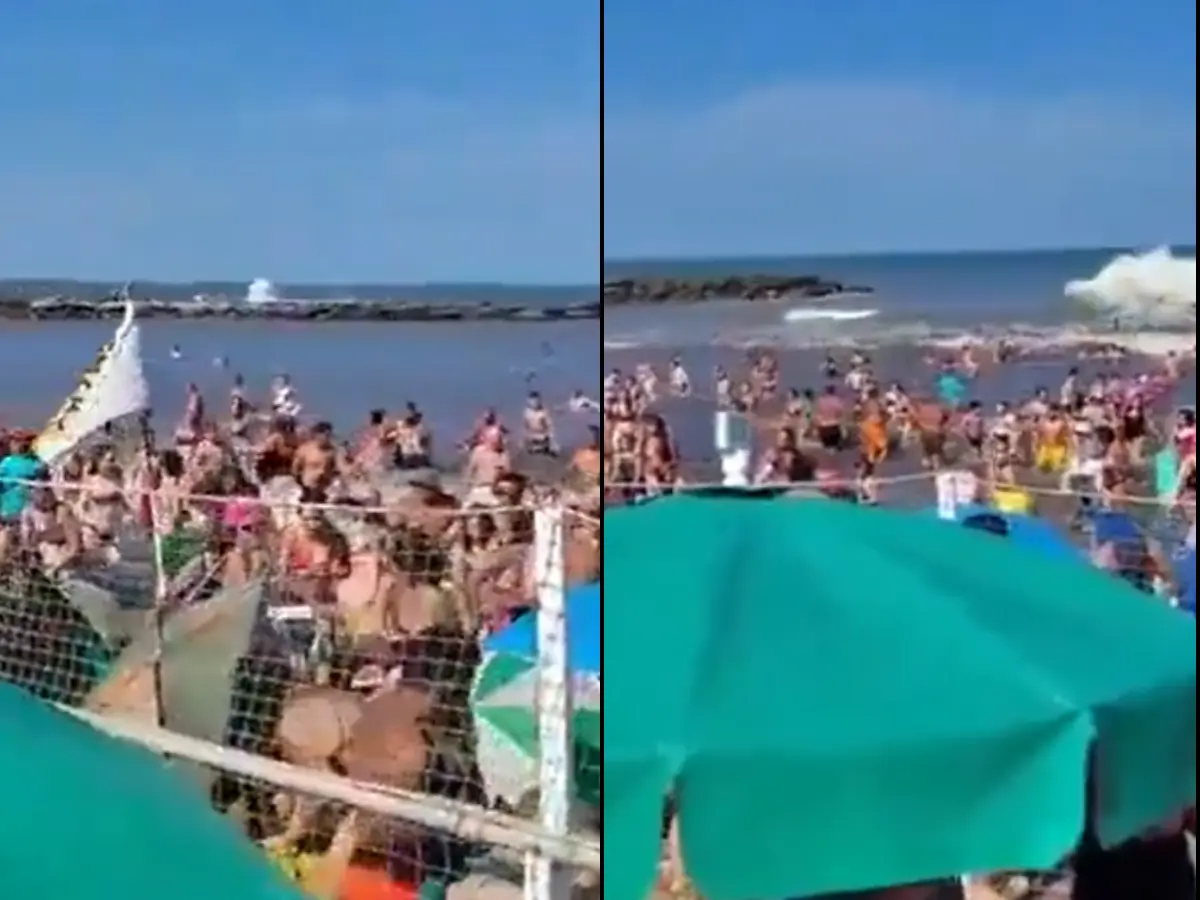
A meteotsunami was recorded in Argentina on Monday. Photograph: (X)
Argentina tsunami: A meteotsunami shocked beachgoers in Argentina on Monday when freak waves as high as 30 feet slammed onto the shores. The incident killed one person, while another had a heart attack. What is a meteotsunami?
Beachgoers in Argentina were slammed by a freak "meteotsunami" that killed and injured dozens more. Videos from the beach show panicked people packing up and running, although the footage of the actual wave is not available. The incident happened on Monday in the coastal town of Santa Clara del Mar. The water surged suddenly, forcing people out of the sea and triggering chaos on the shore, where those lounging around suddenly got up and started leaving. According to several beachgoers, the meteotsunami wave rose around a whopping 30 feet before slamming into the people. One person died in the incident, 29-year-old Yair Amir Manno Núñez, who was on vacation with his girlfriend. He was swept into the waters and crashed head-on into a rock. Another man suffered a heart attack after the waves pulled him in, Diario de Cuyo reported.
What is a meteotsunami?
After the waves calmed, lifeguards rushed to rescue Núñez. They immediately took him to the hospital at Santa Clara del Mar. Initial medical tests showed that he had been struck on the head, which triggered a fatal cardiorespiratory arrest. The freak wave is a rare phenomenon in the region, Fabián García, head of Civil Defence for the province of Buenos Aires, said. He added that it is hard to predict, so they cannot be sure whether it will happen again. Typically, an ocean quake triggers a tsunami, but a meteo tsunami has nothing to do with earthquakes. These freak waves are triggered due to sudden atmospheric pressure drops and strong winds. It hits suddenly, but before that, the water draws back and then rises suddenly and quickly. Witnesses on the Argentine beach reported seeing a similar occurrence. A beachgoer said that he saw a "towering wave" that was "like a wall", and it crashed ashore.
Lifeguard union head Nahuel Nardone said the waves reached "unimaginable heights". Another lifeguard told the Argentinian newspaper that he saw a "black whirlpool" unlike anything he had ever seen. It also swept away umbrellas, bags, towels and other belongings of those at the beach. Since the water behaves just like it would during a tsunami, it is also known as a "mini tsunami". Scientists are still trying to learn more about meteotsunamis. They occur in some places and have been recorded in the Great Lakes, Gulf of Mexico, Atlantic Coast, Mediterranean and Adriatic Seas.

