

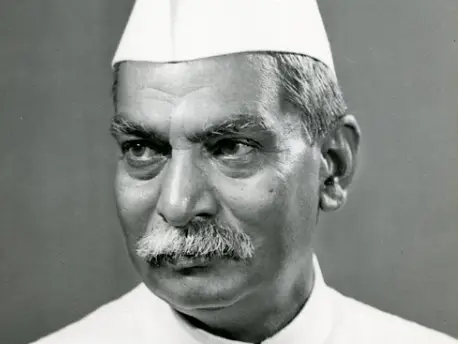
&imwidth=800&imheight=600&format=webp&quality=medium "Rajendra Prasad birth anniversary: Discover 10 interesting facts about India’s first President")
Dr Rajendra Prasad was the first President of India, who served from January 26, 1950, to May 13, 1962. A lawyer-turned-freedom fighter from Ziradei (Bihar), he led the Constituent Assembly after serving as Minister for Food and Agriculture in the Interim Government, and earlier as Congress President (1934, 1939, 1947).
He was born on December 3, 1884, and studied at Calcutta and became a distinguished lawyer before joining Gandhian movements, including Non-Cooperation and Salt Satyagraha, enduring multiple imprisonments. He presided over the Constituent Assembly (1946–49) and was unanimously chosen provisional President in 1950, re-elected in 1952 and 1957, retiring in 1962 and passing away on February 28, 1963.
10 lesser-known facts about Rajendra Prasad
- Dr Rajendra Prasad is the only president in Indian history who served two full terms and stayed in office for the longest term, around 12 years.
- During his regime, the Mughal Gardens at the Rashtrapati Bhavan were opened to the public for the first time in about a month.
- He was Congress President three times: 1934 (Bombay), 1939 (after Bose’s resignation), and 1947 (after J. B. Kripalani).
- Before pursuing a career in law, Dr Rajendra Prasad was a professor of English at a college in Bihar.
- He was also involved in establishing the Bihari Students Conference in Patna College Hall in 1906.
- In 1917, he was a part of a campaign to better the plight of Bihar’s peasants, who were being oppressed by British indigo planters.
- He was an active participant in the Satyagraha Movement, Champaran Movement and the Quit India Movement and was therefore imprisoned by the British during India’s freedom struggle.
- During his imprisonment in Bankipur Jail for three years, he wrote his autobiography, Atmakatha.
- In response to Gandhi’s call for a boycott of Western educational institutions, he told his son, Mrityunjaya Prasad, to drop out of school and enrol in Bihar Vidyapeeth. The institution was developed by him and his friends on an Indian traditional model.
- Additionally, Dr Rajendra Prasad coordinated major earthquake relief in Bihar (1934), building a reputation for administrative probity and compassion.

