

&imwidth=800&imheight=600&format=webp&quality=medium "Mexico's Yucatan Peninsula is hiding world's longest underwater cave filled with ice palaces and sinkholes")
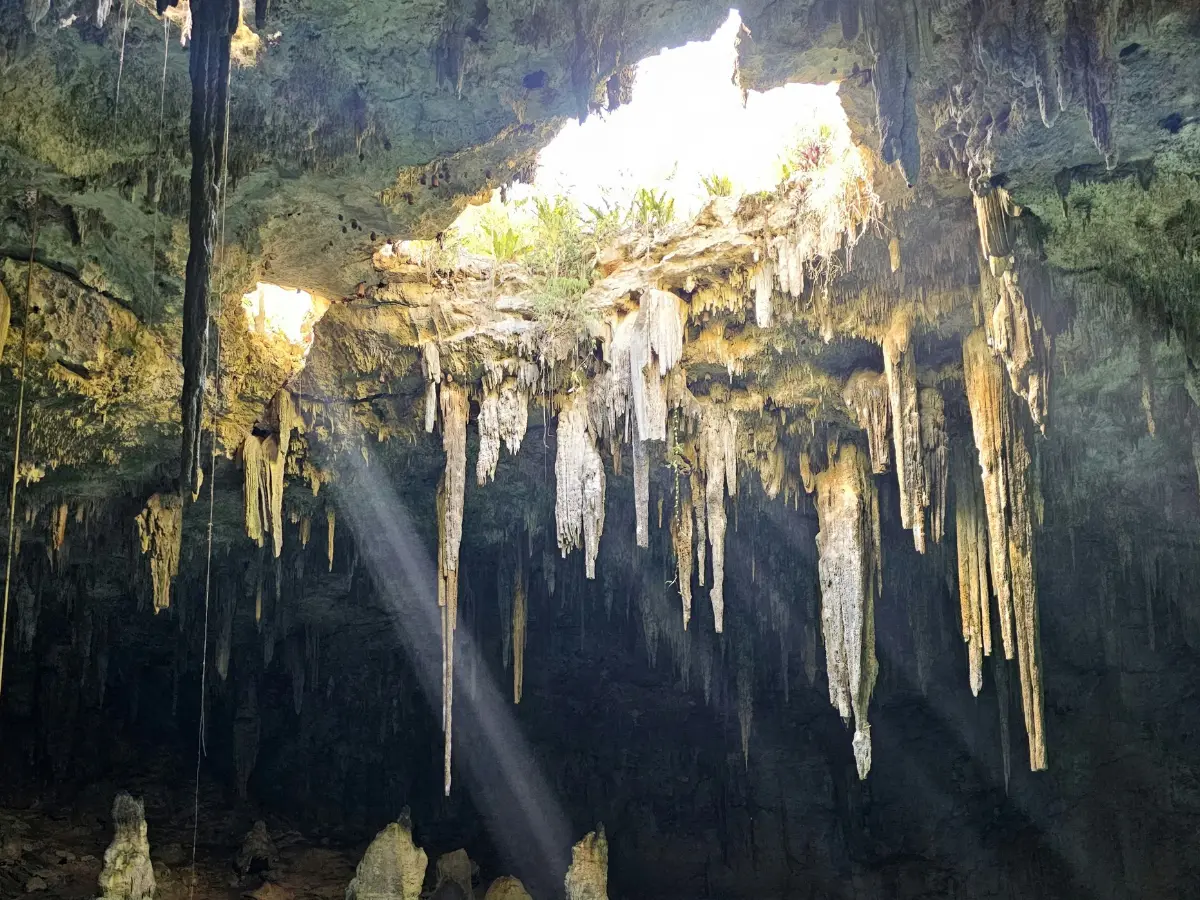
The world's longest underwater cave system dwells under Mexico's Yucatan Peninsula. Known as the Ox Bel Ha, Mayan for "Three Paths of Water", it consists of grand chambers and twisting tunnels, forming a water web. Scientists have now found that it extends for a much longer distance than previously believed. There are giant sink holes and huge crystal chambers known as ice palaces in this tunnel network, besides 38 unique species of cave–dwelling animals. The research group, El Centro Investigador del Sistema Acuífero de Quintana Roo, has been exploring this cave. Since 2018, 175 kilometres of unexplored cave have been scanned. However, the team believes it extends even more expects to find 600 kilometres more of unexplored regions in the cave.
The cave is submerged in a mixture of salt and freshwater. It is a complex web of tunnels and chambers, and scientists think this is because of the way it was formed. Ox Bel Ha came to be millions of years ago when rainwater and dissolved carbon dioxide filtered through a thick layer of limestone on the Yucatan Peninsula. It then reacted with the limestone, forming vast channels and tunnels. They were submerged around 18,000 years ago when climate change led to ocean levels rising and flooding the caves. This is exactly how the caves have continued to dwell since then.
The first time someone entered this cave system was in 1996 when an entrance inside one of the area's natural sink holes, known as cenotes, was found. This cave system has a layer of fresh water flowing faster and sitting on top of a nearly static saltwater layer. It forms what is known as a "halocline", a layer where salt and fresh water mix. This has made exploring the cave system tricky. Besides, underwater explorers also need to manage their limited oxygen supply. The cave system has narrow passages, and they need to not only manage their limited oxygen supply, but also carry the equipment through them, making it tough. The team's quest to uncover further areas of this tunnel network might take a lot of time, considering the forces.

