

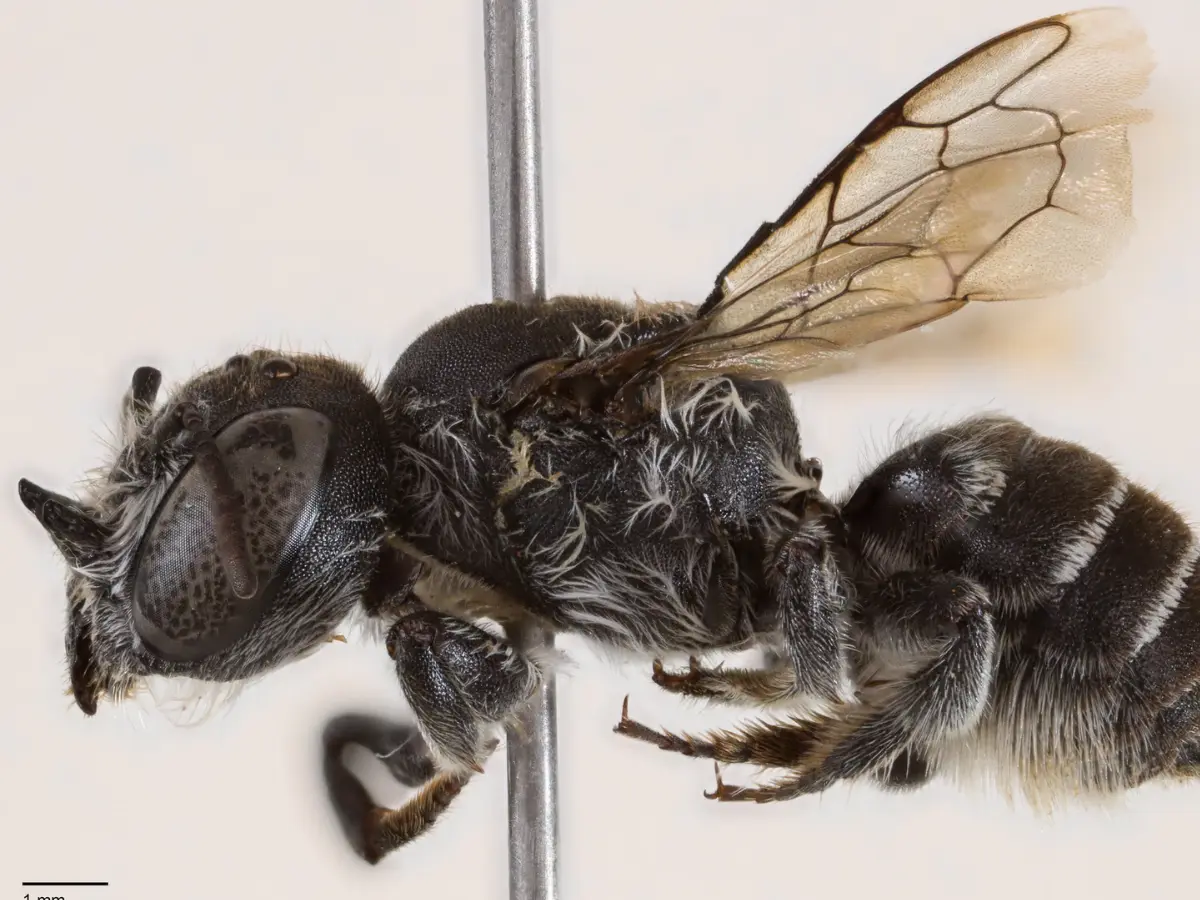
&imwidth=800&imheight=600&format=webp&quality=medium "Meet the newest female devil in town, a bee named Lucifer with spiked horns")
A terrifying species of the bee has been found in Australia, Curtin University announced on Tuesday. It is not your regular creepy crawly creature, but a bee that has "devil horns" that have led it to be named "Lucifer", the actual devil in Christianity. Dubbed Megachile (Hackeriapis) lucifer, the bee was discovered in Western Australia in 2019. Researcher Kit Prendergast at the university’s School of Molecular and Life Sciences was the first to come across the strange-looking bee while studying a critically endangered wildflower. This flower grows only in the Bremer Range region between the towns of Norseman and Hyden. The bee had horns, and she was intrigued by the creature as it was visiting not only the wildflower but also the mallee tree.
Why was the bee named Lucifer?
Kit says she is a huge fan of the Netflix show Lucifer, and so decided to name the bee after it, as it seemed a perfect fit based on its appearance. “The female had these incredible little horns on her face. When writing up the new species description, I was watching the Netflix show Lucifer at the time, and the name just fit perfectly. I am also a huge fan of the Netflix character Lucifer, so it was a no-brainer,” the bee ecologist said. Lucifer is a fantasy horror television series which revolves around Lucifer Morningstar, the devil who abandons hell to run a nightclub in Los Angeles. The study authors added that these horns are only found in females, "unlike most sex-specific weaponry or ornamentation in animals."
“It’s the first new member of this bee group to be described in more than 20 years, which really shows how much life we still have to discover,” she said. The discovery highlights the importance of recognising more species of bees and preserving their habitats before they are gone. In this case, the bee was hovering over the endangered wildflower, showing how it could be on the verge of extinction. “Many mining companies still don’t survey for native bees, so we may be missing undescribed species, including those that play crucial roles in supporting threatened plants and ecosystems,” she said.

