

&imwidth=800&imheight=600&format=webp&quality=medium "Massive earthquake could shake New Zealand as scientists issue warning about fault line that ruptured 10,000 years ago")
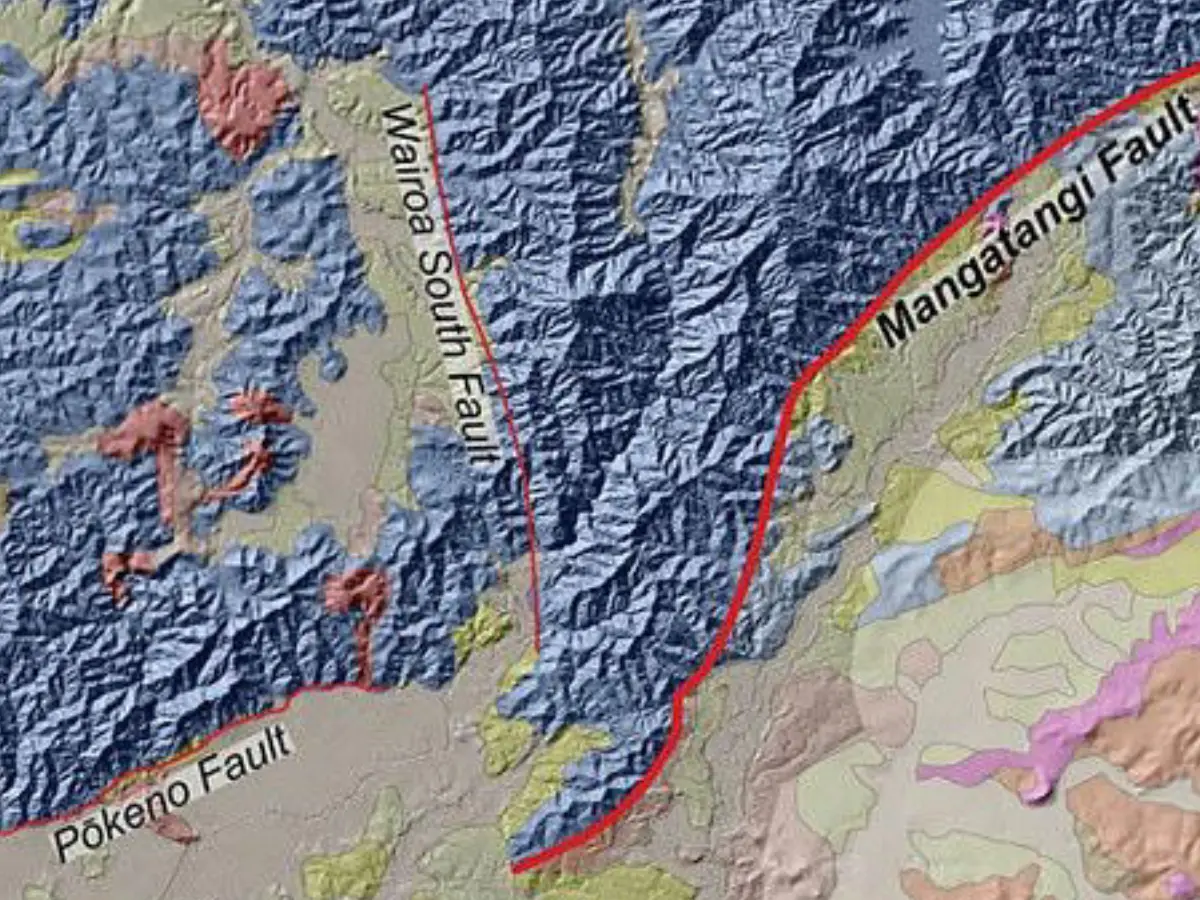
The earthquake dubbed "The Big One" could be coming for New Zealand instead of California. Scientists have found an active fault line running through the country, which could trigger a devastating 6.8 magnitude earthquake. The study was carried out by researchers from the University of Auckland who discovered that the Mangatangi Fault, which runs alongside the Hunua Ranges in South Auckland, could rupture again. If this happens, 1.8 million people living in Auckland could suffer "serious consequences". The fault line last ruptured around 10,000 years ago. "If the whole fault ruptured, there would likely be serious consequences for people living in South Auckland, and possibly further into central Auckland as well," co-author of the study, Dr James Muirhead, said.
New Zealand sits on the boundary of the Australian and Pacific tectonic plates, which makes it prone to earthquakes. But experts haven't been able to fully deduce the risk posed to Auckland. As part of the study, the researchers used radiocarbon dating to analyse the Mangatangi Fault, which revealed that it had not moved within the past 10,000 years. This leads it to be classified as active, as any fault line that has seen movement in the past 125,000 years is deemed active. "This is an active fault with the potential to generate a large earthquake in a region that doesn't expect one," lead author, Hannah Martin, said.
If this happens, a 6.8 magnitude earthquake could trigger devastation, with roads opening up and cracks on the walls, damaging buildings. However, Hannah says there is also a chance that this fault line may not rupture again for tens of thousands of years. Muirhead says that the risk for Auckland remains low. But the study shows that the threat could be significantly higher than we have believed all along. More data would be needed to understand this risk revealed in the study.

