Madhya Pradesh unveils India’s first carbon-capturing 'Algae Tree' in Bhopal: Full details inside

&imwidth=600&imheight=450&format=webp&quality=medium "Madhya Pradesh unveils India’s first carbon-capturing 'Algae Tree' in Bhopal: Full details inside")
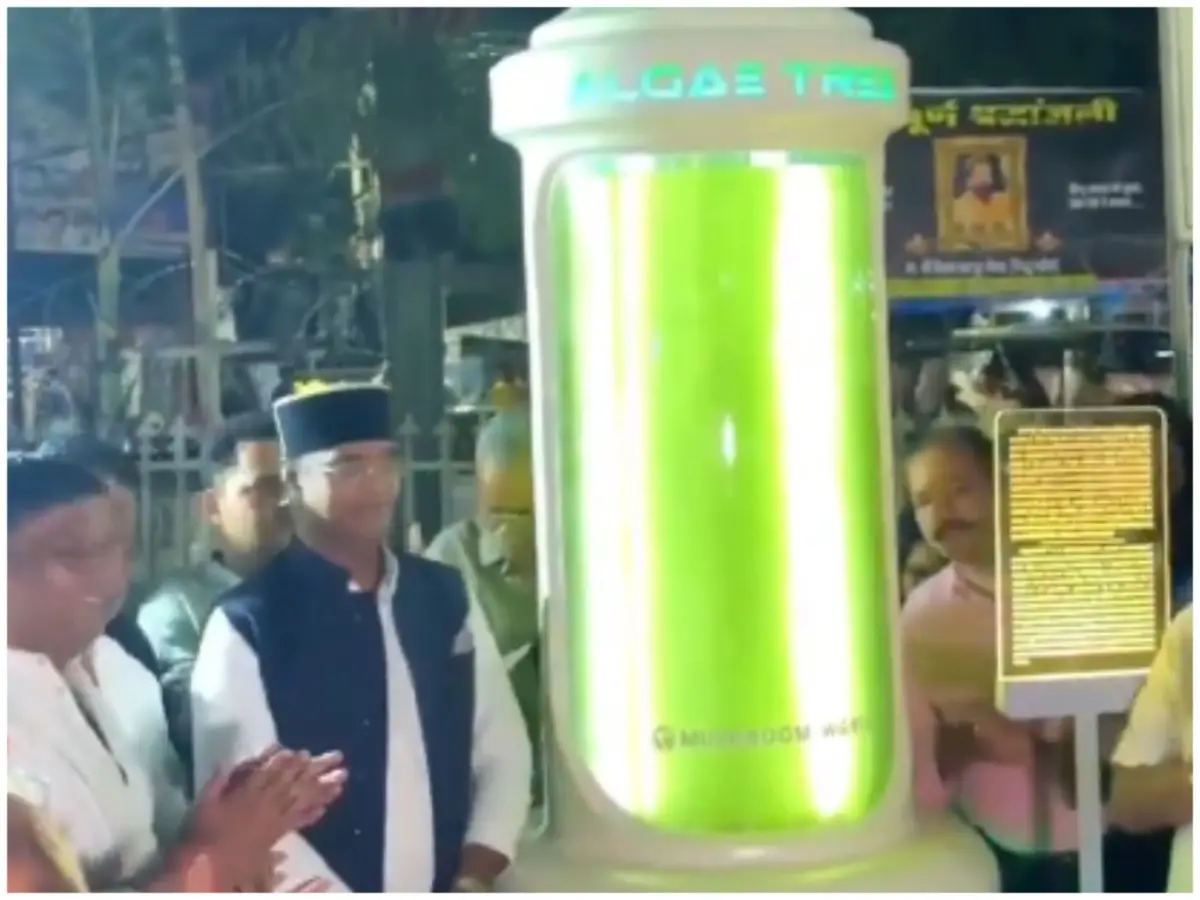
India's first Algae Tree setup in Bhopal that converts carbon dioxide into oxygen. Photograph: (X/@pareekhjain)
The innovative technology has been set up at Swami Vivekananda Park as part of the city’s Smart City initiative. It is designed to absorb as much carbon dioxide as 25 mature trees while simultaneously releasing oxygen into the environment.
Bhopal has become the first city in India to introduce an “Algae Tree”, an advanced carbon-capturing system designed to absorb as much carbon dioxide as 25 mature trees while simultaneously releasing oxygen into the environment. The innovative technology has been set up at Swami Vivekananda Park as part of the city’s Smart City initiative.
The videos and photos of the installation spread across social media, drawing widespread attention online. Several users have appreciated the project's significant role in addressing the worsening pollution, urban heat and climate concerns.
The “Algae Tree” developed by Mushroom World Group, which operates through a microalgae-based mechanism that captures carbon dioxide from the surrounding atmosphere and transforms it into oxygen. The company stated that the project took almost two years to complete and involved the efforts of more than 50 researchers, engineers, and experts.
What does the company of the ‘Algae Tree’ claim
The company of the product claims that a single unit can absorb around 1.5 tonnes of carbon dioxide annually, which is nearly equivalent to the carbon absorption capacity of around 25 mature trees. Solar plates have also been placed on top of the structure, allowing it to partially work based on renewable energy.
The installation comes as Indian cities continue to struggle with soaring temperatures, deteriorating air quality, and declining green spaces. Advocates of the initiative say the technology could eventually help lower carbon levels in densely populated urban areas where large-scale tree plantations are challenging.

