Israel: Archaeologists discover 44 pure gold coins of seventh century in a wall

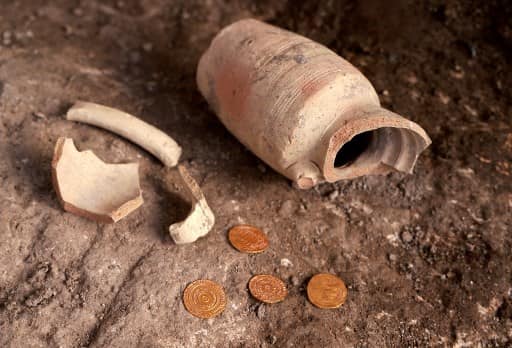
gold coins
A group of archaeologists in Israel has discovered 44 pure gold coins dating back to the seventh century in a wall at a natural reserve.
Each coin weighs about 170 grammes. As per experts, the coins were found at the Hermon Stream, where they were hidden during the Muslim conquest of the region in 635, the BBC reported.
The experts further added that these coins indicated the end of Byzantine rule in the region at that time. The Byzantine Empire ruled the eastern half of the Roman Empire.
Yoav Lere, the director of the group, said, "We can imagine the owner concealing his fortune in the threat of war, hoping to return one day to retrieve his property." However, Lere further added, "In retrospect, we know that he was less fortunate," BBC reported.
The archaeologists not only discovered gold coins from the ancient city but also found a few remains of the ancient buildings, water channels, pipes, a few bronze coins and even more, the Israeli authorities said.
The currency expert, Dr Gabriela Bijovsky of the Israel Antiquities Authority, said some of the found coins belonged to Emperor Phocas (602–610), but most of them belonged to his successor, Heraclius, the BBC reported.
A few days back, an archaeologist in Israel by accident discovered a 3,300-year-old chamber and described it as like being on the set of an Indiana Jones movie. DW reported that, as defined, the structure had several intact potteries with bronze artefacts.
The ancient artefacts and pottery found appear to have served as a family tomb back then.
(With inputs from agencies)
WATCH WION LIVE HERE