&imwidth=800&imheight=600&format=webp&quality=medium "Interstellar comet 3I/ATLAS larger than expected, set to vanish from view before reappearing in November 2025")
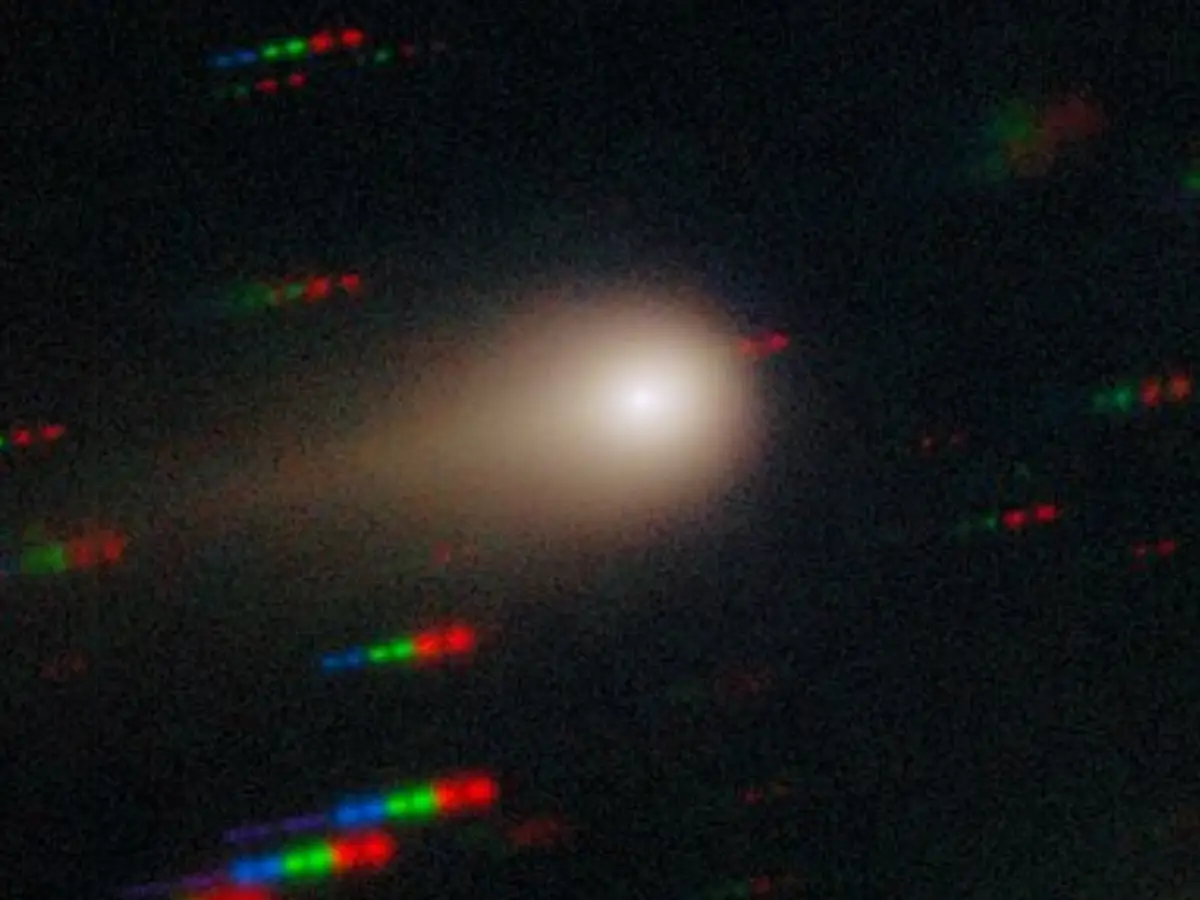
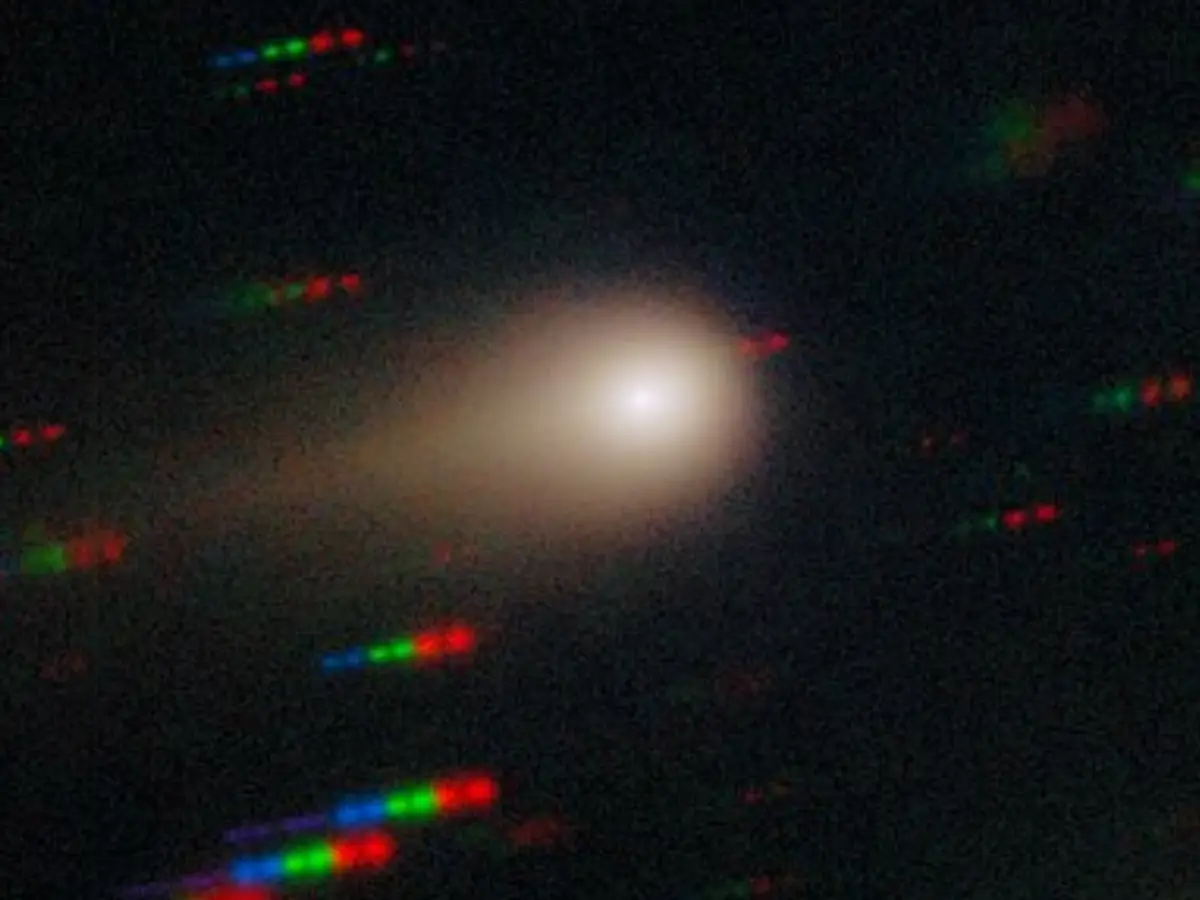
Interstellar comet 3I/ATLAS, discovered on July 1, 2025, is approaching its closest distance from the Sun now. It is expected to be invisible from Earth soon. It will be on the opposite side of the Sun for some time. The interloper will reappear in the sky in late November, before approaching its closest passage to Earth, approximately 268 million kilometres or 1.8 Astronomical Units away in mid-December, which is approximately 1.8 times the distance between the Earth and the Sun.
The best view of comet 3I/ATLAS
The interstellar comet is now just a few degrees away from the Sun, making it optimal for visibility just an hour after the Sun sets. Its perihelion is expected on October 29, 2025, ie, closest to the Sun, at approximately 202 million kilometres distance. It will be closer than the other comets; however, Earth’s going to miss the moment. The best view of the comet will be in early December, just before its closest approach to Earth in mid-December.

Due to its faintness, a telescope with a minimum 70 mm aperture will be needed for a clear look. A secluded area far from the light pollution of cities will be an optimal space to observe the comet.
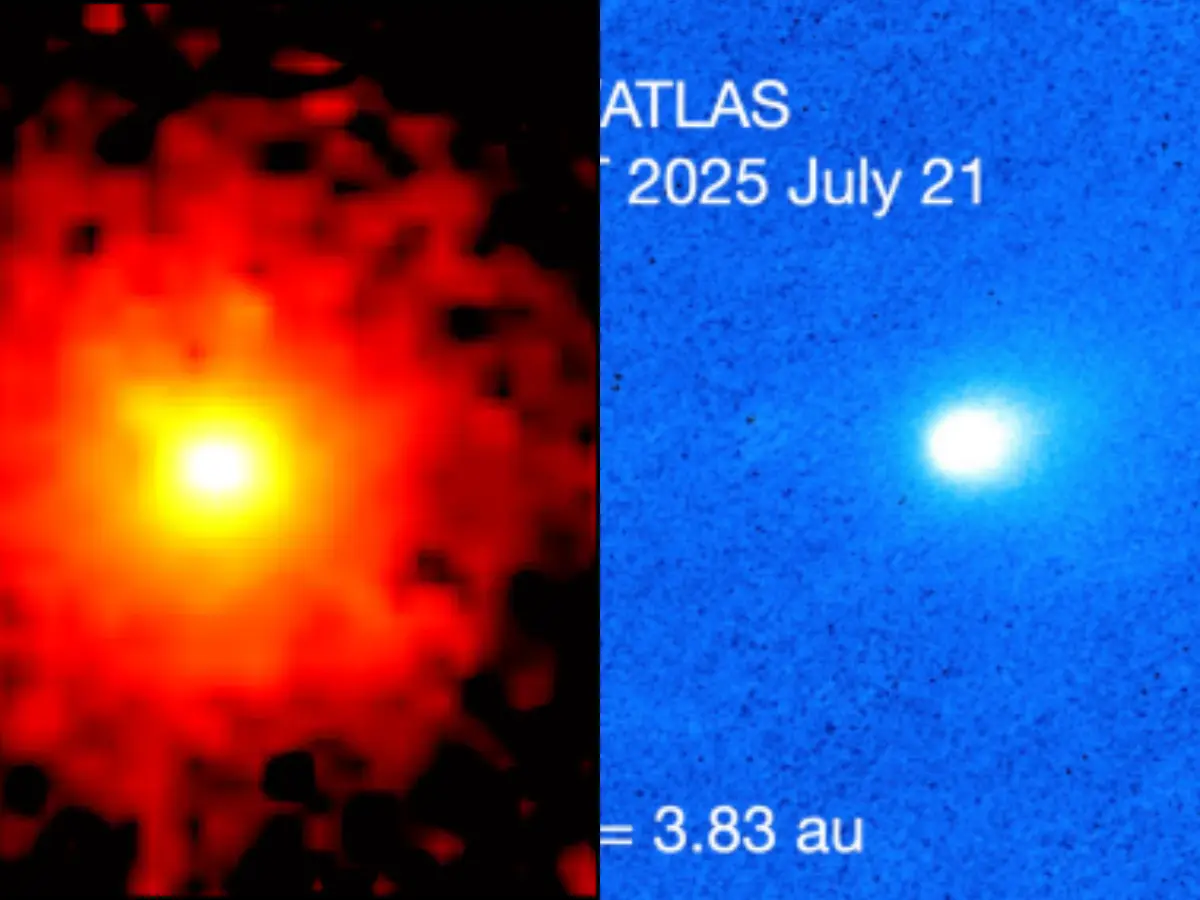
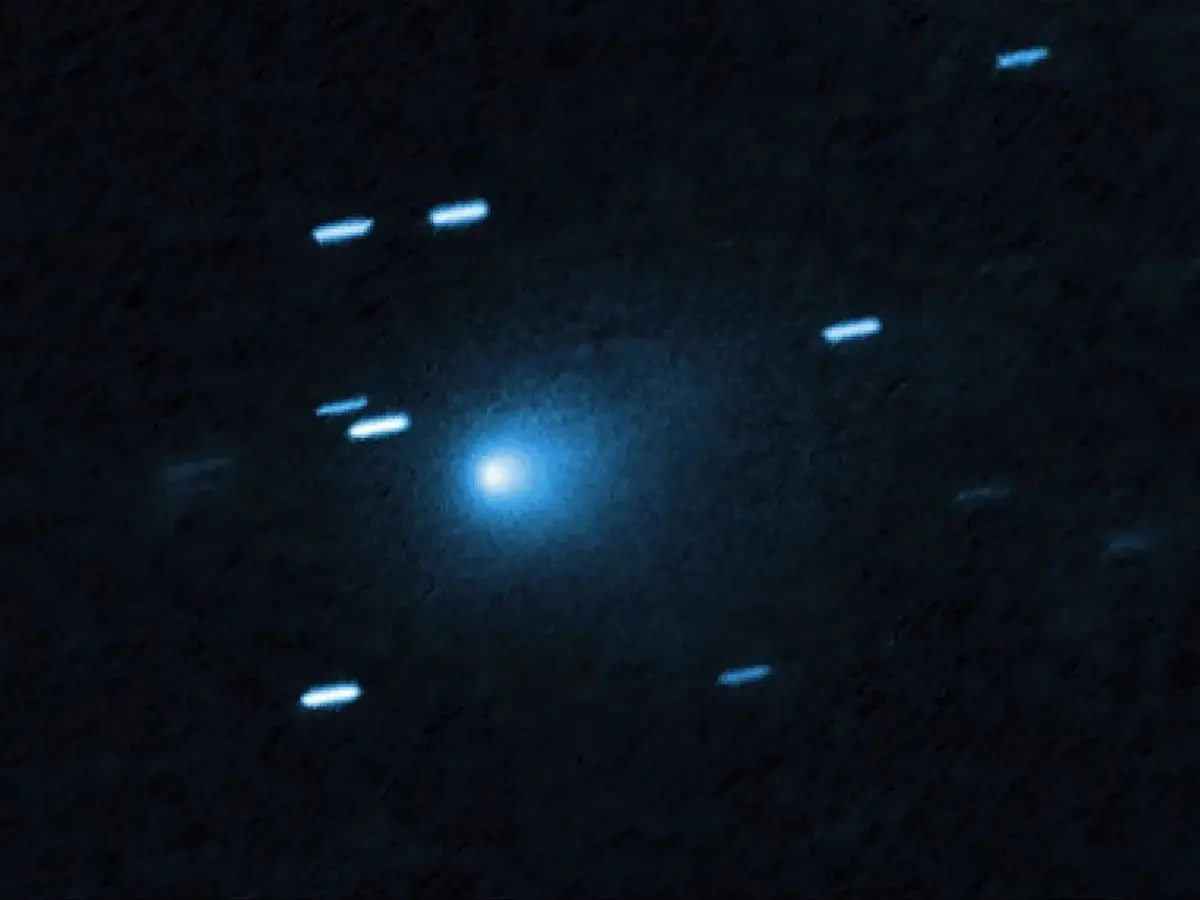
The fascinating interstellar visitor has a nucleus diameter of roughly 5.6 kilometres and is approaching at speeds over 210,000 km/h. Astronomers have carefully studied the light coming from the comet and found that it has cyanide and nickel in its coma. Additionally, NASA's SPHEREx spacecraft has detected carbon dioxide gas and water ice in the comet, confirming its composition. The Interstellar comet 3I/ATLAS is the third visitor after 1I/’Oumuamua, discovered in 2017, and Comet 2I/Borisov, discovered in 2019. It is twice as fast and larger than the other two.