Horseshoe crab's alien-like picture gets Laurent Ballesta Wildlife Photographer of the Year Award 2023

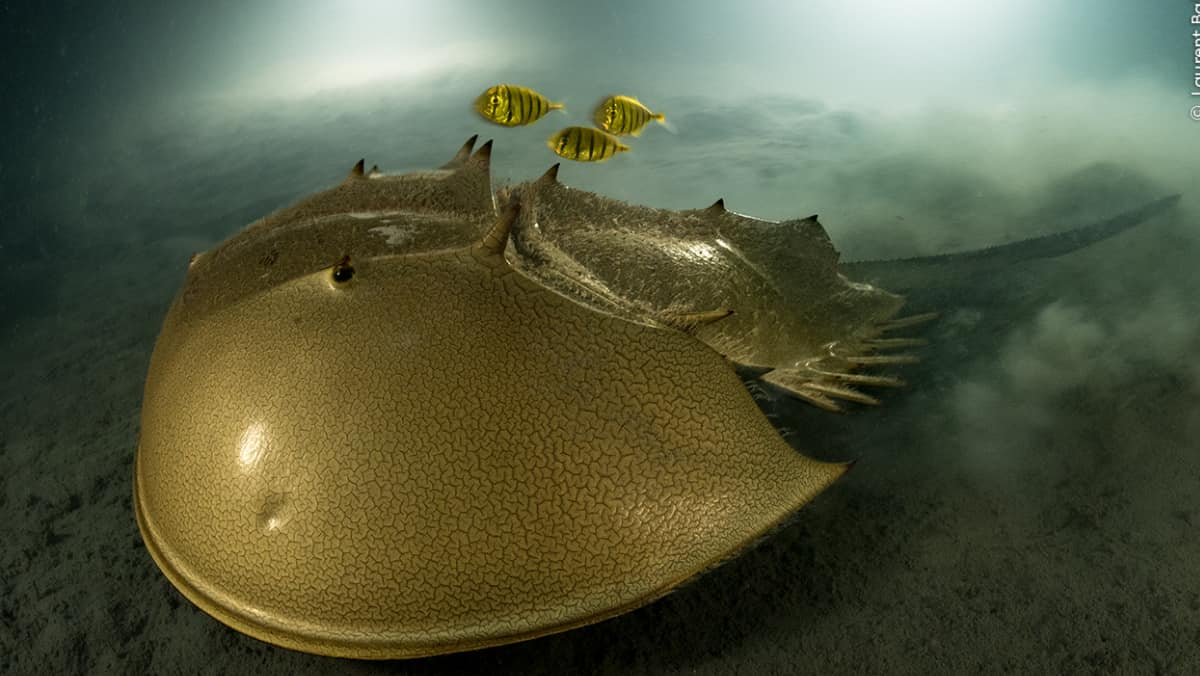
Horseshoe crab picture by photographer Laurent Ballesta
Laurent Ballesta has clinched the title of Wildlife Photographer of the Year (WPY) 2023 with his striking photograph of a horseshoe crab, an enigmatic marine arthropod. This mysterious creature was captured hugging the seabed in the waters off Pangatalan Island, Philippines. Accompanying the horseshoe crab were three small fish, eagerly awaiting opportunities to feast on any meal unearthed by the crab's movements.
Ballesta'ssecond win in WPY's 59-year history
Laurent Ballesta's remarkable win is the second as he has claimed the WPY title. This made him the only second photographer to achieve this distinction in the competition's 59-year history.
Also Read |104-year-old woman dies days before entering into Guinness World Records for daring skydive
His previous win in 2021 was for an awe-inspiring shot capturing a trio of grouper fish in the midst of spawning.
The announcement of Ballesta's triumph came during an extravagant gala dinner held at London's Natural History Museum. Kathy Moran, chair of the judging panel, outlined the "secret sauce", the four key criteria for a winning image. It included "aesthetics," "moment," "narrative," and "something that has a conservation edge to it."
Ballesta's photograph embodied all of these qualities and that is how it earned the prestigious recognition.
According to Moran, Ballesta's winning photograph possessed a unique "luminosity", creating the illusion of an alien presence drifting across the ocean floor.
"It really does feel like an alien floating across the seafloor - but when you step back and realise just how important these creatures are to ocean health and human health, we just felt the image brought it all together and we couldn't pass it up,"Moran reportedly said.
Tri-spine horseshoe crab's battle for survival
Despite surviving for over 100 million years, the tri-spine horseshoe crab is posed with numerous threats, including habitat destruction and overfishing for both food and its blood, which is essential in vaccine development.
Watch |Taylor Swift's Era's tour film set to shatter records with $200 MN global debut
Fortunately, in the young marine reserve around Pangatalan Island, these remarkable creatures are receiving the protection they desperately need."It took a few tries," Bechler reportedly said and added, "The lights were the most difficult thing in the image to get right, because you want them to go across the entire scene but you also don't want them to be too bright and burnt out. I used a timer to not get any blur and then I took photo after photo until I got that moment."
WATCH WION LIVE HERE
You can now write for wionews.com and be a part of the community. Share your stories and opinions with us here.