

&imwidth=800&imheight=600&format=webp&quality=medium "Dinosaur-era fossil? Suspected large skeletal structure unearthed in Rajasthan’s Jaisalmer")
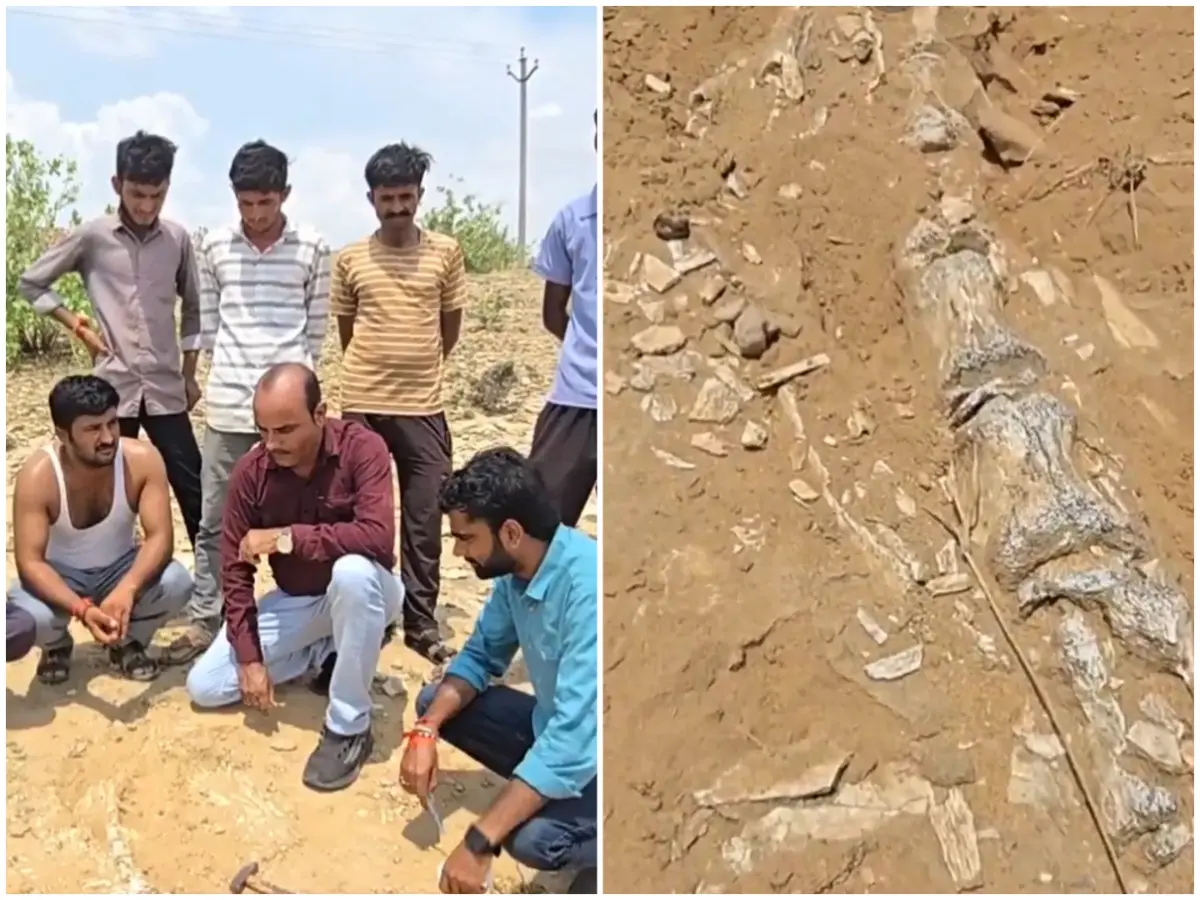
Suspected dinosaur-era fossil remains, along with a large bone-shaped structure and petrified wood, were found amid the excavation of a pond near a village in the Jaisalmer district of Rajasthan. The discovery has raised the possibility of being linked to the prehistoric dinosaur era.
Similar to a large skeletal structure, these stone formations were discovered in Megha village of the district by locals while digging near the pond. A few of the parts were like fossilised wood, while others resembled bones. After the discovery, Experts stated that fossilised wood is not uncommon in western Rajasthan, but the availability of formations similar to bone makes this finding unusual.
Fatehgarh Sub-Divisional Magistrate and the Tehsildar paid their visit to the excavation site on Wednesday and inspected the remains. "We have informed higher authorities, and a team from the Geological Survey of India (GSI) is expected at the spot for scientific investigation. After a complete investigation, we will be able to confirm the age and type of fossil," Fatehgarh SDM Bharatraj Gurjar told Indian news agency PTI on Thursday.
"Some of the structures have the appearance of petrified wood, but there is also a large formation which looks skeletal. This combination suggests that the remains could be millions of years old, possibly belonging to the dinosaur era," archaeologist Parth Jagani said.
Experts warn against any conclusion
However, experts warned against coming to any conclusion till complete scientific tests. "These remains are visible on the surface rather than coming out from deep excavation. It is possible that they are not very ancient and may be only 50 to 100 years old. Only carbon dating and other methods of scientific analysis can determine their true age," said Professor Shyam Sunder Meena.
As per the officials, the suspected fossils were discovered within stone ridges near the pond, an area typically linked to ancient sedimentary formations. While Fossilised wood has been reported earlier from the Thar desert, the discovery of a skeletal-like structure alongside makes this finding particularly important.

