
&imwidth=800&imheight=600&format=webp&quality=medium "Curse of 2020? Time will change in 2029 because of mysterious factors")
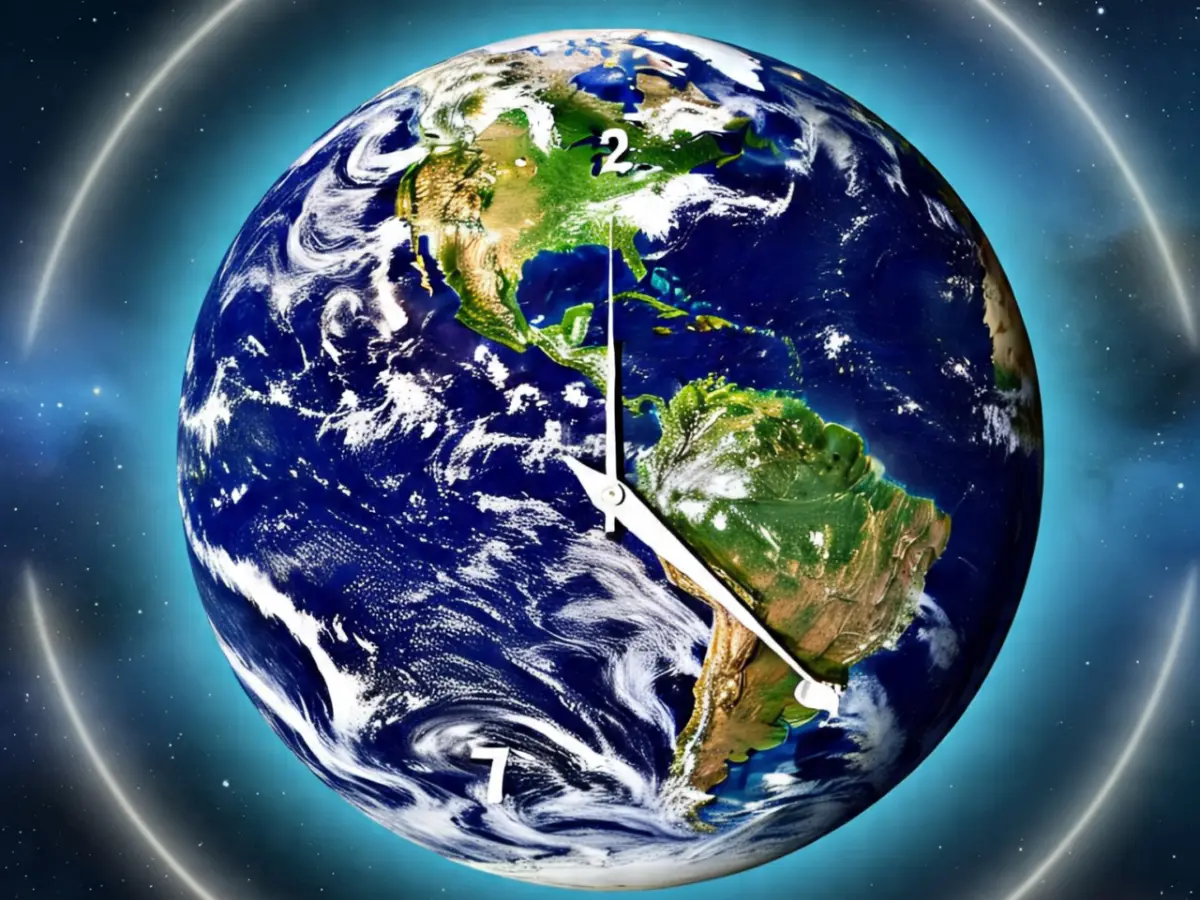
The shortest day to be ever recorded by man is here. July 9 will have a few milliseconds less than your average day. This is because of our Moon's current position. Scientists say the phenomenon is rare, although this is the sixth one to occur since 2020. In the next few weeks, we'll have two more shorter days, one of them even shorter than July 9. The Moon is making the Earth spin faster this summer and will cut off anywhere from 1.3 to 1.6 milliseconds from the 24 hours on July 9. International Earth Rotation and Reference Systems Service (IERS) stated that the Moon will be furthest from the equator on this day, and this will impact the speed of Earth’s rotation. The same will again happen on July 22, and then again on August 5, Popular Mechanics reported. Of the three, August 5 will be the shortest day. Also Read: 511 billion barrels of oil discovered in Antarctica can trigger World War. Here's how
Shortest day in history
The shortest day in the history of Earth was recorded on July 5, 2024 - 1.66 milliseconds shorter than average. It might sound too small to matter, but even this was a full half-millisecond faster than when Earth was observed to spin faster in 2020 for the first time. While this year's phenomenon is attributed to the Moon's position from the Equator, the past rotational changes were because of other things. Earthquakes, volcano eruptions, tidal forces, and other mechanisms could either lead Earth to slow down or move faster. Noting the frequency of change in Earth's rotation, Leonid Zotov, an Earth rotation expert from Moscow State University, told timeanddate.com, in 2022, “The cause of this acceleration is not explained. Most scientists believe it is something inside the Earth. Ocean and atmospheric models don’t explain this huge acceleration.” Also Read: GREAT WALL of universe: 10 billion light-years long cosmic monster detected in space should not exist

World timekeepers will reduce a leap second
This sudden change will lead the world timekeepers to subtract a leap second for the first time ever in 2029. Clocks may have to skip a second — called a “negative leap second” — around 2029, a study in the journal Nature noted in 2024. “This is an unprecedented situation and a big deal,” said geophysicist and study lead author Duncan Agnew. “It’s not a huge change in the Earth’s rotation that’s going to lead to some catastrophe or anything, but it is something notable. It’s yet another indication that we’re in a very unusual time.” Earth has not always had 24 hours in a day. Today, Earth completes one full rotation in 86,400 seconds. But during the era of the dinosaurs, days were 23 hours long. Similarly, during the Bronze Age, the average day was 0.47 seconds shorter. This trend continues as Earth ages, and 200 million years from now, a standard Earth day will actually be 25 hours long.

