'Ancient giants': Massive 300,000-year-old handaxes unearthed in Kent

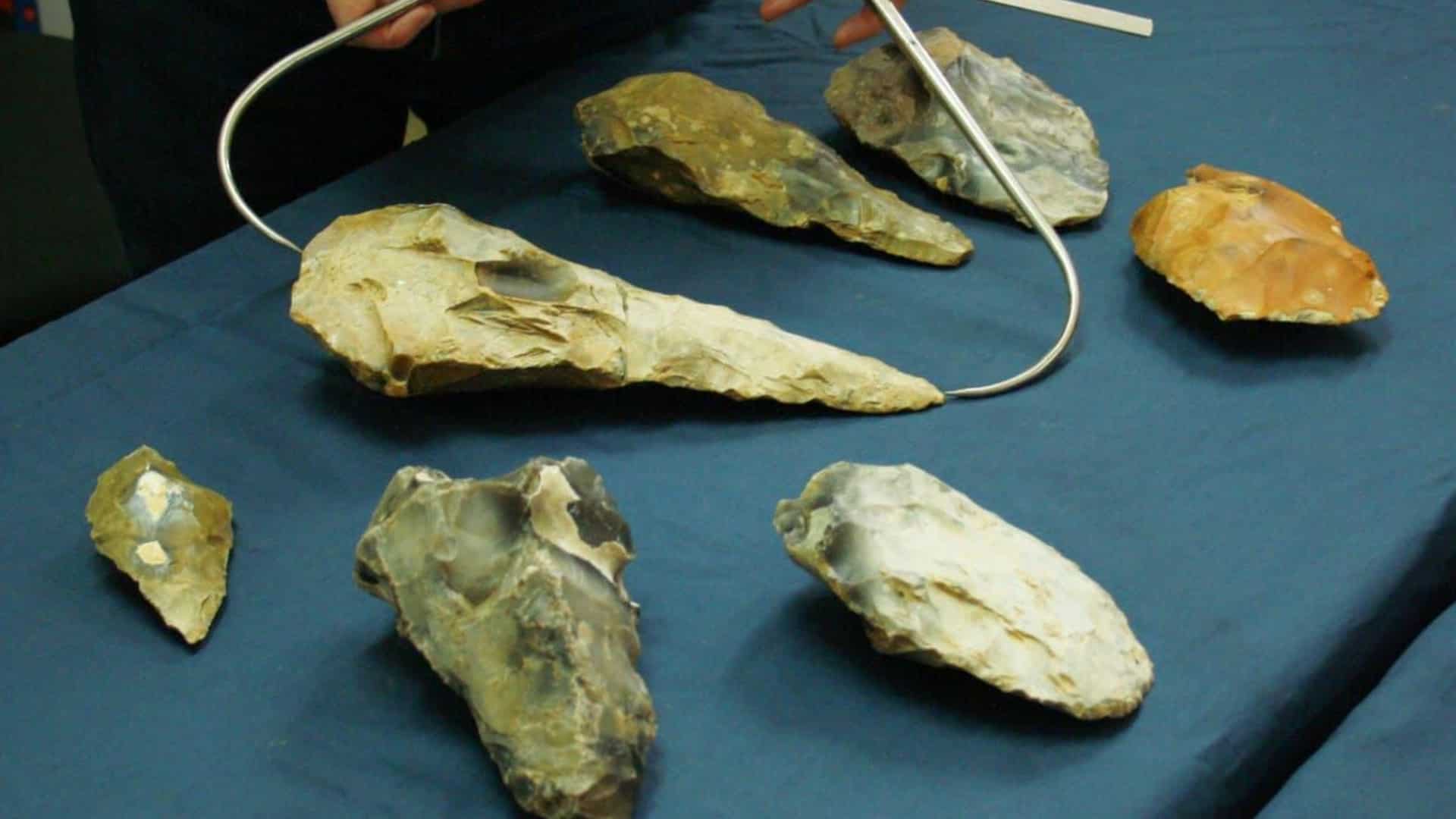
Artefacts discovered by archaeologists in Kent
Archaeologists have made a remarkable discovery in Kent, UK, unearthing some of Britain's largest early prehistoric stone tools, including a foot-long handaxe too massive to be easily handled. The excavation, conducted by researchers from UCL Archaeology South-East, revealed over 800 stone artefacts, believed to be over 300,000 years old, found within ice age sediments preserved on a hillside above the Medway Valley.
Among the significant findings were two large flint knives, described as giant handaxes, which display a distinctive shape with a long, finely crafted pointed tip and a thicker base. Handaxes, typically held in hand, were likely used for butchering animals and cutting meat. The colossal size of these handaxes, with one measuring a staggering 29.5cm, presents a challenge in understanding how they were practically wielded and used.
Letty Ingrey, a senior geo-archaeologist at the UCL Institute of Archaeology who spoke to the Guardian,referred to these tools as "giants," highlighting their immense length and rarity. Although their exact purpose and the early human species responsible for crafting them remain uncertain, the site provides a unique opportunity to unravel these mysteries.
The site is believed to date back to a period when Neanderthal people and their cultures were emerging, coexisting with other early human species in the landscape. The Medway Valley at that time would have been a wild terrain of wooded hills and river valleys, inhabited by various animals, including red deer, horses, straight-tusked elephants, and lions.
Also watch |UK: AI-'encouraged' Windsor Castle intruder's plot was to kill Queen
Remarkable discoveries shed light on prehistoric giants in Britain
Aside from the prehistoric discoveries, the team also uncovered a Roman cemetery dating back to a quarter of a million years later than the ice age activity. The presence of goods and personal items buried with the individuals, as well as pottery and animal bones nearby, suggests feasting rituals associated with the time of burial.
These excavations provide a valuable opportunity to study the development of an entire ice age landscape and shed light on ancient people's adaptation to the challenges posed by ice age environments. The findings contribute to our understanding of early human history in Britain and have been published in the Internet Archaeology journal.
WATCH WION LIVE HERE: