3I/ATLAS update: Interstellar comet emitting X-rays covering an area of 400,000 km

&imwidth=600&imheight=450&format=webp&quality=medium "3I/ATLAS update: Interstellar comet emitting X-rays covering an area of 400,000 km")
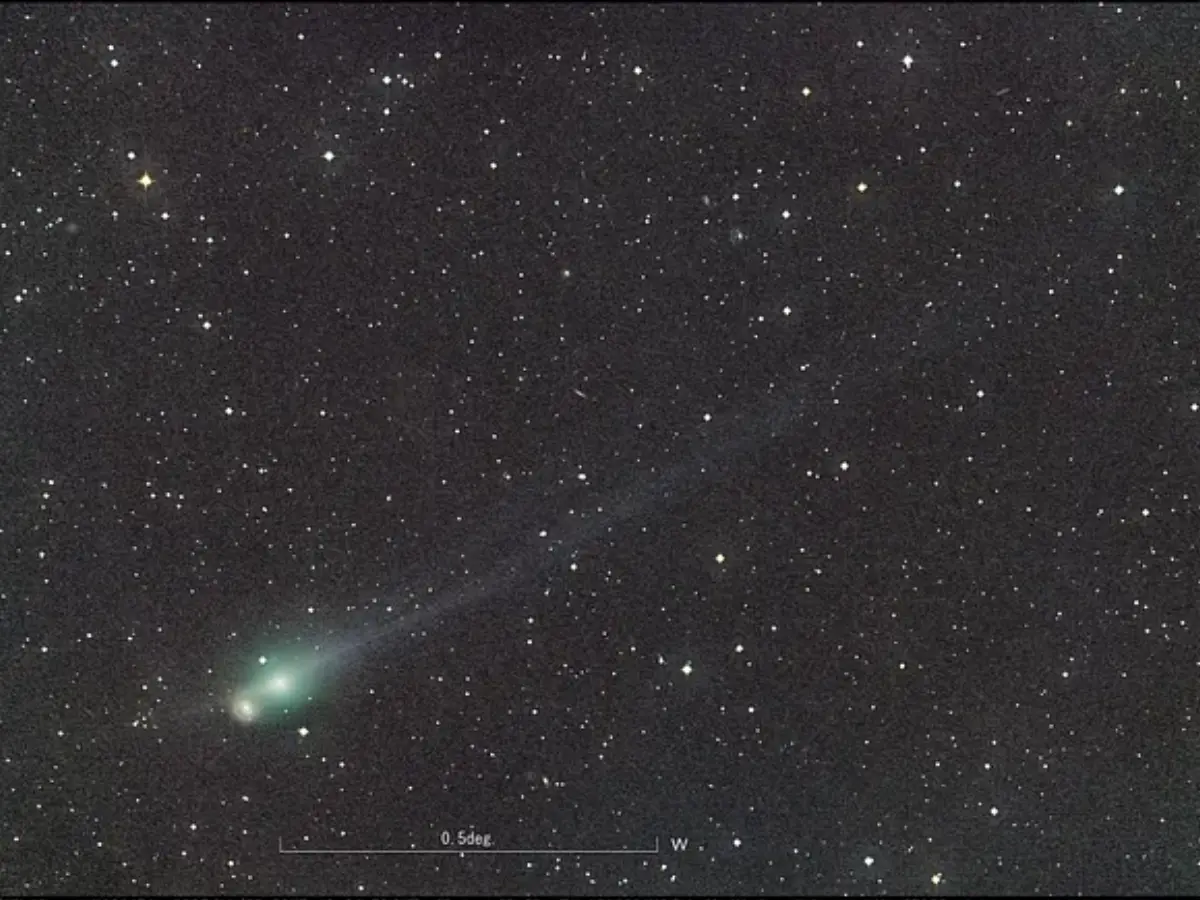
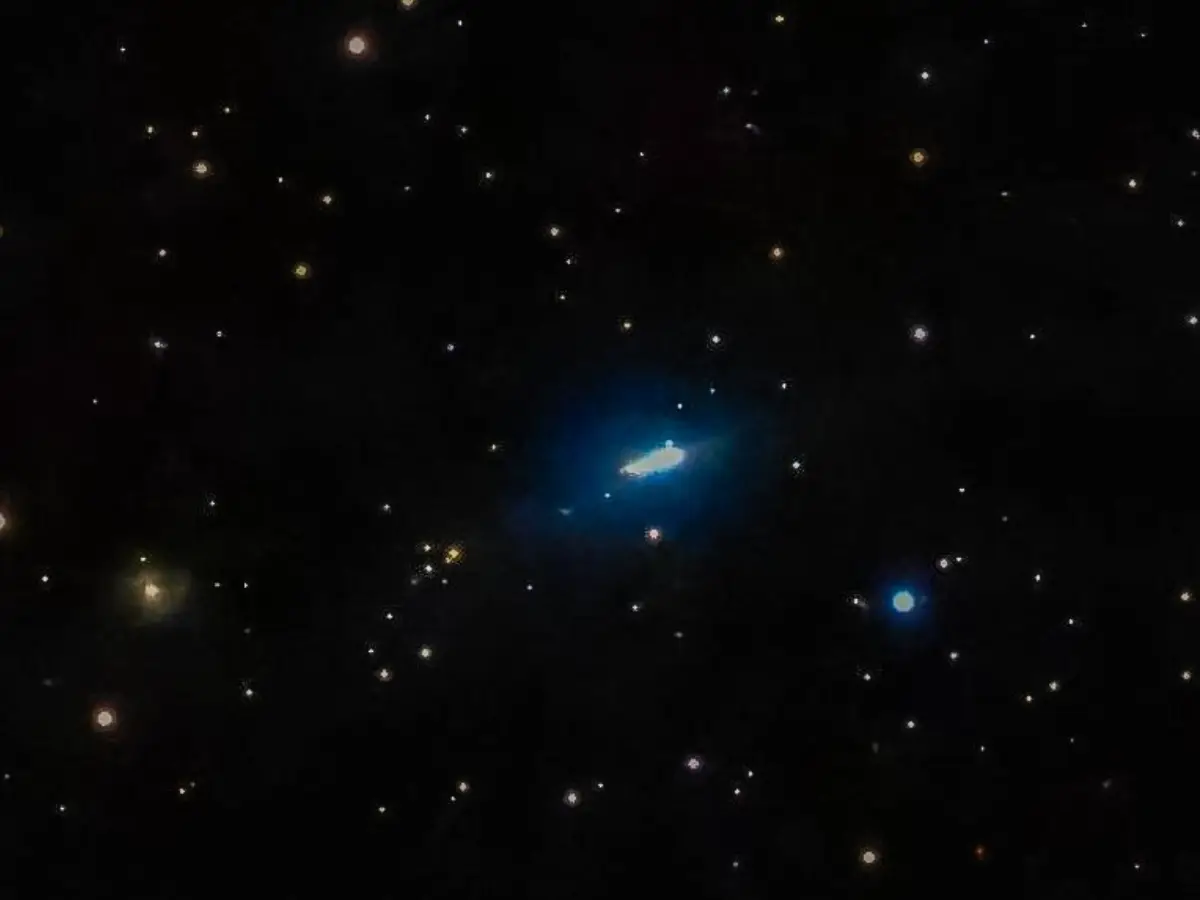
3I/ATLAS is now moving towards Earth. Photograph: (Paul Craggs)
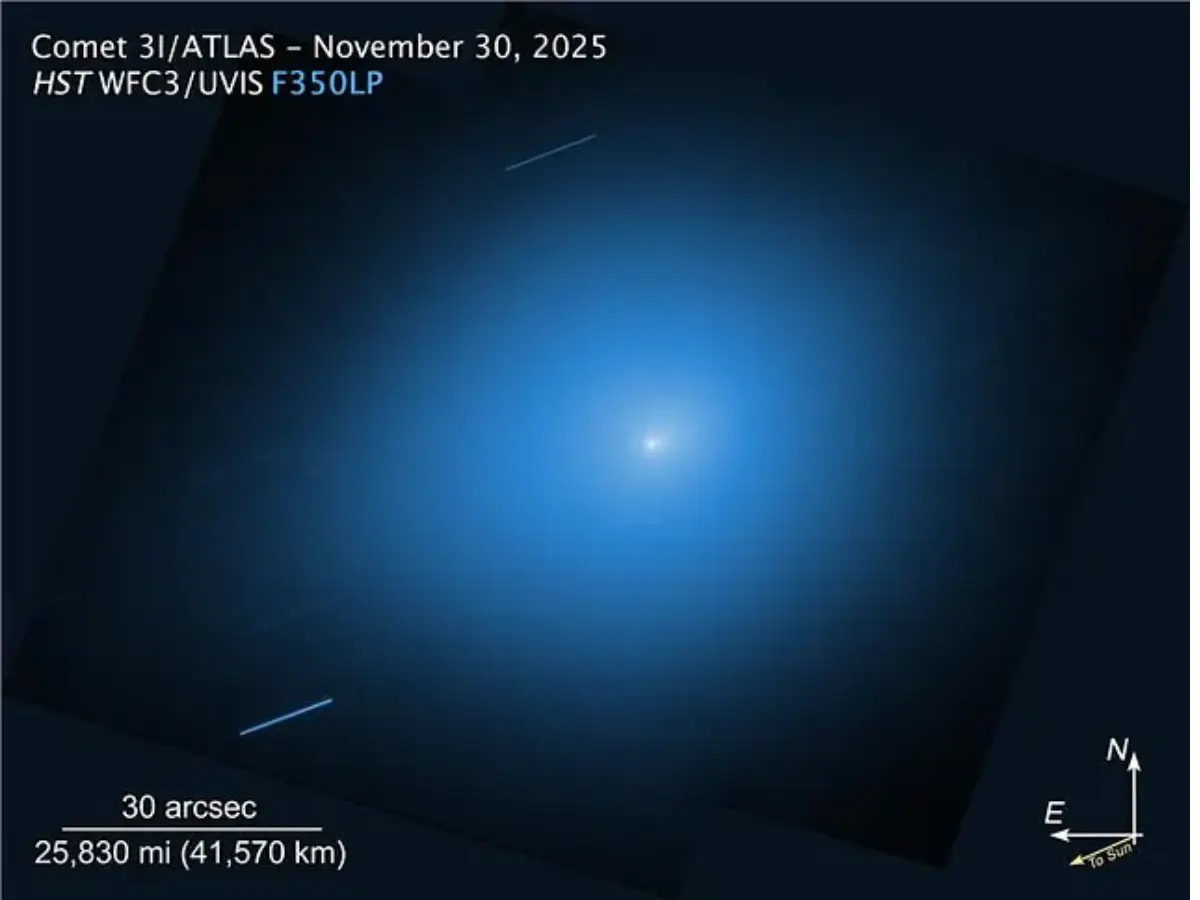
3I/ATLAS update: The interstellar comet has been observed emitting X-rays, according to Japanese scientists. They observed the comet over two days and noticed emissions that shroud an area of 400,000 km around the nucleus of the comet.
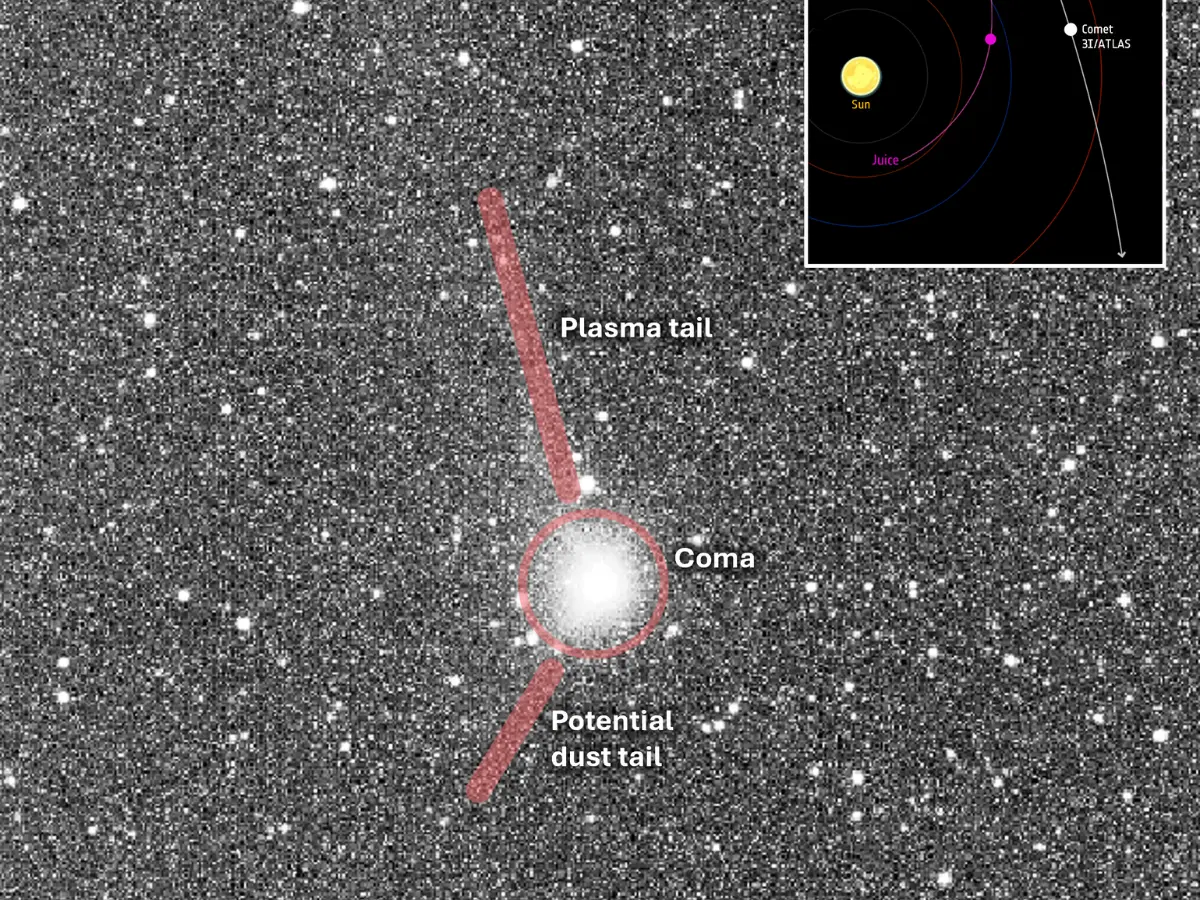
Japanese scientists have detected X-rays being released by 3I/ATLAS, the third interstellar visitor ever recorded in our solar system. Japan Aerospace Exploration Agency (JAXA)’s X-Ray Imaging and Spectroscopy Mission, or XRISM, observed the comet between November 26 and 28, and conducted observations with an effective exposure of 17 hours. According to the findings, a preliminary analysis of the data revealed a faint X-ray glow from 3I/ATLAS. It extends to roughly 5 arcminutes, or 400,000 km around the nucleus of the comet. While it might sound strange, it is common for comets to emit X-rays. According to the study, clouds of gas surround a comet, which are produced as sunlight heats and vaporises its icy surface. "When this gas interacts with the energetic stream of charged particles flowing from the Sun—the solar wind—a process called charge-exchange reaction occurs, producing characteristic X-ray emission," the researchers noted.
The X-rays are likely associated with carbon, nitrogen, and oxygen, and are different from ordinary background emission, such as Galactic X-rays or Earth’s atmospheric emission. "This provides an important clue that the observed emission may indeed arise from charge-exchange interactions between the cometary gas and the solar wind," the researchers wrote.
What is 3I/ATLAS? When is it reaching Earth?
3I/ATLAS has created intrigue in the scientific community ever since its discovery on July 1. It was observed moving at a staggering speed of 200,00 km/hr. The trajectory of the comet is hyperbolic, instantly revealing that it was travelling from outside our solar system, as it is not bound to the Sun's gravity. It flew past Mars on October 2-3, and NASA and ESA orbiters captured a glimpse of the object from a great distance. Later, it reached perihelion on October 29, that is, the closest point to the Sun. At this point, it showed non-gravitational acceleration and brightened suddenly. Now it is travelling towards Earth and will reach its closest point to us on December 19.