
&imwidth=800&imheight=600&format=webp&quality=medium "3I/ATLAS could have spewed poisonous gas at Earth. Could it reach us?")
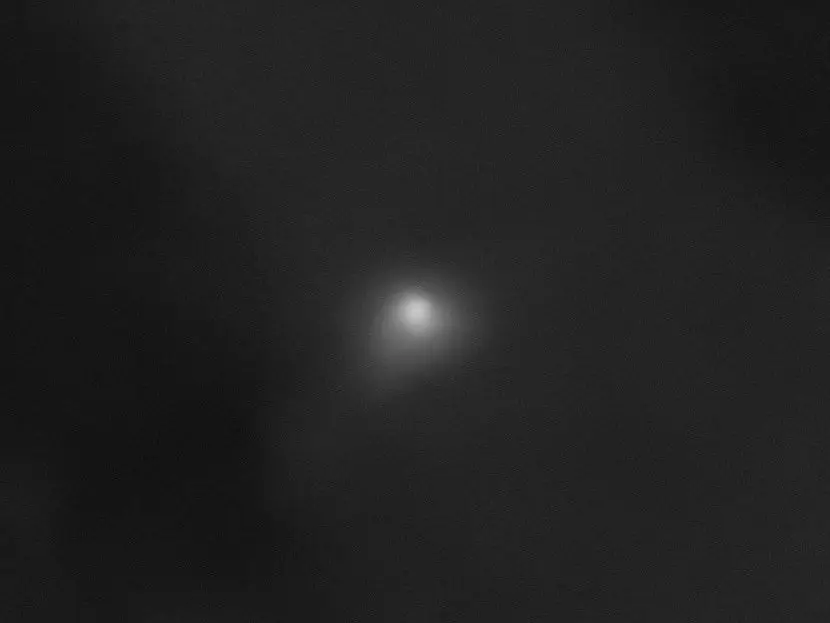
3I/ATLAS is done with its Earth flyby, giving astronomers a wonderful peek into its world. Telescopes across the world captured the comet, with both its tail and the anti-tail putting up a show as it came at a distance of 269 million kilometres. It is now on its way out of the solar system, but not before one last rendezvous with Jupiter. But, one question doing the rounds is whether 3I/ATLAS affected Earth in any way? While it was so far from us, cosmic forces could have blown some material towards our planet. The interstellar comet has a gas plume around it is which is known to contain cyanide and hydrogen cyanide.
This gas would have been swept to a distance of just a few million kilometres from 3I/ATLAS by the solar winds. Harvard scientist Avi Loeb explains that dust particles smaller than a micrometre would be swept away even faster by the solar radiation pressure. But particles that are bigger than a millimetre would remain largely unaffected by solar radiation or wind. This means that cyanide, a poisonous gas, and other material from the comet would have flown across space and landed on bodies that it passed by. This includes Earth, and it is possible that some of it could have been thrown towards us.
However, the good news is that none of it would harm us, thanks to the atmosphere. Just like it protects us from harmful space radiation, it would also capture and burn up the cyanide particles released by 3I/ATLAS before they reach the ground. Also, particles of such size would be far and few, lessening the probability even further. Besides, they originated at a distance larger than about twice the Earth-Sun separation, implying that this material will stay far from Earth.

Why is 3I/ATLAS a strange comet?
3I/ATLAS, the third interstellar comet, was discovered on July 1, and since then has since attained celebrity status in the world of astronomy. Scientists around the world have been observing it and have noticed it acting strangely. It did not have a cometary tail for a long time. It was also seen releasing water like from a hose at a far-off distance from the Sun. Then, when it flew by Mars on October 2-3, several orbiters spotted it and captured photos. At perihelion, it sped up, brightened by several magnitudes and changed its path. It continued to show a prominent jet in the direction of the Sun, an anti-tail which made 3I/ATLAS more intriguing. In March, the Juno probe near Jupiter will again observe it, sending back more data on this mysterious visitor.

