
&imwidth=800&imheight=600&format=webp&quality=medium "16-year hunt for 'Phantom' serial killer led to a shocking scientific error in Germany")
Germans were terrified of a serial killer for 16 years between 1993 and 2009, but after all this time, they were shocked to learn that there never was a serial killer. The murderer was linked to 40 crime scenes, six of which were murders. Despite the best efforts, police failed to find the mystery mastermind behind these crimes. The reason why all the murders were linked to one person was that the same DNA was identified at all these scenes. It indicated that the perpetrator was a woman of Eastern European descent. She came to be known as the “Phantom of Heilbronn" because no one could trace her or locate her. For 16 years, no one knew who she was. The police were literally hunting a ghost. However, things changed in 2007 when police officer Michèle Kiesewetter was shot during her lunch break. She and her colleague, identified as Martin A, were attacked. While Martin was put in a medically induced coma, Michèle died. The murder was believed to have been committed by the Phantom of Heilbronn.
Major anomalies in murder mystery
The investigation showed some anomalies. While DNA evidence insisted the "Phantom" was female, eyewitnesses and evidence from the shooting of Officer Kiesewetter identified both suspects as male. Second, during a separate case, the Phantom’s DNA was detected on documents recovered from a fatal fire. However, when those same documents were re-analysed later, the DNA had vanished. Two years later, the DNA found at the crime scenes linked to the Phantom finally led the police to one person. This was a woman who worked at a cotton swab factory, and this basically unravelled the mystery of the “Phantom of Heilbronn".

How cotton swabs created a serial killer
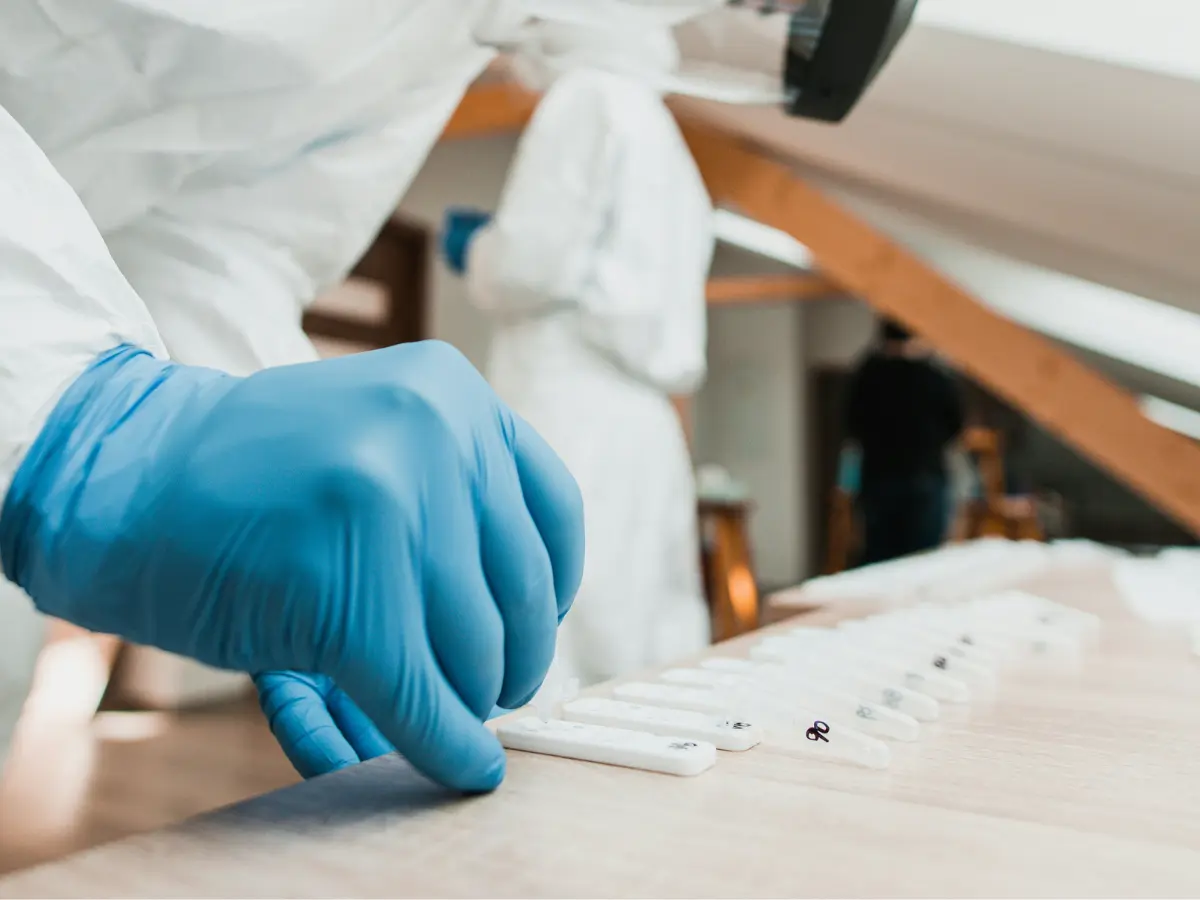
Everything that unfolded in the past 16 years came down to the cotton swabs used for forensic testing. These swabs were produced by the factory where the “Phantom” worked. The factory workers were accidentally contaminating the swabs with their own DNA during the manufacturing process. Forensic DNA testing was still a relatively new field at this time, so the police didn't realise that "sterile" swabs aren't necessarily "DNA-free." So every time a police officer used a new swab to collect evidence at a crime scene, they were inadvertently "planting" the factory worker's DNA on the evidence. The companies producing the cotton swabs insisted they were not meant to be used for forensic investigations. This meant that the police had been chasing a serial killer that didn't even exist for 16 years. This person was once believed to be operating on a large scale in several countries, but in the end, it turned out to be an embarrassing error.

