
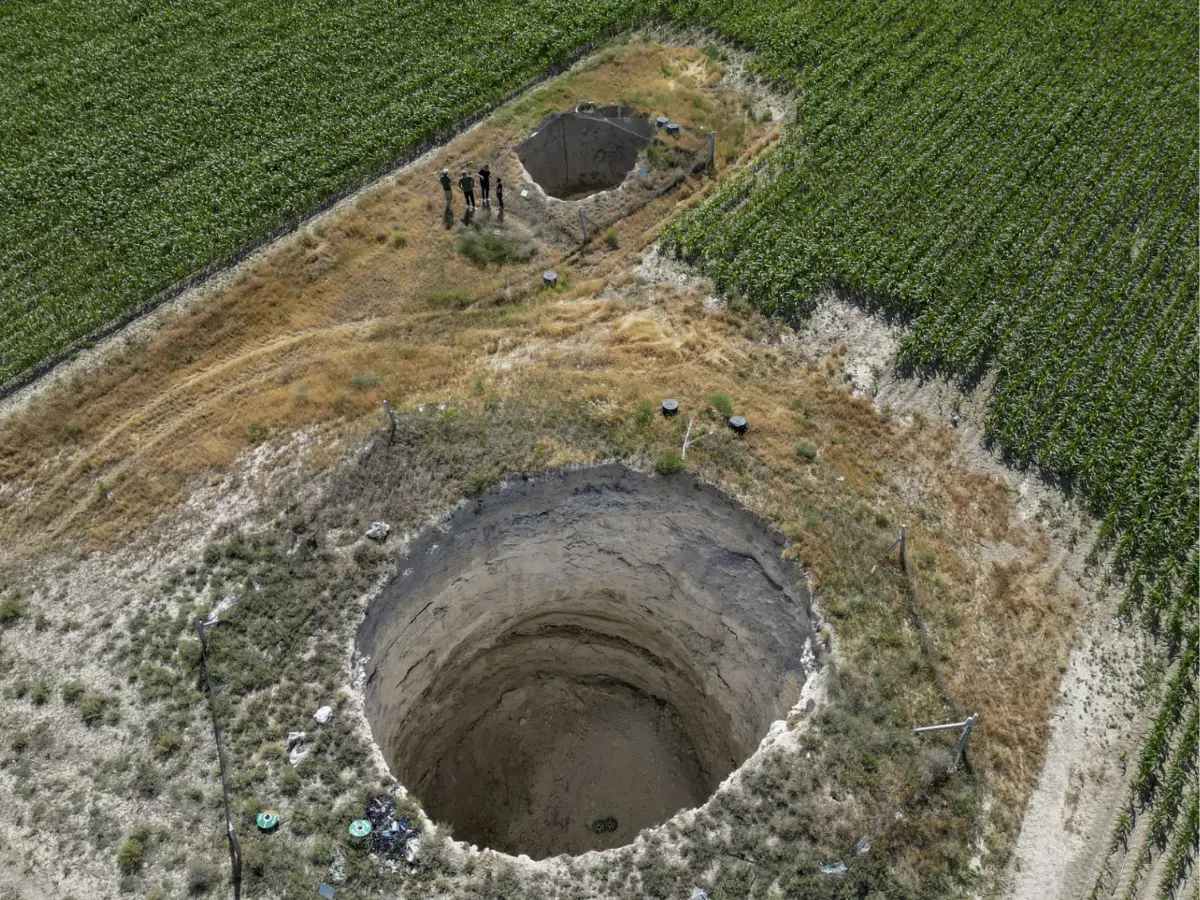
&imwidth=800&imheight=600&format=webp&quality=medium "100 foot sinkholes are swallowing crops in Turkey. There are nearly 700 of them")
Massive sinkholes have been opening up in a region of Turkey, and a recent analysis by Turkey’s Disaster and Emergency Management Authority found 684 sinkholes across the Konya Plain. This started in the early 2000s, and the number of sinkholes has been steadily increasing. New videos taken by drones show these deep sinkholes in this wheat-growing region. According to Konya Technical University, more than 20 new large sinkholes have emerged in the past year in the Karapınar district. These sinkholes are more than 100 feet wide and hundreds of feet deep. What's causing these massive sinkholes to open up in Turkey? According to experts, this is happening because of the reduction in groundwater, drought, and climate change.
Konya Basin and subsidence
Konya Basin is fast losing groundwater primarily because of heavy irrigation for sugar beet and corn production. Turkish geological studies show that the groundwater table in this part of Turkey has dropped by tens of meters over the past few decades. This has led to these monster sinkholes forming fast in the Konya Basin. The situation wasn't as dire until the late 90s. Records show that only a few sinkholes existed in the Konya region until this time, but now dozens of them open up every year. Turkey Today reported that these sinkholes are triggering fear among farmers, as many of them have lost their crops to the land collapsing. Authorities are now working to reduce illegal well drilling.

Considerable loss of groundwater leads to subsidence, causing the land to sink. Analyses on subsidence by the university's Sinkhole Research Centre showed that by the end of 2021, 1,850 areas were showing subsidence. Global observations have shown that Turkey is experiencing severe drought. NASA's Earth Observatory observed that water reservoirs in the country had reached their lowest levels in 15 years in 2021.

