
&imwidth=800&imheight=600&format=webp&quality=medium "1,000 identical marks on a rock in Italy are from an ancient underwater stampede. Who made them?")
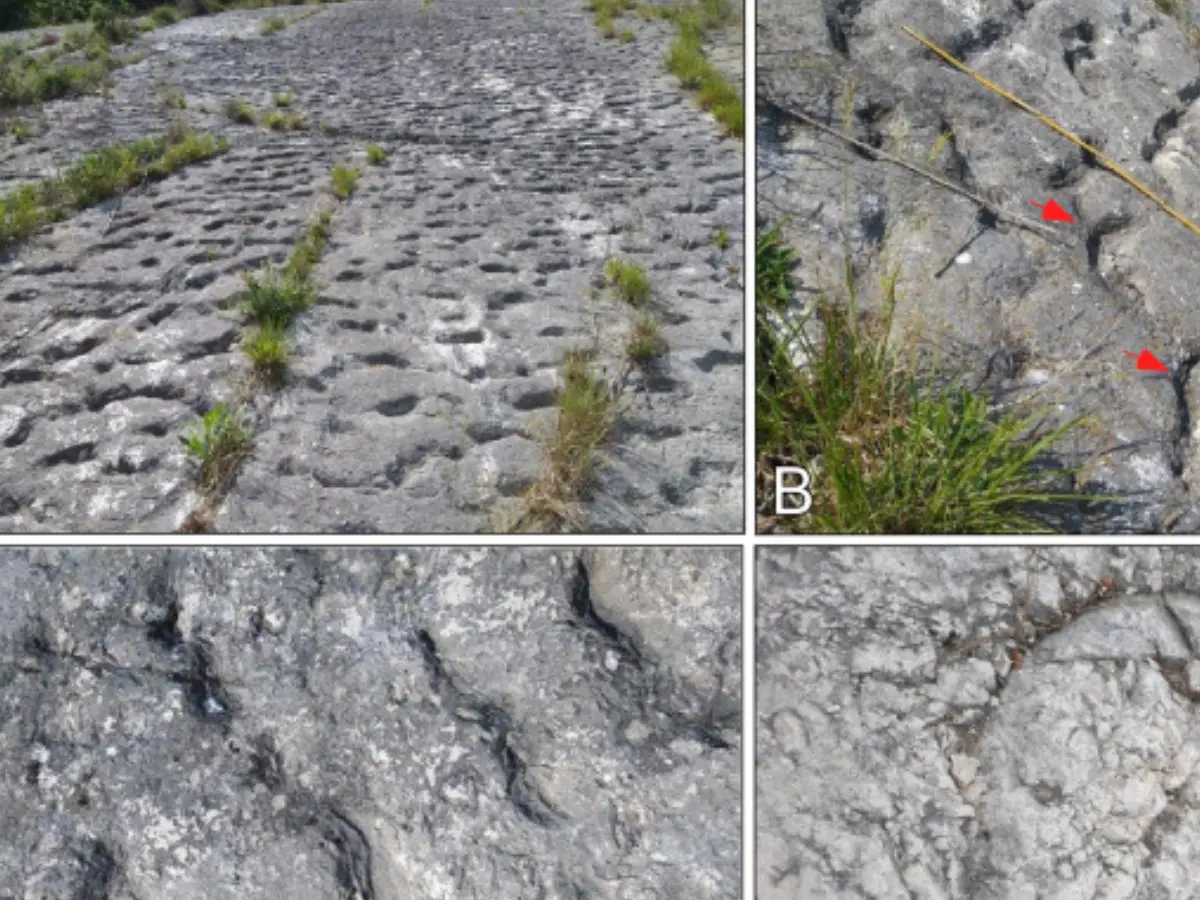
In Monte Cònero, Italy, a slab of limestone features tightly packed footprints that were made 80 million years ago. According to researchers, the trackway may represent a mass stampede of sea turtles fleeing a massive prehistoric earthquake. The discovery was made by a group of hikers who noticed something different about the rock. A team of researchers thinks the fossil tracks are from the Cretaceous Period and linked to a quick two-step event: an earthquake that shook the ancient seabed, leading to the marine reptiles moving across the soft mud during the shaking. Foot marks made millions of years ago should not be present today. But the earthquake that sent the turtles fleeing also protected these marks. Researchers suggest that the tremors triggered an underwater mudslide (a turbidite), which covered the seabed within minutes and preserved the footprints in stone. Experts are still not sure that the marks were made by sea turtles, as a geological phenomenon could also be responsible for them. The study was published in the journal Cretaceous Research.
Scientists discovered nearly 1,000 of these trace fossils. They also analysed the same footprints present on a layer that sits inside a thicker rock section about 131 feet long. To determine the exact age of the footprints, the team used microfossils, tiny organisms that live on the seafloor. The fossil “time stamp” helped them place the footprint horizon to the lower Campanian period during the Late Cretaceous. Earth’s magnetic history further confirms the time, as minerals in sediments can lock in the field direction when the poles flip.

The researchers say that the Late Cretaceous interval witnessed increased seismic activity. Sea level changes also affected sediment flow, how steep underwater slopes become, and the stability of the deposits. Meanwhile, scientists admit that merely paddle marks cannot confirm that it was the sea turtles who were jolted by the underwater earthquake, and the impressions could have been left by any marine animal. However, the signs point to a strong possibility of sea turtles or any other flippered reptile being the culprit.

