What are social media giants doing to curb Taliban amid Afghanistan crisis?

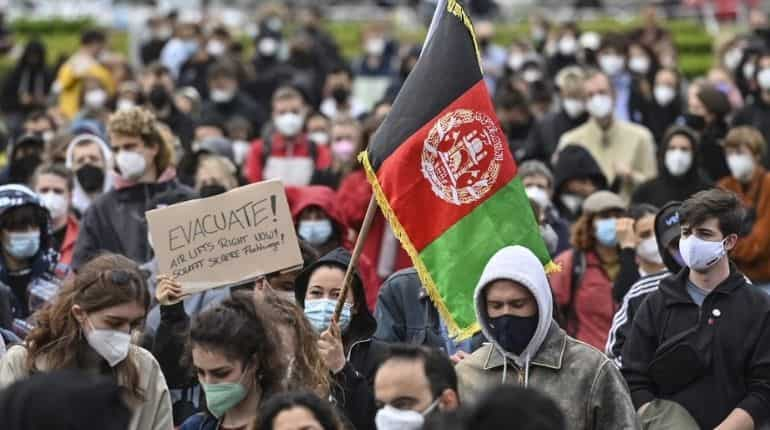
A participant holds up a placard readig 'Evacuate! Air lifts right now!' during a demonstration in Berlin on August 17, 2021, to demand the safe passage and airlift out of Afghanistan, where people try flee the country after the Taliban swept back to powe
The Taliban's rapid takeover ofAfghanistanposes challenges for multiple major social media and messaging platforms on what and who should be allowed on their platforms.
The companies, which have come under fire from global lawmakers and regulators for their outsized political and economic influence, often depend on state designations or official international recognitions to determine who is allowed on their sites.
These also help determine who might be verified, allowed official state accounts or may receive special treatment for rule-breaking speech due to newsworthiness or public interest loopholes.
However, the differences among the tech companies' stances suggest the approach is not uniform.
Here is what various social media giants are doing after the Talibanseized Kabul, confirming their takeover of power in Afghanistan after a stunningly swift end to the country's 20-year war.
Facebook blocks WhatsApp accounts
WhatsApp accounts linked to theTalibanhave been banned after the radical Islamic group seized control of Afghanistan and sought to use the messaging service to help it govern.
"TheTalibanis sanctioned as a terrorist organization under US law and we have banned them from our services under our Dangerous Organization policies," a Facebook spokesperson said.
The Facebook move shut down a WhatsApp hotline theTalibanhad set up to receive complaints about violence and looting, according to the Financial Times.
Facebook had on Monday said it designates the Taliban a terrorist group and bans it and content supporting it from its platforms.
OnTwitterInc, Taliban spokesmen with hundreds of thousands of followers have tweeted updates during the country's takeover.
However, the company has issueda statement saying that the network would review Taliban's content that may violate its rules, specifically against the glorification of violence or platform manipulation.
Youtube
Alphabet Inc’s YouTube said on Tuesday it has a long-held policy of not allowing accounts believed to be operated by the Taliban on its site, as social media companies faced questions about how they would handle the group that fast gained control ofAfghanistan.
The video-sharing service relies on governments to define "Foreign Terrorist Organizations" (FTO) to guide the site's enforcement of its rules against violent criminal groups.
The USinstead classifies the Taliban as a "Specially Designated Global Terrorist," which freezes the USassets of those blacklisted and bars Americans from working with them.
(With inputs from agencies)