&imwidth=800&imheight=600&format=webp&quality=medium "Declassified: Meet the Tupolev Tu-95! The Soviet bomber so loud, its roar could be heard from space")
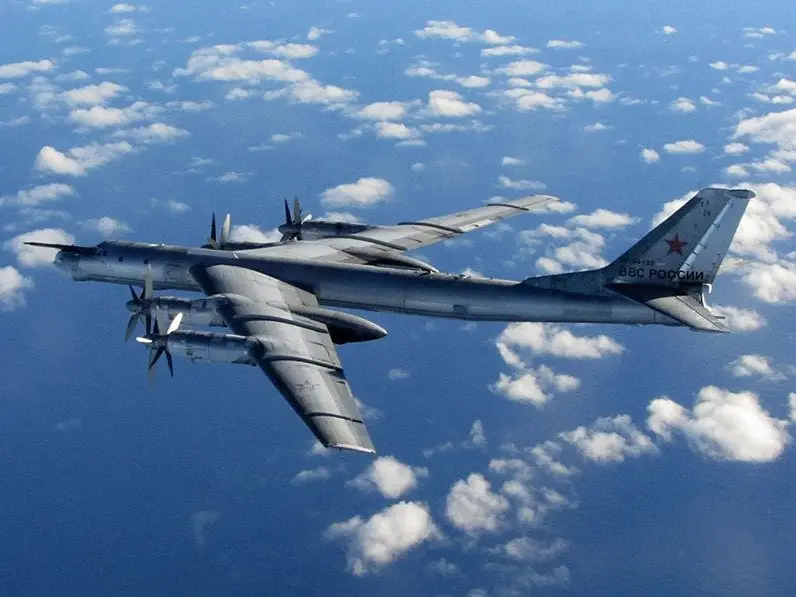
During the Cold War, few aircraft commanded as much attention or made as much noise, as the Tupolev Tu-95, a long-range strategic bomber developed by the Soviet Union in the 1950s. Nicknamed the “Bear” by NATO, the Tu-95 remains in service even today, thanks to a mix of power, endurance, and unmistakable presence. But its most infamous trait? Noise, lots of it.
Unlike most jet-powered bombers of its era, the Tu-95 is powered by four massive Kuznetsov NK-12 turboprop engines. These are the most powerful turboprop engines ever built and drive contra-rotating propellers, meaning each engine has two sets of propellers spinning in opposite directions. The result is an incredibly efficient design for long-range flight and an ear-splitting acoustic signature.
The Tu-95’s propellers rotate at the tips faster than the speed of sound, creating a continuous sonic boom effect in motion. This made the aircraft so loud that Western submarines and naval ships could detect its low-frequency vibrations underwater, long before radar contact. In fact, US spy satellites in low-Earth orbit reportedly picked up ground vibrations from Tu-95 takeoffs during intelligence sweeps, making it one of the few aircraft to literally shake the Earth from above.

Despite its noise, the Tu-95 was prized for its 15,000 km range and ability to loiter at high altitudes for hours. During missions near NATO airspace, its engines could often be heard minutes before visual contact, giving it a strange advantage: enemies were often aware of its arrival but still couldn’t match its endurance.
While the claim that the Tu-95 could “be heard from space” is likely an exaggeration of satellite-based vibration detection, its signature roar remains unmatched in aviation history. The Bear may never have been stealthy, but its role was never to hide. It was to send a message, loud and clear.