The ‘Football factory of the world’: Which city holds This title?

&imwidth=600&imheight=450&format=webp&quality=medium "The ‘Football factory of the world’: Which city holds This title?")
The ‘Football factory of the world’: Which city holds This title? Photograph: (Instagram/@brownhistory)
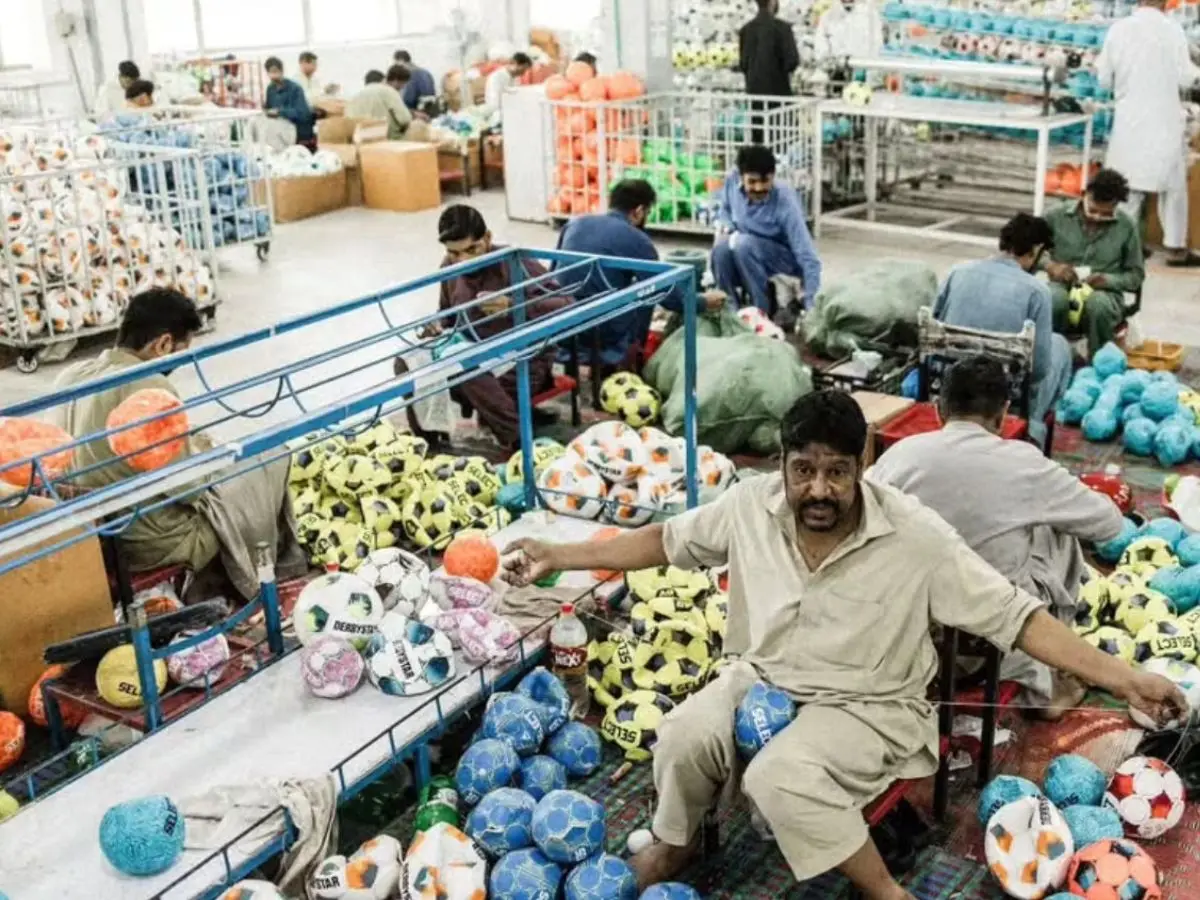
This Pakistani city produces nearly 70 per cent of the world's footballs, including hand-stitched balls and those used in FIFA World Cup matches, earning it the nickname "the football factory of the world."
From professional football stadiums to local playgrounds, many of the footballs used around the world are made in Sialkot, Pakistan. The city is responsible for producing nearly 70 per cent of the world’s footballs, earning it the reputation of being the “Football Factory of the World.” Sialkot is also closely linked to the FIFA World Cup. Since 1982, official World Cup match balls have been made in the city, making it a key centre for football manufacturing.
The official ball for the 2026 FIFA World Cup, called “Trionda,” was also produced there and its design reflects the tournament’s three host countries, the United States, Mexico and Canada.
Swiss photographer Stefan Bohrer visited Sialkot to document the skill and craftsmanship involved in football production. Many footballs are still stitched by hand, with workers carefully adding colours, logos and final details before the balls go through quality checks.
A major contributor to Sialkot’s success is Forward Sports, a company established in 1991 by engineer Khawaja Masood Akhtar. Starting with only 50 employees, the business grew into a globally recognised football manufacturer.
"One of the most important reasons behind our growth has been our focus on empowering women,” Akhtar told Muslimnetwork.tv. “Some of the finest football stitching and manufacturing work has been carried out by women workers.”
)
The ‘Football factory of the world’: Which city holds This title? Photograph: (Instagram/@brownhistory)
Also Read - FIFA 2026 | 'Lionel Messi deserved a red card': Algeria lodge FIFA complaint over controversial tackle
In 1994, Forward Sports partnered with Adidas, helping the company expand into international markets. Akhtar has credited part of the company’s growth to its support for women workers, many of whom play an important role in football stitching and manufacturing.
Today, Forward Sports produces millions of footballs each year by combining modern technology with traditional craftsmanship. Its focus on innovation and women’s participation has helped make it a global success story.