
&imwidth=800&imheight=600&format=webp&quality=medium "'Strength, speed, recovery': Ashu Malik breaks down elite kabaddi training before Asian Games")
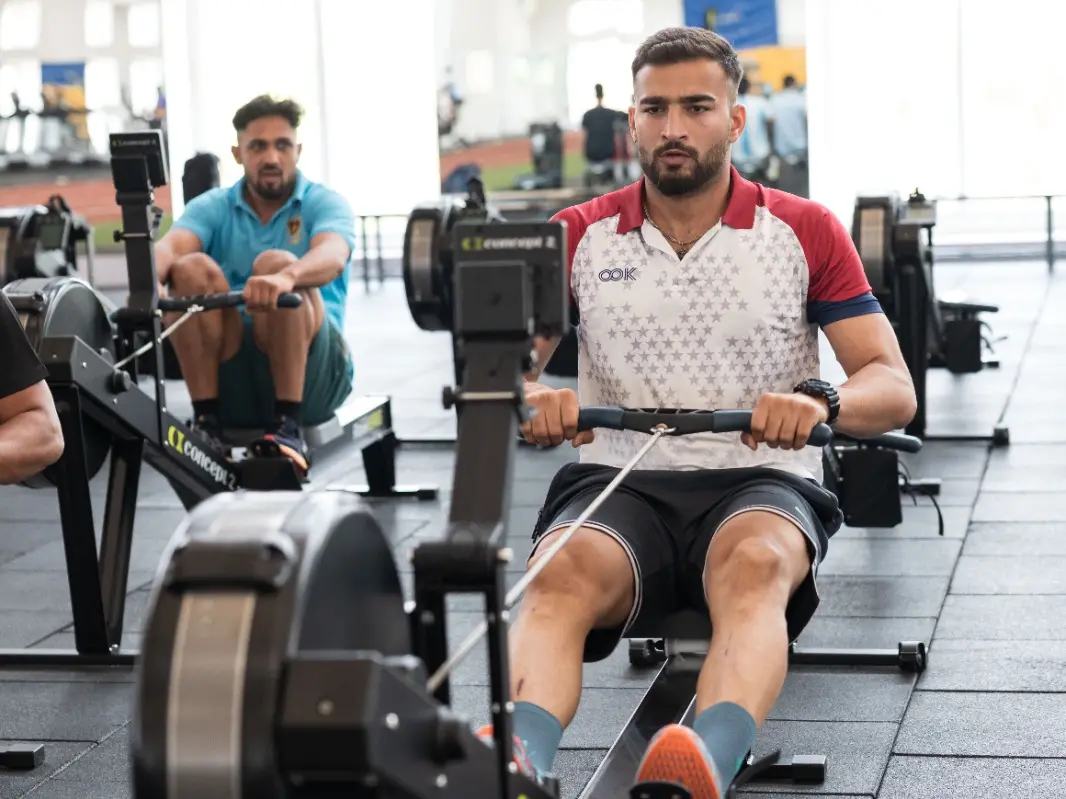
For Ashu Malik, the road to the 2026 Asian Games isn’t just about mat sessions; it’s about redefining preparation altogether. At the Inspire Institute of Sport (IIS), Malik has found a system that pushes him beyond the rhythms of the Pro Kabaddi League. “The difference starts with discipline,” he explained in an exclusive interview with WION. Unlike the unpredictable diets during league travel, IIS offers tailored nutrition, controlled environments, and structured recovery systems. From sauna baths to ice recovery and pool sessions, the emphasis is clear: performance is built off the mat as much as on it.
But Malik isn’t just relying on facilities; he’s dissecting his own game. Speed and conditioning have become central to his focus, especially given the physical toll kabaddi demands. “Sometimes it’s small technical gaps, like not reaching a defender or missing a bonus because of a leg lift,” he says. “These are the margins I want to improve.” Training alongside 40-plus elite players has added another dimension. Kabaddi’s inherently team-driven nature means feedback is instant and constant. Teammates analyse raids in real time, offering tactical insights that a raider might miss in the moment. That collective intelligence, Malik believes, is invaluable.

Then there’s the presence of seasoned stars like Pawan Sehrawat and Naveen Kumar. For Malik, the dynamic is less hierarchical and more collaborative. “We learn from each other. Sometimes I ask them questions, sometimes they ask me. That exchange helps everyone grow.” One of the biggest takeaways from the camp has been a renewed respect for recovery. Malik emphasises that training without proper rest is counterproductive. Strength and conditioning, often overlooked by already-fit players, has also become a non-negotiable part of his routine, crucial for longevity and injury prevention.
Looking ahead, Malik is clear-eyed about India’s biggest threat. “Iran will be our toughest competition,” he says, pointing to the familiarity both teams share due to overlapping leagues and exposure. But that familiarity cuts both ways; India knows Iran just as well. Among the emerging talents, Malik singles out Deepak Shankar as one to watch, a young player already making a strong impression in camp and tipped for a bright future. In a sport where margins are razor-thin, Malik’s preparation shows a shift in Indian kabaddi’s approach, more scientific, more holistic, and more relentless than ever before.

