'We thought Taliban had changed': Afghan girls banned from school

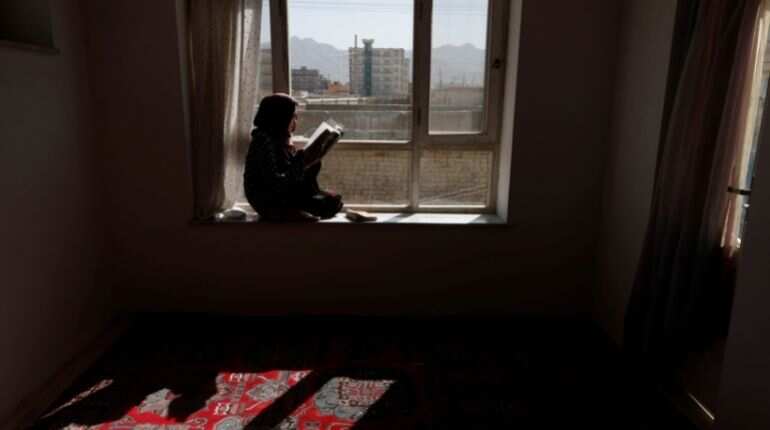
Afghanistan school girls
Days after theTalibanstaged a cruel U-turn on allowingAfghangirlsback toschool, Adeeba Haidari feels as if she is in prison.
The 13-year-old was one of thousands of jubilantgirlswho flocked back to secondaryschoolsreopening across the country on Wednesday, for the first time since theTalibanseized power in August.
But just hours into classes, the education ministry announced a shock policy reversal that left schoolgirls feeling betrayed and the international community outraged.

Also read |'Every Afghan girl has right to education': US, allies slam Taliban ban on girls' education
"Not only me but everyone you asked believed that theTalibanhadchanged," said Adeeba, who briefly returned to Al Fatah Girls Schoolin the capital, Kabul.
"When they sent everyone back homefromschool, we understood that theTalibanwere the sameTalibanof 25 years ago," her 11-year-old sister Malahat added.
)
Justice eludes Air India 1985 bombing victims as Canada probe goes 'inactive' | Gravitas
)
Trump revives India-Middle East-Europe economic corridor as India emerges central to West Asia’s future: What is it?
)
Erdogan again raises Kashmir issue at UNGA, calls for dialogue under UN Charter
)
Trump signs Greenland security deal with Denmark, paving way for two new US military bases
)
Most Americans want greater federal AI oversight
)
IND vs JPN T20I: How an overturned wide became point of difference between India's win and a tie
)
Trump-Xi summit: From trade to Taiwan, what will the US and Chinese presidents discuss in Washington?
)
Cyclone Arnab: Landfall expected before midnight tomorrow as IMD issues orange alerts across six states
)
ICC plans T20I expansion and fewer ODIs in 2027–2031 FTP cycle: Report
)
US-China tech war: Businesses in the front line
)
'Mumma’s boy from Gwalior who dared to dream': Kartik Aaryan pens long note after first National Award win
)
Gravitas | Boosting NHS productivity could save 20,600 lives in UK annually: Report
)
Nor'easter could batter 13 US states this week. What you should know
)
US and China vie for AI dominance as calls grow for regulation | Gravitas
)
Yemen clashes kill 154 people in two days as cornered Saudi battles Houthi offensive | Gravitas
)
Bomb scare in New York amid UNGA: Suspicious suitcase found near UN headquarters
)
IND vs JPN, one-off T20I: Japan captain Kendel on pushing India to the brink - ‘It was special’
)
Raaka creates history! Allu Arjun’s film secures Guinness World Record ahead of release
)
Mikel Arteta verbally agrees to three-year extension with Arsenal after title-winning Premier League season
)
WION Iconic Tourism Summit and Awards 2026: Key voices to discuss India’s tourism future
)
WION Iconic Tourism Summit and Iconic Awards 2026: India's travel economy leaders gather in Delhi
&im=FitAndFill=(700,400))
New OTT releases this week (September 21-27, 2026): Shaque: Trust No One, Hunkkaar, Don’t Be Shy- 5 new titles coming to Netflix, Prime Video and more
)
81st UN General Assembly: Burnham announces UK-US AI defence tie-up
)
Trump calls on nations to quit ‘rogue’ and ‘out-of-control’ International Criminal Court, rips UN
)
Infections transmitted from pregnant woman linked to autism risk
)
'What kind of confession is this?': Pakistan PM Shehbaz Sharif’s 'terrorists would be roaming New York' remark goes viral, raises alarm online. Watch
)
Elephants hide behind trees, stage surprise attack on poachers targeting rhinos in South Africa
)
IIT Bombay professor Suryanarayana Doolla sent on leave amid Sahil Wakode death probe
&im=FitAndFill=(700,400))
National Film Awards 2026: Kartik Aaryan, Mammootty, Yami Gautam, Randeep Hooda and other key winners
)
‘Strike a deal or drive Iran into hell’: Trump issues fresh warning to Tehran at UNGA
)
Anne Hathaway to run in supporting race for Nolan's epic
)
Over 4,200 books withdrawn from circulation in J&K colleges, 94% from Kashmir
)
From Gaddafi tearing up UN Charter to Trump’s ‘escalatorgate’: Most unforgettable UNGA moments
)
Explainer: Why rare-earth export licences and Board of Trade are US priorities ahead of Trump-Xi summit
)
Asia prepares for record El Nino, food shock
)
Oil slips to $98 as Saudi Arabia restarts East-West oil pipeline
)
Four female students raped during 'Red Zone' at California university. What we know
)
'Taiwan and human rights are red lines': China warns US ahead of Xi-Trump visit
"We are being treated like criminals just because we aregirls. Afghanistan has turned into a jail for us."
When theTalibanreturned to power, they promised a softer rule compared with their first regimefrom1996 to 2001, which became notorious for human rights abuses.
They claimed to respect women's rights, in line with their interpretation of Islamic sharia law, and saidgirlswould be allowed to study through to university.
But theTalibanhave imposed a slew of restrictions on women, effectively banning themfrommany government jobs, policing what they wear and preventing themfromtravelling outside of their cities alone.
They have also detained several women's rights activists.
"We miss our freedom. We miss our classmates and teachers," said Adeeba.
Dreams shattered
There has been no clear explanation for the last-minute reversal on secondaryschools,but reports leakedfroma secretive leadership meeting this week suggested motives rangingfromproblems with uniforms to an outright rejection of the need for education for teenagegirls.
The education ministry still insistsschoolswill restart, but only when new guidelines are issued.
Across town, Nargis Jafri,fromthe minority Shiite Hazara community, said theTalibanfeel threatened by educated women.
"They believe that if we study, we will gain knowledge and we will fight against them," the 14-year-old told AFP, sitting with her books spread out on her study table at home.
It is agonising for her to watch boys her age walking past her house on their way toschooleach morning.
"It is really hard and painful for me," she said.
Like many families, history is repeating itselffromone generation to the next.
Nargis's mother, Hamida, was forced to leaveschoolduring theTaliban's first rule when she was about 10 years old.
The storiesfromwhat shethoughtwas a distant past are flooding into her mind again.
"I used to feel strange when she told us how she wore a burqa or a chador, or how a woman was not allowed to go out without a male relative," Nargis said.
Hamida now struggles to accept a similar fate for her daughter.
"My daughter will be held backfromgoing toschool," she said. "The dreams she has in her heart will be shattered."
Watch |Taliban backtracks on announcement of reopening schools for girls in Afghanistan

