Taliban publicly execute convicted murderer by gunfire in sports stadium

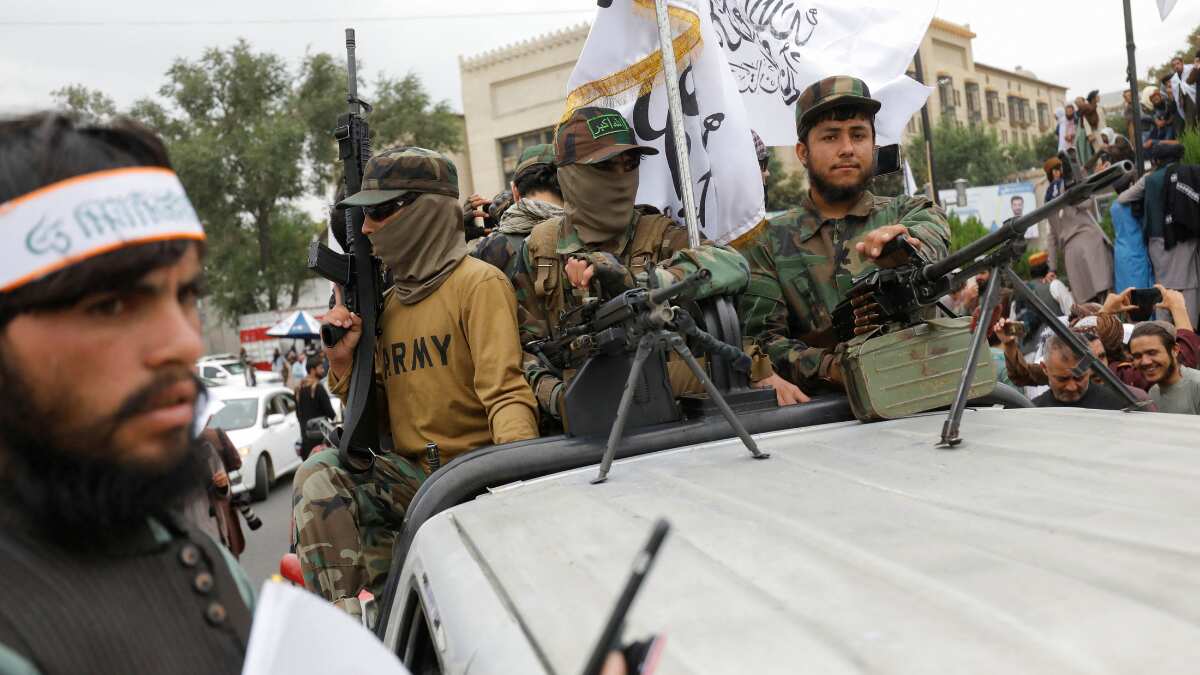
Taliban fighters
Taliban authorities on Monday (Feb 26) publicly executed a convicted murderer by gunfire in a sports stadium, news agency AFP reported citing officials.
It became the third death penalty carried out in Afghanistan in a matter of days. As per the report, the man was found guilty of a knife murder in January 2022.
A Supreme Court statement signed by Taliban chairman Hibatullah Akhundzada revealed that he was executed for his crimes in northern Sheberghan city (in some reports spelt as Shibirghan) under a death order. Sheberghan is the capital of northern Jawzjan province.
In the statement, the man was identified as Nazar Muhammad. It noted that his case "was examined very thoroughly and repeatedly".
A witness spoke to the news agency on the condition of anonymity because he was not authorised to speak with the media.
The execution took place in heavy snowfall, the witness said, further mentioning that the brother of the murdered man shot the convict five times with a rifle.
The execution took place amid tight security around the stadium, in front of the convict's family and also the family of the victim, including women and children. Thousands of others were also present in the stadium, a local provincial official told AFP.
Watch:Relief in Austria as 84-year-old Herbert Fritz released by Taliban
As per reports, it was the fifth public execution since the Taliban seized power in Afghanistan in August 2021 after the United States and North Atlantic Treaty Organization (NATO) troops withdrew from the country after two decades of war.
After coming to power, the Taliban promised to abide by the more moderate rule, however, the Islamist regime began carrying out harsh penalties in public, including executions, floggings, and stonings similar to their former control over Afghanistan in the late 1990s.
Akhundzada had even ordered judges in 2022 to fully implement all aspects of Islamic law, including "eye for an eye" punishments known as "qisas".
(With inputs from agencies)