Smog: No easy way out for Delhi

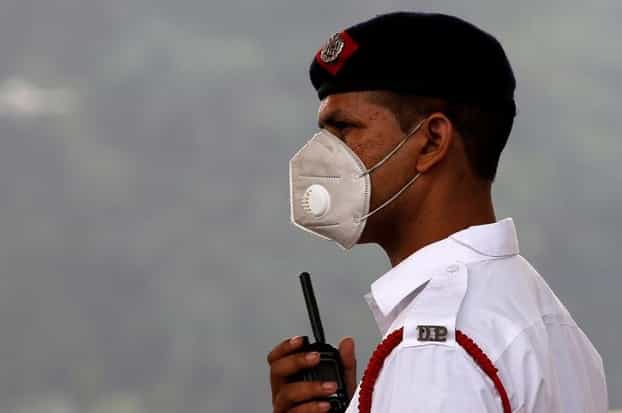
Heavy smog in Delhi
Delhi chokes from burning of crop stubble in Punjab, Haryana and Western Uttar Pradesh, the presence of polluting industries in the NCR region, very high density of diesel-run automobiles as well as constant and widespread construction activities.?
“If winters are here can the smog be far behind?”
If you live in Delhi or for that matter in north-west India, chances are you must have listened to this resigned lament at least once every year before the onset of winters.
Smog, a combination of smoke and fog, has a corrosive quality and plays havoc with your respiratory system. In Delhi and the adjoining National Capital Region (NCR), the problem has grown over the years and has assumed dangerous proportions during the last decade and a half.
During the 1980s and 90s, the problem of smoke and smog had started raising its ugly head but at that time the reasons were different. The use of diesel as fuel in buses and auto-rickshaws as well as the indiscriminate burning of waste was considered to be the main culprits. So when the city shifted to CNG (compressed natural gas) for autos and buses, there was an immediate improvement in the ambient air quality.
Smog, a combination of smoke and fog, has a corrosive quality and plays havoc with your respiratory system.
However, in the first decade of the 21st century, all the gains made due to the implementation of CNG were lost because of a host of reasons.
Still, the menace can be fought but a multipronged action needs to be taken in a mission mode.
But before talking about the solutions we should know the causes of smog in Delhi and the limitations they will put on the solutions implemented in the future.
Delhi is geographically predisposed to suffer from the haze. Proximity to arid zones of Rajasthan, increasing desertification coupled with erratic wind flow patterns during winter creates a situation where even moderate pollution can lead to long spells of haze.
Adding to this, many new and old sources of pollution have conspired to choke Delhi in the last two decades.
Right now the city suffers from smog due to four main reasons – burning of crop stubble in Punjab, Haryana and Western Uttar Pradesh, the presence of polluting industries in the NCR region, very high density of diesel-run automobiles as well as constant and widespread construction activities.
Let’s begin with crop residue burning. Earlier, when the crops were harvested by hand, they would get easily mixed with the soil when tractors were used since the stubbles left behind were very small. Now long staffs of stubbles are left behind because of the mechanised thrashers and harvesters, leaving no option for the farmers but to burn them.
Technicians, scientists and engineers should come together to find a solution to this problem on an emergency basis and the government should financially help the farmers to introduce new methods of harvesting their crops once they are in place. Penalising them alone wouldn’t work.
Now long staffs of stubbles are left behind because of the mechanised thrashers and harvesters, leaving no option for the farmers but to burn them.
Most of the industries, in and around Delhi fall into the category of MSMEs or Medium, Small and Micro Enterprises. They use diesel and furnace oil, two of the most polluting fuels, as their sources of energy.A thorough research has already been done and various government agencies suggest that a cleaner fuel in the form of natural gas is available and can readily be provided to these industries.
The industry, on the other hand, fears it will escalate their cost of production and make their product unviable in the market. The government should sponsor a scheme to compulsorily change their fuel use.We should remember that these small enterprises operate on very little margins so they would need government help to make a transition to cleaner fuel. Tax holidays and soft loans to implement fuel transition and technology installation can be a way forward.
Third, there should be a complete ban on construction activities between the months of October to March.In a growing economy, construction activities will happen and should happen. But it should be made time specific in the context of NCR to stop its ill effect on health during a season which increases pollutant levels in the air.
Fourth, is automobiles. Here, the people’s participation is needed. The government should seriously consider banning certain types of automobiles for personal use, especially diesel driven SUVs and other big cars, and encourage people to use public transport as much as they can.For this, the government will also have to provide last mile connectivity and improved bus services which are reliable and comfortable. Bicycle lanes should be strictly followed and a heavy penalty should be imposed on those who violate it.
Finally, the coal-fired power plant in Delhi should be phased out and the government should force the distribution companies to source electricity from gas-fired power plants and solar farms from Rajasthan.It may increase the power bills a bit, but that’s a small price to pay for clean and healthy air.