Pakistan: Troubled nation goes to polls after day of violence, roiled by vengeful politics, crisis-hit economy

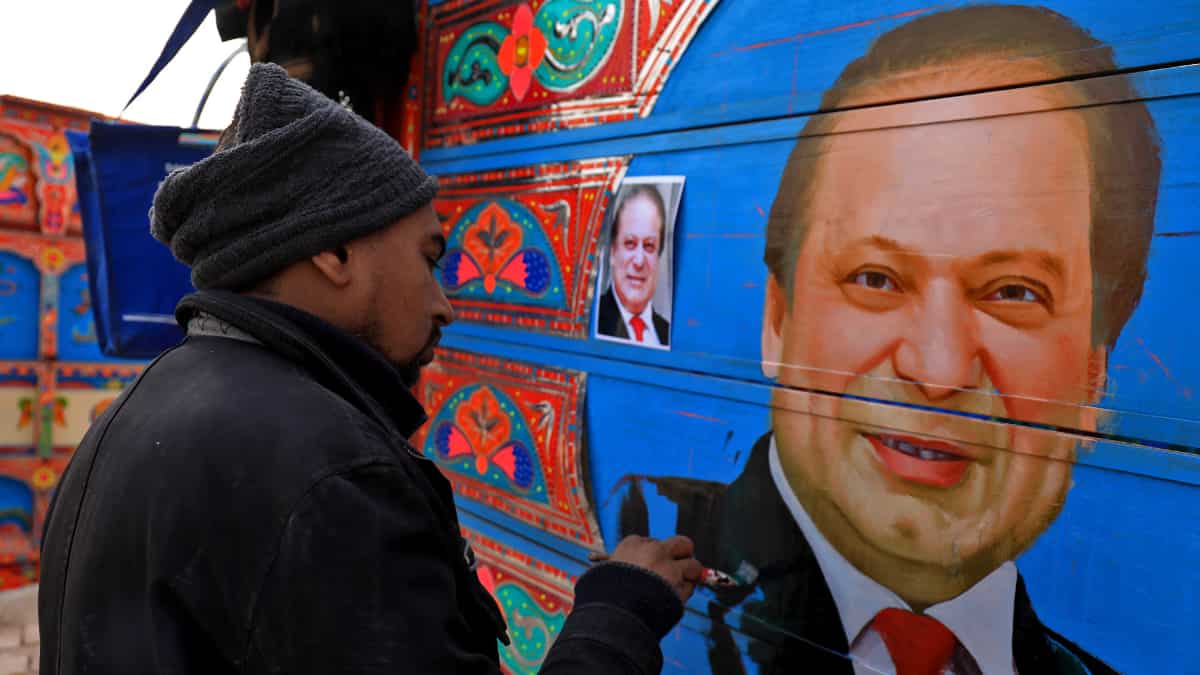
Nawaz Sharif
Pakistan is all set for a general election on Thursday (Feb 8), just hours after deadly blasts rocked the troubled nation, killing nearly 30 people and injuring dozens. The shocking explosions led to a tense situation across the nation, forcing authorities to deploy more than half a million security officers to maintain law and order on the polling day.
The South Asian nation has been marred by several factors including, economic crisis, political instability, and a rise in terrorism. These elements pose unprecedented challenges for the nation, making this general election consequential as it is expected to pave the way for the country's future.
Blasts on eve of Pakistan election
The world turned its attention towards the Pakistan election, and the blasts grabbed headlines, leaving behind discussions on candidates and agenda for the nation. In the run-up to the vote, at least two candidates were shot dead and dozens more were targeted in attacks amid security incidents.
Jan Achakzai, caretaker information minister for Balochistan province, said: "The aim of today's blasts was to sabotage the election. Despite today's blasts, the election will take place tomorrow. People of Balochistan will come out tomorrow without any fear."
So far, there has been no immediate claim of responsibility for the blasts in the Balochistan region, which is home to several militant factions fighting for a larger portion of the country's resources.
Who are the key players?
Ahead of the polls, allegations of pre-poll rigging have marred the election in the aftermath of crackdown on the party of jailed former prime minister Imran Khan, who won the 2018 election but was ousted from power four years later by a national assembly vote of no confidence.
Khan and his party members allege that conspiracies against them might alter result of the election. In a pre-recorded message, Khan urged the nation to cast their votes. About 128 million of Pakistan's 240 million people are eligible to vote.
Nearly 18,000 candidates are running for seats in the national and four provincial assemblies, with 266 seats directly contested in the former - an additional 70 reserved for women and minorities - and 749 places in the regional parliaments.
Nawaz Sharif: He is the former prime minister and chief of the Pakistan Muslim League-Nawaz (PML-N) party. The three-time former PM returned from a four-year self-imposed exile in the United Kingdom late last year, having contested the last election from a jail cell. His convictions for corruption and a lifetime ban from politics were overturned by courts.
Maryam Nawaz Sharif: She is the daughter of Nawaz and has played an influential role in the PML-N party. She was also jailed along with her father shortly before the 2018 elections on corruption charges. But the charges were later overturned.
Shehbaz Sharif: He is the younger brother of Nawaz. In his brother's absence, Shehbaz led a coalition government for 16 months following the ouster of Imran Khan until parliament was dissolved and a caretaker government took over to prepare for national elections.
Imran Khan: The former cricketer has been serving jail time since August. He has received multi-year bans from taking part in politics over many corruption and criminal charges, which he denies.The former cricket star denies wrongdoing and has blamed the country's powerful generals, who he fell out with in the lead-up to a no-confidence vote in 2022. The military denies meddling in politics.
Bilawal Bhutto Zardari: He was the country's foreign minister until a caretaker government took over late last year. He said that he is focusing on the country's huge youth population and other issues such as climate change, and more.
Watch:Pakistan election commission calls the explosions a 'terror attack'
What's next for the winner?
The Sharifsare vying to become the supreme leader, but the major task will begin after the polls when the elected leader will take the responsibilityto govern the nuclear-armed nation of 241 million people.
Analysts say that whoever wins takes over a deeply divided country with the economy in an absolute poor state. Inflation has reached an alarming level of nearly 30 per cent, the currency has been in free fall for three years and a balance-of-payments deficit has frozen imports, severely hampering industrial growth.
(With inputs from agencies)