Internet goes down for several hours in parts of Pakistan

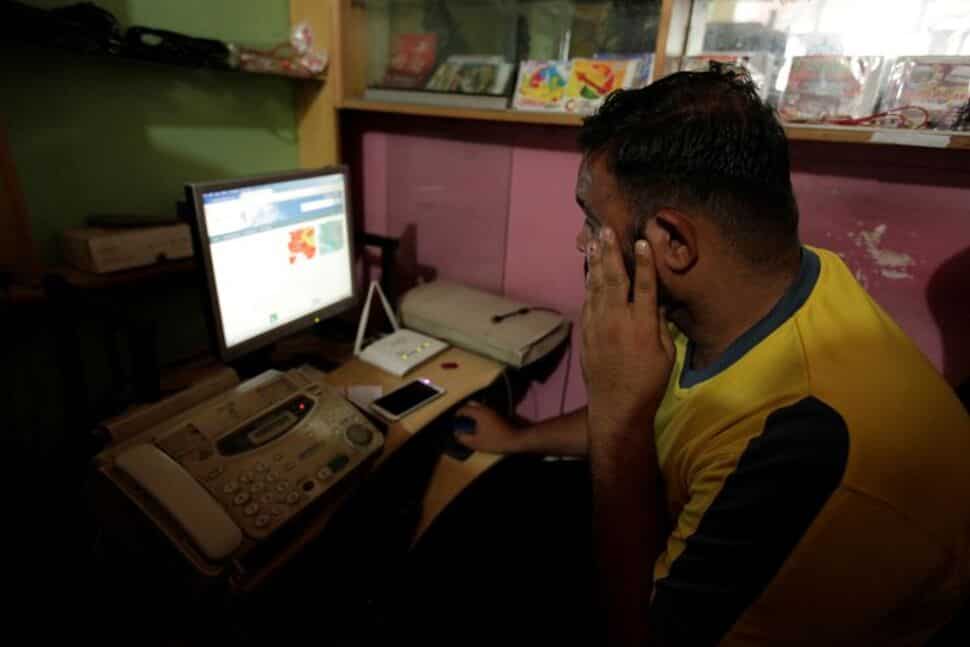
A man explores social media on a computer at an internet club in Islamabad, Pakistan.
Following an hour-long interruption brought on by heavy rains and flooding, internet access has now fully returned to Pakistan's central and northern regions, according to the country's telecom regulator.
The capital and other significant urban centres experienced poor connectivity, according to major Pakistani cellular companies, with one business attributing the issue to flooding.
The Pakistan Telecommunication Authority (PTA) said"the technical failure in data networks which caused internet outage in Pakistan has been addressed," adding that all internet services have been returned to normal.
PTCL, a state-owned telecommunications company, previously reported that users in the northern and central areas were experiencing outages due to problems with its optical fibre network.
It posted on Twitter that "PTCL's optical fibre network is experiencing certain technical difficulties due to severe rainfall and floods."
Later, it claimed that the error had been fixed.
The issues with PTCL spread to other service providers, including cellular data.
The internet network at Telenor Pakistan, which is supported by Telenor of Norway, went down due to a problem at the ISP.
Users in Pakistan who posted on social media claimed that additional telecom services had gone offline, but no announcements from those businesses acknowledged any issues.
Both the country's capital, Islamabad, and Lahore, the second-largest urban area in Pakistan, reported widespread internet blackouts where both fixed-line broadband customers and cellular network users reported no access.
However, many users claimed that Jazz, owned by Amsterdam-listed international service company Veon, remained operational throughout the interruption. Jazz is Pakistan's largest telecoms operator.
According to Khayyam Siddiqi, Jazz's head of external relations, "Jazz network remains mostly unaffected due to our resilient design and many levels of protection to give consistent experience to our users."
With a population of around 220 million, Pakistan has a sizable and expanding online community. According to the PTA, there are 119 million broadband subscribers and 116 million users of 3G and 4G services.
(With inputs from agencies)