Why is NASA urging people to listen during solar eclipse on April 8 and report back?

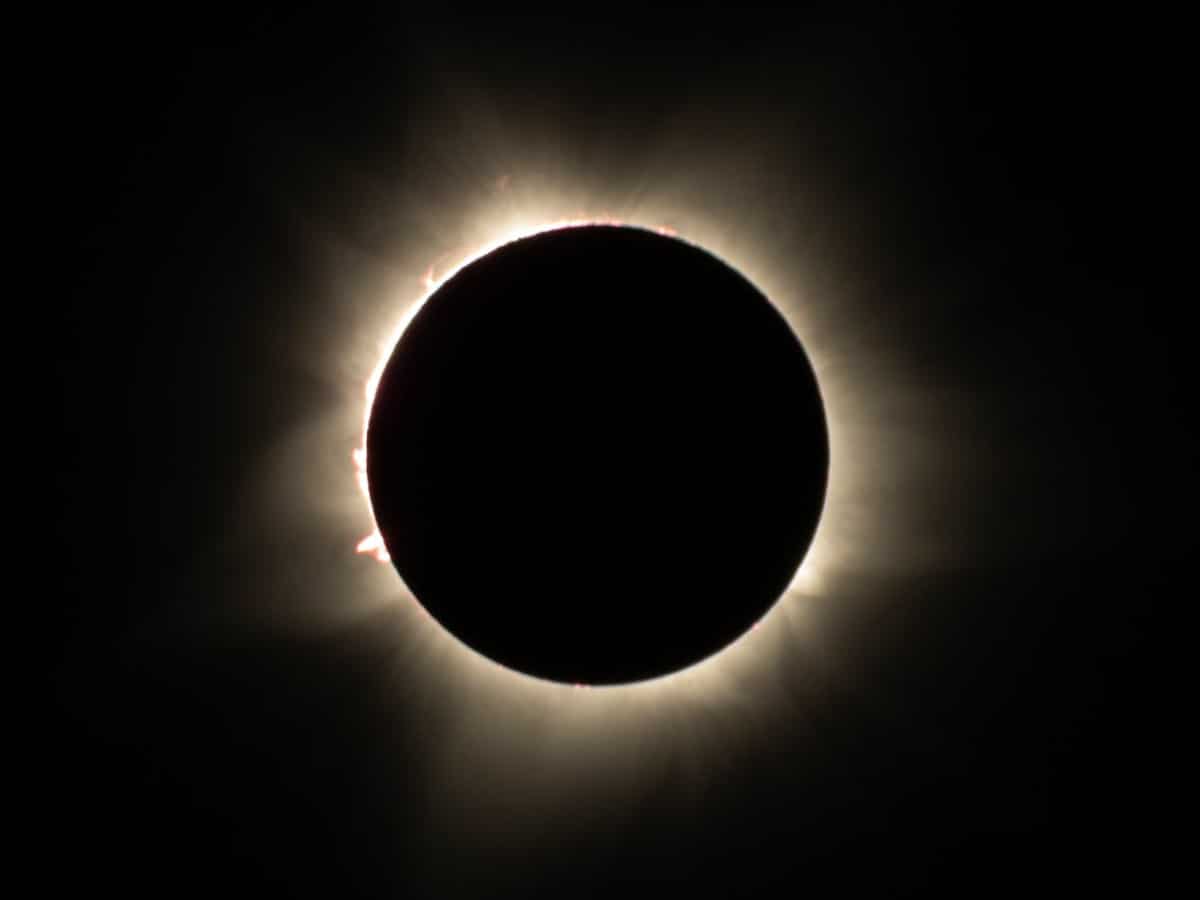
(Representative image) Total Solar Eclipse 2024
We all have heard that eclipses (solar and lunar) are a rare sight that the universe offers in this cosmic world. But this year’s solar eclipse will not just be something you see, but also something that you will experience on many levels.
The April 8 solar eclipse will be more than just a visual event as it will have multi-sensory effects, including sound. This is the reason why NASA is asking people in the US to listen during the total eclipse on April 8 this year.
"We want to show that eclipses can be studied in a multi-sensory manner, through sound and feeling and other forms of observation," said Kelsey Perrett, Communications Coordinator with the NASA-funded Eclipse Soundscapes Project.
How people can help in understanding eclipses better?
NASA is aiming to collect more diverse data on solar eclipses for its Eclipse Soundspaces Project, for which it wants millions of people to listen, observe and record anything that they think might be peculiar. The result will be, as scientists hope, a better understanding of how an eclipse affects different ecosystems.
Data collectors recruited for the project will also use a low-cost recording device called AudioMoth to capture the sounds of animals, birds and insects—especially crickets.
One mystery that researchers want to solve is whether nocturnal and diurnal animals act any differently or become more or less vocal during a solar eclipse.
“The more audio data and observations we have, the better we can answer these questions,” said Perrett.
“Contributions from participatory scientists will allow us to drill down into specific ecosystems and determine how the eclipse may have impacted each of them.”
However, individuals participating in this project do not need a technical background or significant financial resources to participate.
Anyone, including those who are blind or have low vision, can join as "Data Collectors" using an AudioMoth or as “Observers by recording their multisensory observations and submitting them to the project website following the eclipse."
“The intention of this project is to make the total solar eclipse an engaging and enjoyable experience for everyone,” said Dr. Henry “Trae” Winter, co-lead of the Eclipse Soundscapes Project. “We are excited to invite the public to participate in this opportunity to perform real and meaningful scientific research as equal participants," he added.
(With inputs from agencies)