What is love? Now, researchers have mapped exactly which parts of brains fire up in various love situations

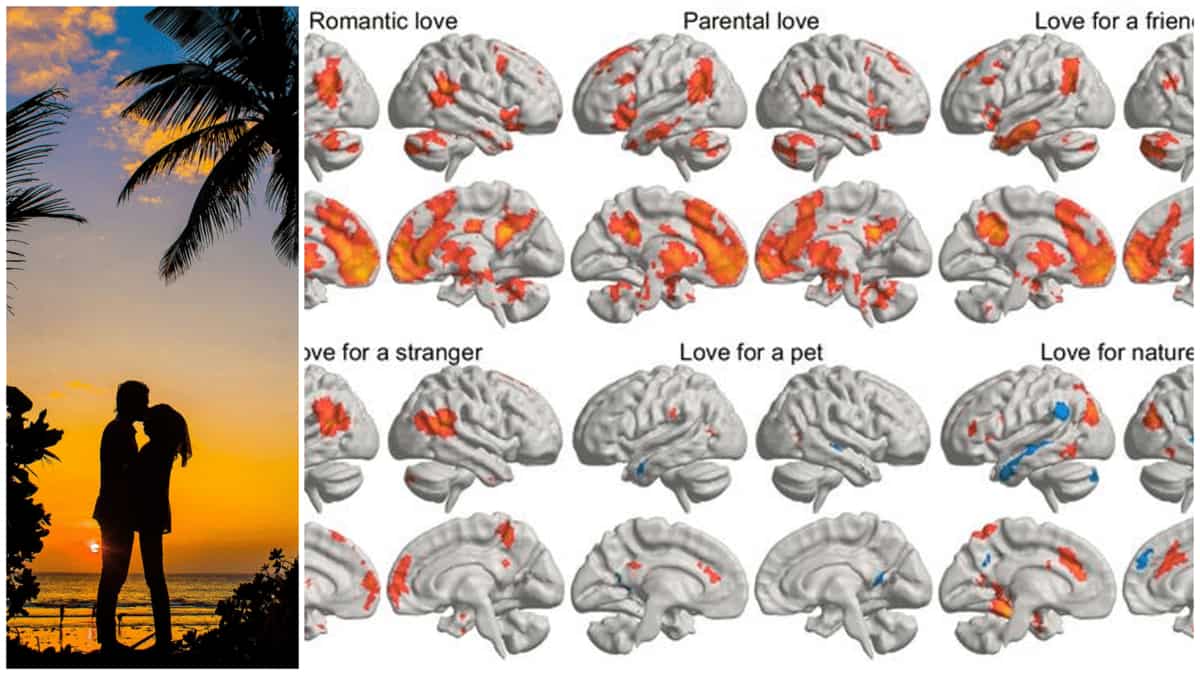
Surprisingly, it's not romantic love that ignited brains more
What is love, or rather, 'where' is love? A fascinating new study has located where exactly love happens in our brains. More precisely, it has mapped how different types of love situations fire up different parts of the brain.
Using functional magnetic resonance imaging or fMRI, the researchers from Aalto University mapped the brain activity of participants who were given stories to think about, related to six types of love: for romantic partners, friends, children, strangers, pets and nature.
Watch: Does falling in love mess with your head?
How was the 'brain in love' study done?
The researchers gave specific love-related statements to participants and observed how their brains reacted. After hearing a professional actor’s rendition of each love story, participants were asked to imagine each emotion for 10 seconds,the researchers said in a release.
Could you guess which type of love ignited more parts of the participants' brains?
Love for one’s children generated the most intense brain activity, closely followed by romantic love, according to the study published in the journal Cerebral Cortex.
The statement given to the parents was: "You see your newborn child for the first time. The baby is soft, healthy and hearty — your life’s greatest wonder. You feel love for the little one."
It was presented to 55 parents who said they were in a loving relationship.
Also Read: Love in the times of AI: Your digital avatar might soon go out on dates for you
"In parental love, there was activation deep in the brain's reward system in the striatum area while imagining love, and this was not seen for any other kind of love," said Pärttyli Rinne, who coordinated the study.
‘‘The activation pattern of love is generated...in the basal ganglia, the midline of the forehead, the precuneus and the temporoparietal junction at the sides of the back of the head," said Rinne.
Brain activity is influenced not only by the closeness of the object of love but also by whether it is a human being, another species or nature.
Compassionate love for strangers was less rewarding and caused less brain activation than love in close relationships, it noted.
The study also found that love of nature activated the reward system and visual areas of the brain, but not the social brain areas.
The study also found that it is possible to find, based on brain activity, whether a person is a pet owner or not.
"When looking at love for pets and the brain activity associated with it, brain areas associated with sociality statistically reveal whether or not the person is a pet owner. When it comes to the pet owners, these areas are more activated than with non-pet owners," said Rinne.
(With inputs from agencies)

